


Metering Plugin Buying guide
Metering Plugin: A Complete Buyer's Guide
Professional mixing demands objective measurement alongside subjective listening. This guide helps you identify the metering plugin that reveals problems your speakers might hide.
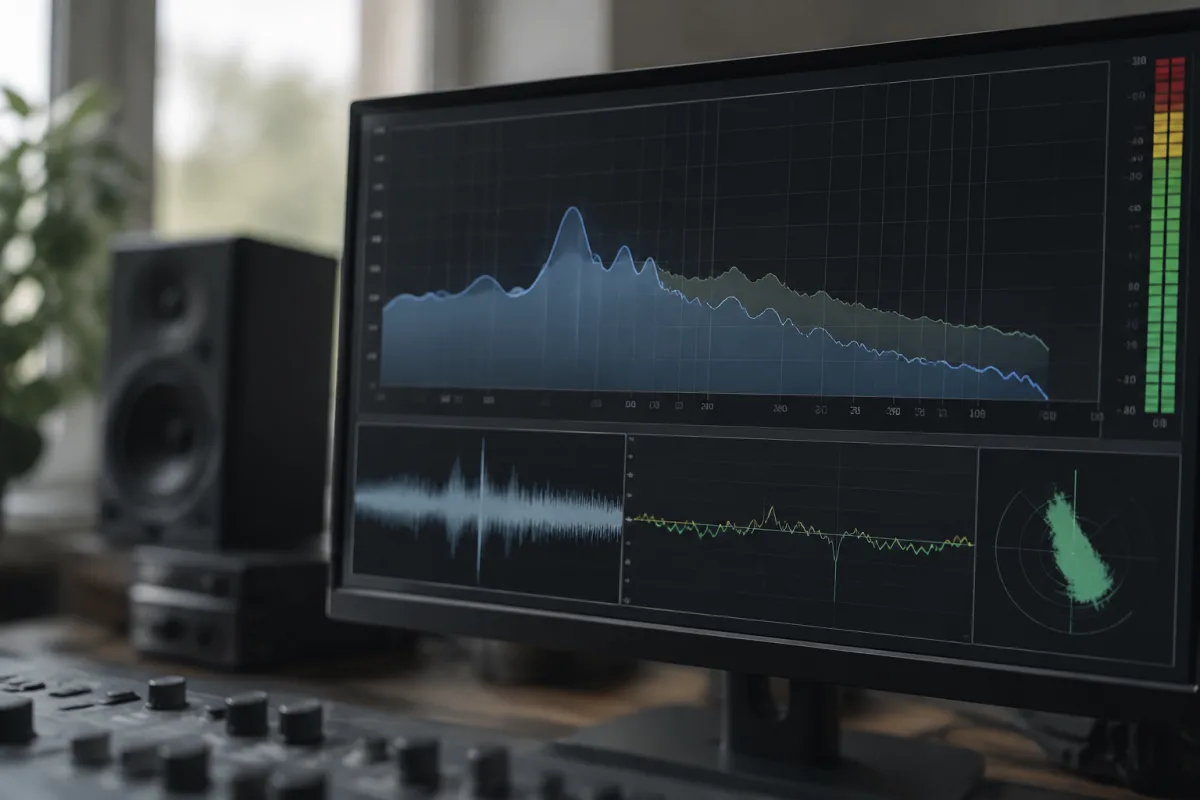
Professional mixing demands objective measurement alongside subjective listening, yet selecting a metering plugin often confuses producers unfamiliar with technical specifications and measurement approaches. This buying guide focuses on practical applications, helping you identify the metering plugin that integrates naturally into your workflow and reveals problems you might otherwise miss through speaker-room interaction alone.
Types of Measurement: Know Your Metering Plugin Category
Metering plugins fall into distinct categories serving different measurement needs. Peak metering shows loudness levels, essential for preventing clipping and maintaining headroom. Loudness metering measures perceived loudness according to broadcasting standards, increasingly important for streaming platforms. Spectrum analysis displays frequency distribution, revealing build-ups or gaps in your mix. Phase analysis shows whether elements interact constructively or destructively. Correlation metering displays mono compatibility. Before choosing a metering plugin, identify which measurements matter most for your workflow. A metering plugin brilliant at spectrum analysis won't necessarily excel at loudness measurement.
Peak Metering Accuracy
All metering plugins measure peak levels, but implementation quality varies. Premium metering plugins update display rates frequently, capturing transient peaks your DAW's built-in meter misses. Budget metering plugins sometimes average measurements, obscuring brief peaks that can cause clipping on streaming services. If preventing loudness surprises matters—particularly important for commercial mixing—invest in a metering plugin known for accurate peak capture. This seemingly simple feature separates professional metering plugins from basic implementations.
Loudness Measurement Standards
Modern streaming platforms require loudness normalisation, making LUFS (Loudness Units relative to Full Scale) measurement increasingly essential. Quality metering plugins support multiple loudness standards: LUFS for streaming (Spotify targets -14 LUFS), LKFS for broadcast, and older loudness units like LRMS. If you're mixing for commercial release, a metering plugin supporting LUFS measurement is mandatory. Some metering plugins include integrated loudness targets, showing whether your mix hits the correct loudness level for your delivery platform. This convenience feature eliminates external loudness checking software.
Spectrum Analysis Capabilities
A metering plugin's frequency analysis reveals problems invisible through listening. Some metering plugin products display real-time spectrum with multiple display modes—bars, curve, or cascade. Advanced metering plugins include spectrogram functionality showing frequency content over time, invaluable for identifying problematic resonances or frequency accumulation. Examine whether your target metering plugin provides analysis clarity matching your requirements. Budget metering plugins sometimes display spectrum too broadly, averaging away important detail. Professional metering plugins zoom into problem frequencies effectively.
Correlation Metering and Mono Compatibility
A correlation meter shows whether your mix maintains mono compatibility. A metering plugin displaying correlation information prevents common errors like accidentally creating stereo mixes that collapse to mono or lose bass through phase issues. This measurement proves particularly valuable for mixing music destined for club systems or broadcast. A quality metering plugin includes correlation functionality alongside loudness and spectrum analysis. Budget metering plugins sometimes omit this important measurement.
Phase Analysis and Stereo Imaging
Sophisticated metering plugins include phase analysis showing stereo field balance and potential phase problems. This visual representation helps identify whether your mix image matches your intentions. Some metering plugins display mid-side separation, clarifying what's centred versus wide. If your production involves critical stereo imaging—ambient music, binaural recordings, or mastering work—a metering plugin including phase analysis proves invaluable. General mixing rarely demands this level of measurement detail.
CPU Efficiency and Display Responsiveness
Metering plugins vary dramatically in CPU demands. Lightweight metering plugins consume minimal resources, ideal for tracking sessions and full mixes on limited computers. Sophisticated metering plugins with real-time spectrogram and high-frequency-resolution analysis demand substantial CPU. During trial periods, monitor your metering plugin's resource consumption under realistic project conditions. Some engineers run multiple metering plugins simultaneously—a comprehensive metering plugin lets you consolidate measurements into a single, efficient tool.
Real-Time Display Update Rates
A metering plugin's display responsiveness affects usability. Fast update rates capture transient peaks and show rapid changes in loudness. Slower update rates create frustration when you can't see what's actually happening in the mix. Professional metering plugins update displays frequently enough to show musical transients clearly. Budget metering plugins sometimes update sluggishly, making them difficult to use during active mixing.
Integration with Your DAW
Some metering plugins integrate seamlessly with your DAW's native metering, creating unified measurement tools. Others function independently. Investigate whether your target metering plugin works well within your DAW's workflow. Can you resize the plugin window extensively? Do measurements sync properly with your DAW's loudness settings? These practical integration issues determine whether a metering plugin becomes an indispensable tool or an awkward peripheral.
Loudness History and Logging
Advanced metering plugins include loudness history tracking, recording how loudness fluctuates throughout your mix and identifying problem sections. Some even export measurement data for analysis in external software. This functionality proves valuable for A/B comparisons, documenting mixing decisions, and troubleshooting loudness problems. Budget metering plugins typically show only real-time measurement without history functionality.
Workflow Considerations
Evaluate whether your candidate metering plugin supports the specific workflow you employ. Do you mix while watching metres, requiring an always-visible, cpu-efficient solution? Or do you prefer occasional loudness spot-checks? A metering plugin chosen for continuous monitoring differs from one for periodic verification. Consider how you'll actually use the metering plugin during realistic production sessions.
Free Versus Premium Metering Plugins
Quality free metering plugins exist, delivering reliable peak and loudness measurement. Premium metering plugins add advanced features like spectrogram analysis, correlation metering, and comprehensive loudness history. Determine whether advanced features justify premium pricing for your workflow. Many professional mixers start with free metering plugins, upgrading only after discovering specific measurement limitations.
Selection Strategy
Begin by identifying your measurement priorities. Do you need primarily loudness measurement for streaming? Spectrum analysis for identifying frequency problems? Mono compatibility verification? Phase analysis? This determines which metering plugin category suits you. Research three candidates in that category, utilise their trial periods, and evaluate in your actual mixing environment. Pay attention to display clarity, update responsiveness, and CPU efficiency. Read professional reviews and user forums, noting comments about reliability and workflow integration. Test your top candidate metering plugin extensively before purchasing, ensuring its measurements align with your mixing references and delivery requirements.


Comments