


Kontakt Library article
Kontakt Library: A Complete Guide
Kontakt libraries transform Native Instruments Kontakt into an unlimited instrument playground. Learn which libraries to buy, how to build your collection, and why professionals rely on Kontakt sampling.
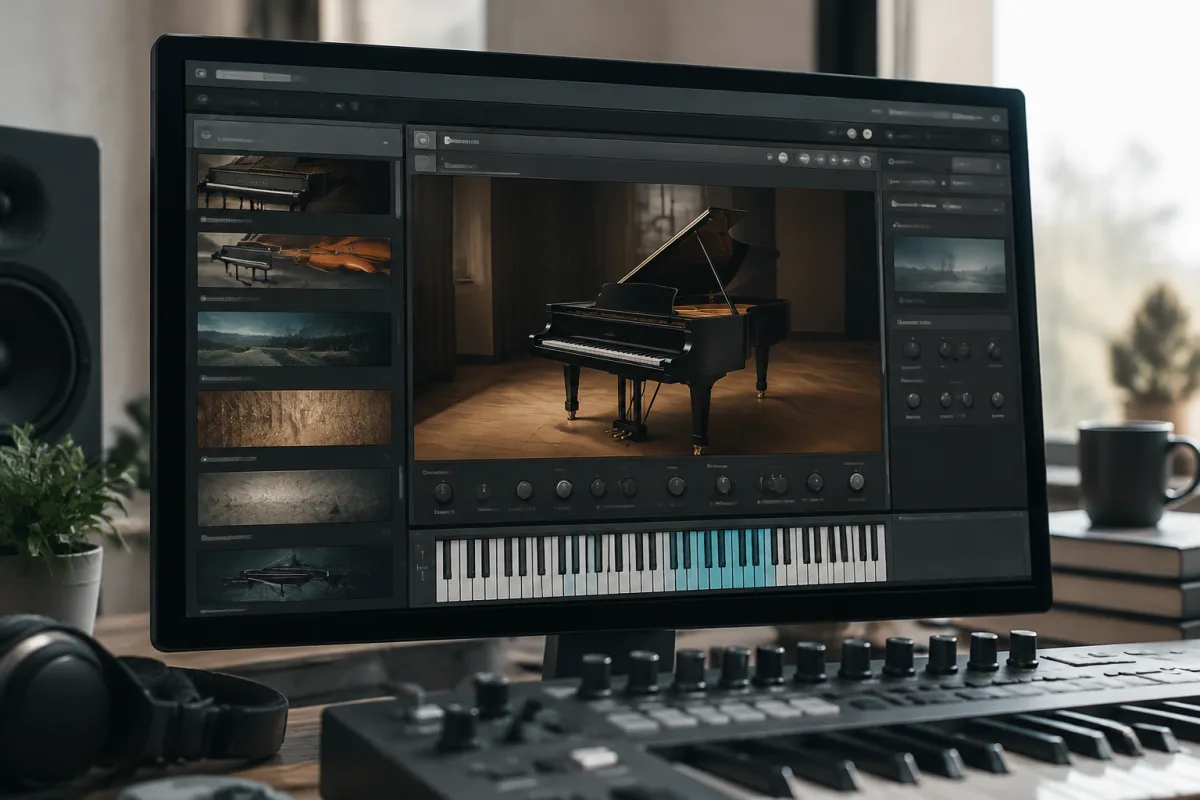
Kontakt libraries are where sampling actually becomes music production. Native Instruments Kontakt is the sampler software, yes—but the libraries are what make it sing. They're the sound packs that transform your DAW from a blank canvas into an instrument playground filled with drums, pianos, strings, brass, percussion, world instruments, effects and everything in between. Serious producers own dozens of libraries. Beginners start with two or three and immediately wonder why they didn't invest sooner. That's because Kontakt libraries deliver instant musicianship: layer a couple of samples, adjust the parameters, and suddenly you've got textures and tones that would take weeks to program from scratch.
What Are Kontakt Libraries?
Kontakt libraries are sound packages created by instrument manufacturers, sample companies, and independent designers. They're compatible with Native Instruments Kontakt (version 5.0 and above, though most favour recent versions). Each library typically focuses on a specific sound world: orchestral instruments, jazz drums, synth pads, ethnic instruments, vocal layers, effects. You load a library into Kontakt, select an instrument within it, and start playing.
The power lies in flexibility. A Kontakt library isn't a rigid loop or a frozen sound file. It's a parametric instrument. You can adjust pitch, timbre, reverb, effects, multiple articulations (a violin can swell, bow, pizzicato, harmonics—each a different library sample), and combine articulations in real time. This is what separates professional Kontakt libraries from basic sound packs.
Understanding Library Architecture
Single Instruments vs. Instrument Banks
Some Kontakt libraries are monolithic: a single focused instrument offering deep articulation depth. Native Instruments Berlin Strings, for example, is one massive violin/viola/cello/bass package. Others are multi-instrument collections: Komplete packages contain hundreds of instruments spanning multiple genres. Neither is inherently better; it depends on your needs.
Articulations and Playability
Professional libraries map different articulations to key switches, velocity ranges, or round-robin alternation. A strings library might have sustain (default), staccato (hold C1), pizzicato (hold C#1), tremolo (hold D1). This lets you switch playing techniques whilst keeping one hand on the melody keys. Beginners sometimes miss this depth; experienced players exploit it completely.
Sampling Rate and Bit Depth
High-quality libraries are recorded at 96kHz or higher, 24-bit depth. This matters for transparency and headroom, especially if you're layering multiple samples. Budget libraries sometimes sit at 44.1kHz, 16-bit. The difference is audible if you're working in professional mixing contexts.
Major Kontakt Library Producers
Native Instruments Komplete
The standard. Komplete is a mega-package containing orchestral, jazz, rock, electronic, world and experimental instruments. Every producer benefits from owning Komplete because it covers every genre competently. None of the individual instruments are absolute best-in-class, but collectively it's an industry standard.
Spitfire Audio
British company specialising in orchestral and cinematic sound. Their libraries (Strings Pro, Woodwinds, Brass Pro, Perc Complete) are incredibly detailed. If orchestral realism is your priority, Spitfire is where serious money goes. Their sampled pianos are legendary.
Best Service
German sample library specialist. Deep sound design focus. Their Hollywood Strings, Orchestral Strings, and percussion libraries are go-to choices for film composers. They emphasise playability and control.
Soundiron
Independent library creator known for ethnic instruments, experimental sounds, and detailed articulation. Their libraries are often more affordable than major companies whilst maintaining serious quality. Brilliant for producers seeking character and uniqueness.
Heavyocity
Cinematic texture and sound design specialists. Their libraries (Thrive, Aura, Opus) focus on evolving soundscapes, drones, and experimental instruments. If you want to move beyond traditional instrument simulation, Heavyocity opens different doors.
Kontakt Library Categories and When to Buy Them
Orchestral Libraries
Strings, woodwinds, brass, percussion—realistic sampled orchestral instruments. Essential if you compose for film, games, or classical arrangements. Quality varies wildly. Professional orchestral libraries cost £500–£3,000 each. Budget options exist (£100–£300) but with limited articulation depth.
Piano and Keyboard Libraries
Sampled pianos, electric pianos, vibraphones, etc. A professional recorded piano library (Spitfire, Native Instruments, Best Service) replaces a real piano in many recording contexts. Costs range from £150–£800 depending on recording quality and articulation depth.
Drums and Percussion
Drum kits, percussion instruments, ethnic percussion, mallets. Kontakt drum libraries offer something real percussion sampling can't: infinite playability without phase issues or sample repetition. Professional libraries cost £200–£600; budget kits start at £50.
World Instruments
Sitar, oud, bouzouki, didgeridoo, hang drum, etc. Kontakt excels at non-Western instruments because sampling captures authenticity whilst providing playable parameters. Libraries typically cost £100–£400.
Sound Design and Experimental
Textures, drones, evolving pads, synth emulations. These libraries are about sonic exploration rather than realism. Costs range £100–£300. They're invaluable for electronic producers, film composers and sound designers seeking character.
Kontakt Library Comparison Table
| Library Type | Typical Price | Best For | Learning Curve |
|---|---|---|---|
| Komplete (comprehensive pack) | £300–£500 | All-purpose production, beginners | Gentle—includes tutorials |
| Spitfire Strings Pro | £400–£800 | Orchestral realism, film | Moderate—complex controls |
| Best Service Hollywood | £600–£1,500 | Professional film scoring | Steep—highly customisable |
| Soundiron ethnic instruments | £100–£300 | World music, experimental | Moderate—well documented |
| Heavyocity sound design | £200–£400 | Cinematic textures, electronic | Moderate—intuitive interface |
Building a Kontakt Library Collection
Stage One: Foundation
Start with Komplete or another all-purpose library. You'll have drums, bass, strings, brass, pianos, synths and effects. This handles 70% of production scenarios. Cost: £300–£500. This alone is enough for serious music-making.
Stage Two: Genre Specialisation
Once you know your style, buy deeper. Jazz producer? Invest in focused jazz drum and piano libraries. Film composer? Add orchestral strings, brass and woodwind libraries. Electronic producer? Grab sound design libraries and synth emulations. Each addition costs £200–£600 but dramatically expands your sonic palette in that direction.
Stage Three: Character and Uniqueness
Add world instruments, experimental textures, or rare libraries like vintage synths or broken field recordings. These separate your sound from others using standard libraries. Costs range £100–£400 per library. This stage is pure creative exploration.
Practical Tips for Kontakt Library Production
Layering Libraries
Kontakt's power multiplies when you layer multiple libraries. Combine a Komplete drum kit with a Spitfire strings pad and a Soundiron ethnic instrument, and you've created something unique to your production. Learn which libraries complement each other sonically.
Using Macro Controls
Professional libraries expose key parameters as "macro knobs"—usually eight controls that let you shape the sound without diving into deep menus. Mastering macros transforms static samples into living, breathing instruments.
Velocity Awareness
Most Kontakt libraries respond to MIDI velocity. Light touch = soft sound; harder touch = aggressive tone. Learning to play with dynamic velocity control makes sampled instruments sing like real ones.
Budget Considerations
Kontakt itself costs £99 (Kontakt Player, limited) or £699 (full Kontakt, unlimited). Libraries range from free (Spitfire has free packs) to £3,000+ (professional orchestral collections). A basic setup (Kontakt + Komplete) runs approximately £400–£600. Adding 2–3 specialised libraries brings you to £1,000–£1,500 total investment. That's expensive compared to looping music, but it's industry standard for serious production.
Making Your Choice
If you're starting, buy Komplete. You'll learn Kontakt's workflow and discover what sounds you actually need. After six months, you'll know whether to invest in orchestral depth, jazz specialisation, world instruments, or sound design. Don't buy randomly; buy toward your actual music.
If you're already producing, audit what you own. Gaps become obvious—maybe you need better drums, or those strings never quite sit right. Targeted library purchases solve real production problems.
Finally, remember that libraries are tools, not shortcuts. A brilliant producer with Komplete outworks a mediocre producer with every Spitfire library. But a brilliant producer with access to great libraries produces faster and better. That's the real win.
Conclusion
Kontakt libraries are where sampling and sound design meet practical music production. Whether you're composing orchestral scores, making electronic music, scoring films, or simply expanding your sonic palette, the right Kontakt libraries transform your production capability. Start with a foundation library like Komplete, learn the workflow deeply, and expand toward your specific creative needs. That disciplined approach builds a library collection that genuinely serves your music.



Comments