


Music Production App Buying guide
Music Production App: A Complete Buyer's Guide
A music production app brings your studio into your pocket. This buying guide covers app types, price tiers, key features, and how to choose based on your music production goals.
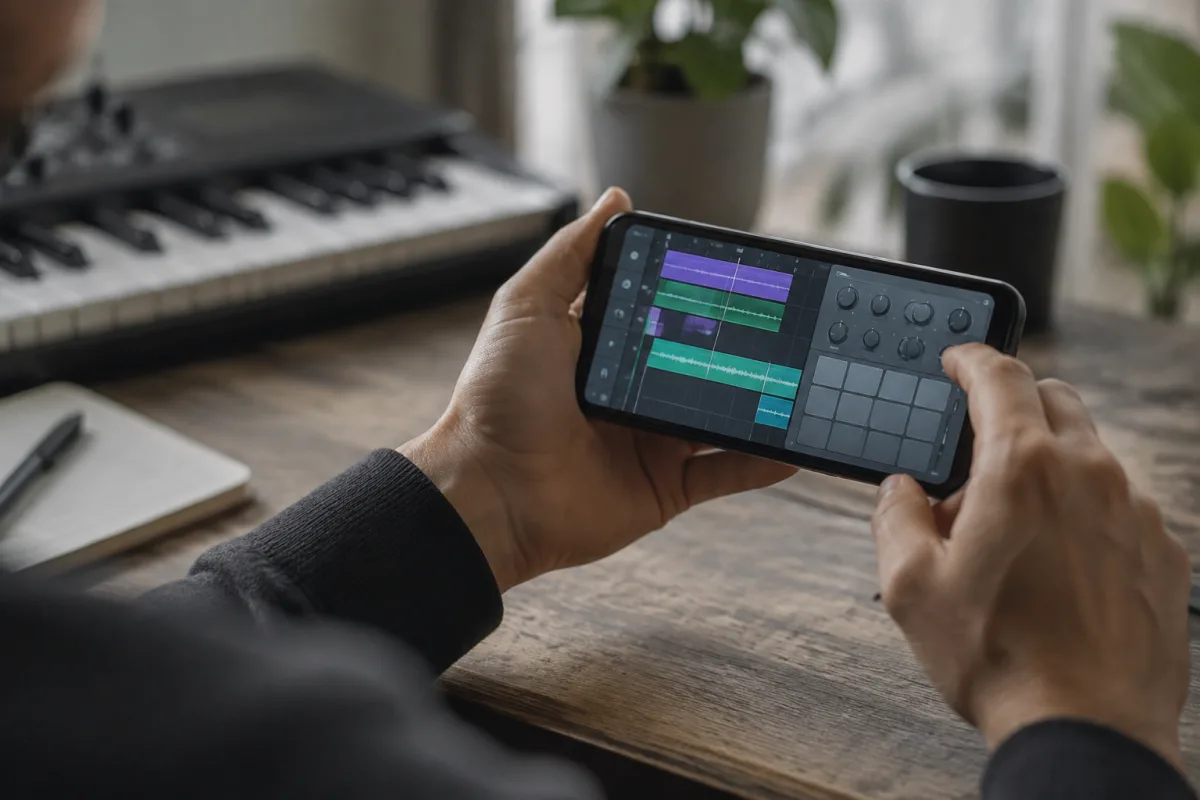
If you've considered making music but assumed you needed expensive desktop software or a full studio setup, think again. A music production app on your phone or tablet can be remarkably capable and surprisingly affordable. But which app should you choose? The options range from free, stripped-down apps to paid, feature-rich digital audio workstations. This buying guide cuts through the options and helps you find the right music production app for your needs, budget, and ambitions.
What a Music Production App Does
A music production app is software that lets you create, record, edit, and arrange music on a mobile device. Some apps are simple beat makers and loop players; others are full digital audio workstations (DAWs) rivalling desktop software. The appeal is obvious: your music studio fits in your pocket, ready to use anytime inspiration strikes.
Types of Music Production Apps
Music production apps fall into several categories:
- Beat makers: Simplified software focused on rhythm and loop composition. Ideal for beginners or hip-hop producers. Examples include easy drag-and-drop interfaces. Low learning curve; quick results.
- Sequence-based apps: Apps built around step sequencers or piano rolls for creating melodies and recording notes. Great for electronic music, synth work, and arrangements.
- Full DAWs: Mobile versions of professional desktop software (Ableton Live, FL Studio, etc.). Capable of recording live instruments, editing audio, mixing, and mastering. More complex but professionally powerful.
- Loop-based apps: GarageBand, BeatMaker Pro, and similar tools that focus on arranging loops and samples. Simple but creatively limiting.
- Pocket-sized synthesizers: Apps like iKaossilator, Animoog, or Moog Model D that focus on sound synthesis rather than composition. Ideal for sound design and experimentation.
Key Specs and Features to Consider
When evaluating a music production app, focus on:
- Audio recording capability: Can you record live voice or instruments? This is essential for singers and acoustic musicians. Beat makers can skip this.
- Track count: How many simultaneous tracks can the app handle? Beginners need 8–16 tracks; more is better if you plan complex arrangements.
- Virtual instruments included: Does the app come with synths, drums, and samples? Or do you need to buy them separately? Included sounds are valuable for budget-conscious users.
- Mixing capabilities: Are there faders, EQ, effects, and automation? Basic mixing is essential; advanced tools like sidechain filtering are bonuses.
- Export quality: Can you export as high-quality audio (WAV, 24-bit)? Or only MP3? Professional export matters if you plan to release music.
- Compatibility: iOS only? Android? Both? Multi-platform is more flexible, though iOS dominates music production apps.
- Learning resources: Are tutorials, documentation, or community forums available? This matters if you're learning from scratch.
- Update frequency and support: Does the developer actively update the app? Abandoned software becomes incompatible over time.
Price Tiers for Music Production Apps
Music production apps span the entire price spectrum:
- Free apps: GarageBand (iOS only), Soundtrap, BandLab, and many others offer surprising functionality at no cost. Perfect for tinkering and learning. Limitations vary—some are quite capable, others are toys.
- Budget paid apps (£3–15): Affordable entry points with real features. BeatMaker Pro, FL Studio Mobile, n-Track Studio. Good value for casual producers.
- Mid-range (£15–50): Professional-grade apps with serious production tools. Ableton Live, Korg Gadget, Cubasis 3. Worth the investment if you plan to produce regularly.
- Premium apps (£50–100): Full desktop DAWs ported to mobile (Logic Pro for iPad). Overkill for most hobbyists; justified if you work seriously on the go.
Best Music Production Apps by Use Case
| Your Goal | Best Music Production App | Price | Why It Fits |
|---|---|---|---|
| Learning music production | GarageBand (iOS) or BandLab | Free | Intuitive, no barrier to entry, includes sounds |
| Beat-making and hip-hop | BeatMaker Pro or FL Studio Mobile | £10–35 | Focused interface, excellent drum tools, samples included |
| Serious mobile production | Ableton Live or Korg Gadget | £35–60 | Professional workflow, full mixing, compatible with desktop |
| Recording live instruments | Cubasis 3 or n-Track Studio | £15–40 | Multitrack recording, editing, mixing included |
| Sound design and synthesis | iKaossilator or Animoog | £5–15 | Deep synthesis engines, designed for experimentation |
Common Pitfalls When Choosing a Music Production App
Avoid these mistakes:
- Assuming free = worthless: Many free music production apps are genuinely capable. GarageBand and BandLab offer real functionality. Don't dismiss free options out of hand.
- Buying the most expensive app for beginners: A £100 app won't teach you faster or make you more creative. Start cheap or free, then upgrade as you improve.
- Ignoring platform compatibility: If you use Android, iOS-only apps are useless. Check availability before committing.
- Expecting desktop-quality results on mobile: Mobile apps are powerful but have limits (screen size, processing power, touch interface). Desktop software remains superior for complex projects.
- Choosing isolated apps over ecosystems: Apps that integrate with desktop (Ableton, FL Studio) offer better workflows if you plan to use both. Isolated mobile-only apps limit flexibility.
- Not checking user reviews for bugs or crashes: A beautiful app that crashes constantly is worse than a plain but stable one. Read reviews carefully.
- Assuming all sounds are included: Some apps require expensive add-ons or sample packs. Budget-conscious producers should choose apps with generous included content.
- Skipping the trial or free version: Most quality apps offer free trials or lite versions. Test before buying; what works for others may not suit your workflow.
Getting Started: Your First Music Production App
Here's a simple path forward:
- Start free: Download GarageBand (iOS), BandLab, or Soundtrap. Spend a week familiarising yourself with basic concepts: tracks, tempo, arrangement, and mixing.
- Identify your needs: After using a free app, you'll know what matters. Do you want beat-making? Recording? Synthesis? Mixing? This clarity guides your next choice.
- Watch tutorials: YouTube has excellent walkthroughs for popular apps. A 10-minute overview often saves hours of frustration.
- Try a paid option: Once you're confident you'll use it, invest £15–40 in a dedicated app matching your goal. The paid tools often reward invested time with better workflows and deeper features.
- Be patient:**Don't expect instant mastery. Each music production app has a learning curve. Commit to learning one app deeply rather than bouncing between many.
The Transition to Desktop
Many producers start on mobile and eventually move to desktop for complex projects. A music production app is an excellent launching pad, not a permanent limitation. If you fall in love with music production, upgrading to a desktop DAW and proper studio gear is the natural next step. But first, discover whether you even enjoy making music—a £5 app is a lower-risk introduction than a £300+ DAW and studio setup.
For comprehensive reviews of specific music production apps, in-depth comparisons, and advanced production techniques on mobile, explore our complete music production app guide.
Bottom Line
A quality music production app costs little and teaches you enormous amounts. Start with a free app to learn the basics, then invest £15–50 in an app matching your production goals. The mobile music production landscape is richer and more capable than ever. Your first song might be only an app download away.


Comments