


Luna DAW Buying guide
Luna Daw: A Complete Buyer's Guide
Luna DAW is Amazon's cloud-based answer to professional music production. Buying it means understanding what you're getting: a service that breaks the traditional desktop DAW model entirely.
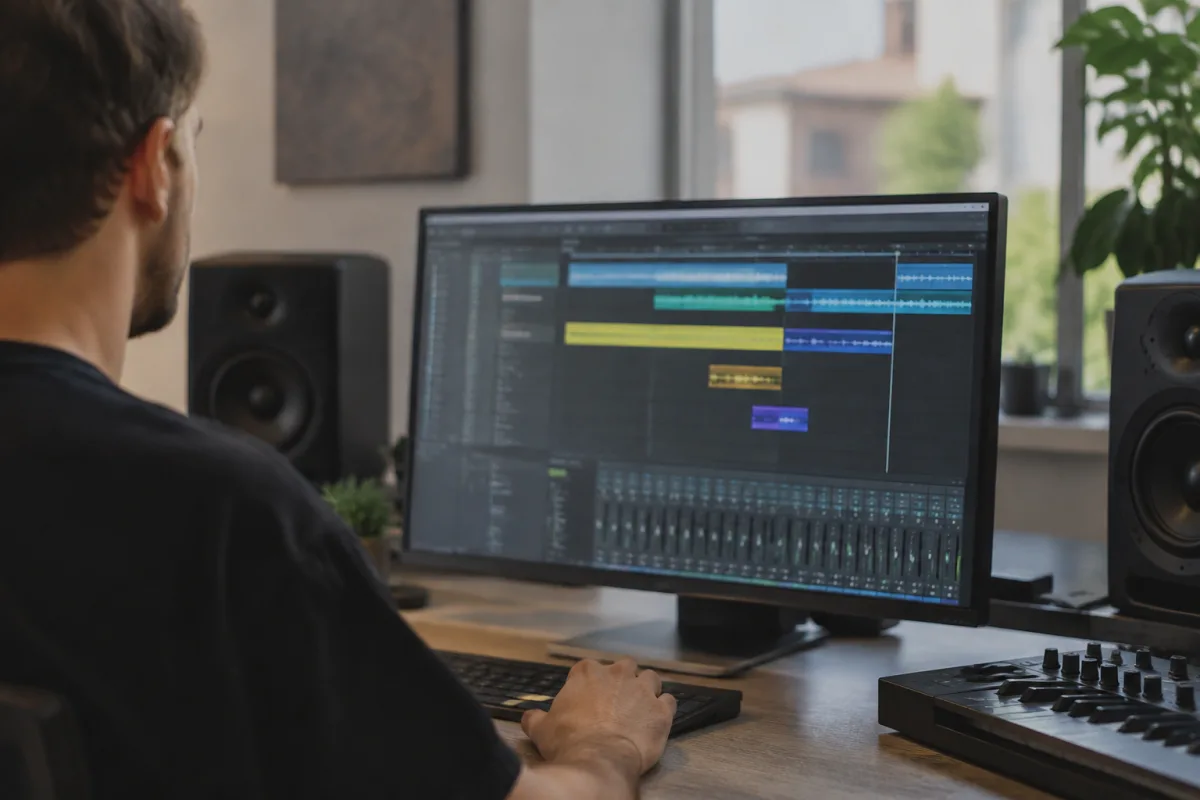
Luna DAW is Amazon's answer to professional music production. Buying it means understanding what you're actually getting: a cloud-based studio that breaks the traditional desktop model entirely. This buying guide shows you whether it fits your workflow.
What this service actually is
Luna DAW is a cloud-based digital audio workstation that runs in your web browser and on iPad. It's not like Logic or Ableton. You don't install it on your computer. You log into Amazon's servers, and your studio is there, anywhere, on any device. That changes everything about how you work.
The promise is powerful: start a song on your iPad on the train, open it on your desktop at home, work on it on your laptop at a friend's studio. All synced instantly. All your plugins, samples, and settings follow you.
Pricing and what's included
The subscription starts around £14 per month. Plugins are extra. Komplete integration (Native Instruments sounds) is extra. Uaudio collaboration is extra. So a realistic monthly cost is £40-60 if you want a full production suite.
Compare to Logic (one-time £200), Ableton Live (one-time £600), or FL Studio (one-time £200). This subscription model means you're renting, not owning. After two years, you've paid £960. After four years, £1920. The math changes the calculation significantly.
The hardware requirement
It runs in your browser and on iPad. On desktop, you need Luna's interface hardware (£300+) for any real latency performance. Without it, you're fighting network lag that makes real-time playing impossible.
That £300 is a significant barrier. You can't just subscribe and use it. You need the hardware to make it work properly. That's not disclosed clearly enough in marketing.
Internet dependency and reliability
This is the elephant in the room. The service needs good internet. Not just "good enough for video streaming" but genuinely stable, high-speed internet. A dropped connection mid-session doesn't just pause your work; it's a genuine problem.
If your internet cuts out or degrades, your session is at risk. If you're on someone else's WiFi at their studio, you're vulnerable to their network. Many producers can't rely on internet stability, and for them, this approach isn't viable no matter how good it is otherwise.
The collaborative advantage
This is the actual killer feature. Multiple people can work on the same project simultaneously, hearing the mix in real-time, contributing ideas. A band can work together from different countries. A producer and engineer can both touch the mix instantly.
If collaboration is central to your workflow, the advantages are real. Traditional DAWs make collaboration clumsy. This makes it seamless. But if you work solo, this advantage vanishes.
Plugin availability and compatibility
The service uses cloud-based plugins, not standard VST. That's both good and bad. Good: compatibility is guaranteed. Bad: not every plugin you own will work. Waves, iZotope, Fabfilter—some exist as Luna versions, some don't. Before buying, check whether the plugins you rely on are available.
Audio interface integration
It integrates with quality audio interfaces, but you need the hardware first. Then you can connect your Apollos, RMEs, Focusrites through this ecosystem. Latency is reasonable once configured, but it's never as direct as using a desktop DAW with USB or Thunderbolt audio interface.
Learning curve and interface design
The interface is modern and clean, borrowing ideas from Ableton's Session View. If you know Ableton, Logic, or Pro Tools, it feels familiar enough to learn quickly. If you're a complete beginner, it's intuitive. The learning curve is shallower than most desktop DAWs.
Who should buy Luna DAW
Buy Luna DAW if: you collaborate frequently with remote musicians, you need to work across multiple devices and locations seamlessly, you have rock-solid internet, you don't rely heavily on third-party VST plugins. It's genuinely good for these use cases.
Don't buy if: you work solo, you need maximum plugin choice, your internet is unreliable, you want to own your software permanently, you're budget-conscious (subscription adds up).
Comparison to alternatives
Ableton Live is cheaper up front (£600) but doesn't offer cloud collaboration. Logic Pro (£200) is more feature-complete for mixing. Pro Tools subscription (£70/month) offers similar cloud features but stronger industry integration. Reaper (£60) is endlessly powerful and cheap. Each serves different purposes.
The subscription trap
Monthly subscriptions are seductive because the entry price is low. But they compound. Many musicians end up paying monthly for five different services: DAW, sounds, plugins, cloud storage, VST library. Subscriptions add to that stack. Budget consciously.
Free trial and testing
Amazon offers a free trial period. Use it genuinely. Work on a full song, not just poking around. Invite a collaborator and actually work together. Check internet latency and stability. Only after that test can you decide if it fits your workflow.
The future
Amazon is committed for now, but cloud services can change. Pricing can increase. Features can disappear. Buying a perpetual license to Logic is buying something permanent. Subscribing is renting something temporary. That risk profile is different.
For more context on this platform's features and comparisons to other production tools, check out our detailed guide to Luna DAW and how it compares.
Conclusion
Luna DAW is genuinely innovative for collaboration and cross-device work, but it's not the future for everyone. It's a specialised tool for remote collaboration and cloud-based workflow. If that's you, buy it and enjoy the advantage. If you work solo, need plugin choice, or worry about internet reliability, stick with traditional DAWs. It solves real problems but creates others.



Comments