


Beat Maker App article
The Ultimate Guide to Beat Makers App
Beat maker apps bring professional music production capability to your phone. Learn which beat maker app suits your goals, from casual experimentation to serious production.
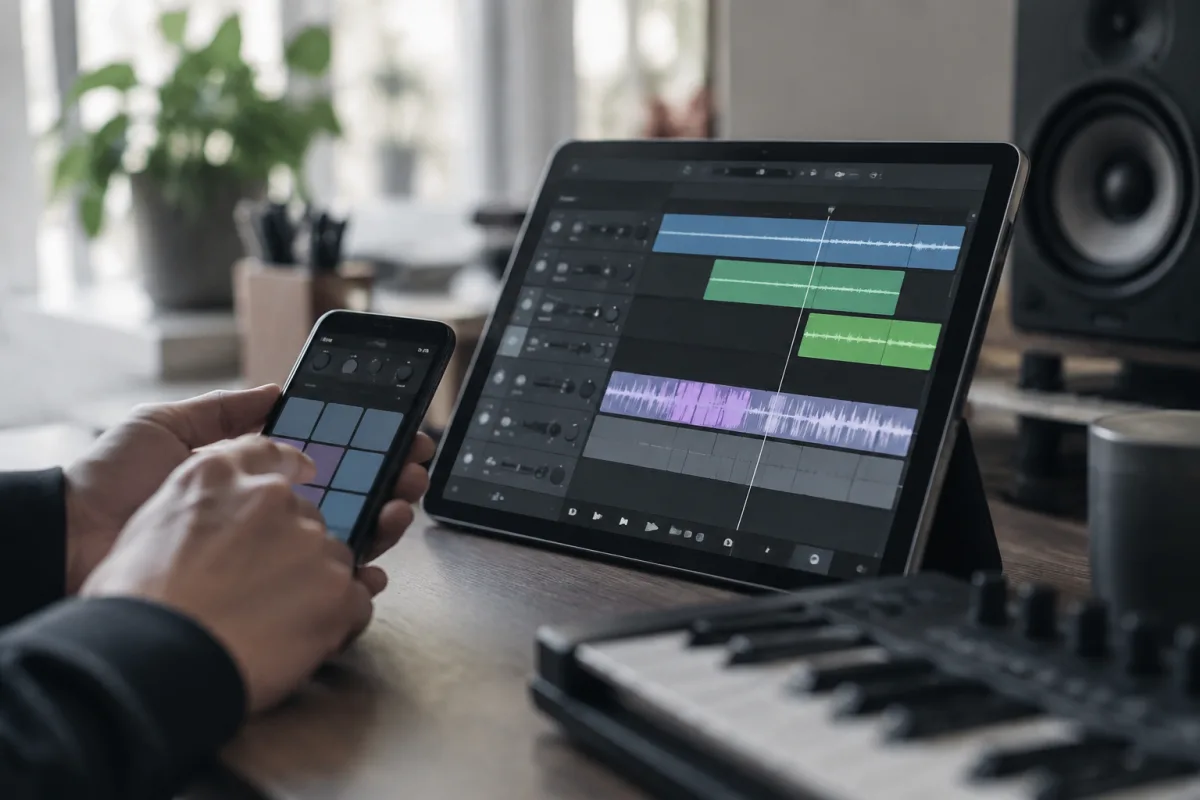
Beat maker applications have democratised music production. Decades ago, creating beats required expensive hardware—drum machines, synthesisers, samplers—and specialist knowledge. Today, a beat maker app on your phone or tablet offers genuine production capability. Whether you're experimenting with rhythm, exploring hip-hop production, or building full tracks, choosing the right beat maker app matters.
What Beat Maker Apps Actually Do
A beat maker app is a digital audio workstation simplified for rhythm-focused production. Instead of a full production suite, a beat maker app specialises in pattern sequencing, drum programming, and sample triggering. You arrange loops, layer sounds, and build rhythm structures. Some beat maker apps include basic synthesis and effects; others focus purely on sequencing and sample playback.
The advantage over full DAWs (Digital Audio Workstations) is simplicity and portability. You don't need a computer, audio interface, and dozens of cables. A beat maker app runs on a tablet or phone. This accessibility has made music-making far more approachable for beginners.
Core Features Across Beat Maker Apps
Pattern sequencers are universal. A beat maker app displays a grid where each square represents a timing step. Tap to activate steps, and the app plays the sound at that moment. Variation comes in grid resolution: some beat maker apps use 16-step patterns (classic four-on-the-floor rhythm), whilst others offer 32 or 64 steps for complex polyrhythmic arrangements.
Sound libraries vary significantly. Budget or free beat maker apps offer perhaps 50-100 drum sounds and loops. More comprehensive options provide thousands of professionally recorded drums, bass loops, synth samples, and melodic hits. Sample quality distinguishes professional beat maker apps from novelty toys. Premium samples sound clean and punchy; cheap samples sound thin and muddy.
Effects like reverb, delay, and compression appear in mid-range beat maker apps. These effects shape sound and create depth. Entry-level beat maker apps sometimes omit effects entirely, limiting creative possibilities.
Beat Maker Apps for Beginners
Drum Pad Machine and similar apps appeal to absolute beginners. They trade sophistication for simplicity: tap pads to trigger sounds, arrange patterns visually. Learning curve is minimal; creative ceiling is moderate. These beat maker apps work as introductions—you learn whether you enjoy music-making before investing in more complex tools.
Beginner-focused beat maker apps typically cost £2-10 or free with limited samples. This low cost makes experimentation risk-free. Even if you abandon music production, you've invested little.
Intermediate Beat Maker Apps
FL Studio Mobile and GarageBand (on iOS) represent the intermediate tier. These beat maker apps offer genuine production capability: multi-track sequencing, flexible pattern arrangements, synthesis basics, and effects. You can build complete tracks without additional software.
FL Studio Mobile provides the interface most similar to full FL Studio (a professional DAW). If you're learning on FL Studio Mobile and progress to desktop FL Studio, your knowledge transfers directly. This beat maker app emphasises workflow and professional features despite running on mobile.
GarageBand, included free on every iOS device, offers surprising capability. Drum kits sound professional, synths respond musically, and arrangement tools enable building complete songs. GarageBand is often overlooked but is genuinely one of the best beat maker apps available at any price.
Intermediate beat maker apps cost £5-15 or are free. Even paid options are inexpensive relative to desktop production software.
Advanced Beat Maker Apps
Steinberg Cubase Artist, BeatMaker 3, and similar professional-grade beat maker apps offer studio-quality production. These aren't simplified DAWs—they're genuinely powerful production environments optimised for tablets. You get multi-track sequencing, advanced synthesis, professional effects chains, and audio recording.
Advanced beat maker apps typically cost £20-50, comparable to desktop software subscriptions. They're genuinely investment-level tools, not toys.
Choosing the Right Beat Maker App
Consider your goals. Casual experimentation? A free beat maker app suffices. Serious music-making? Invest in a beat maker app with quality samples, effects, and flexible sequencing. Intending to expand to desktop production? Choose a beat maker app that mirrors professional software so your learning transfer directly.
Sample libraries matter significantly. Audition the included sounds before purchasing a beat maker app. Premium samples feel professional; cheap samples feel tinny. This subjective perception directly affects how motivating production becomes.
Workflow considerations: does the interface match your thinking style? Some beat maker apps use piano-roll sequencing; others use grid patterns; some emphasise touch performance. Trial versions and free tier options let you test before committing financially.
Beat Maker Apps for Different Genres
Hip-hop producers typically gravitate toward beat maker apps with high-quality drum samples, chopped-loop sequencing, and swing controls (the human feel that makes rhythms breathe). FL Studio Mobile excels here, but so do genre-specific beat maker apps like Pacemaker.
Electronic musicians benefit from beat maker apps with synthesis depth. Synth design possibilities matter more than drum samples. Apps like Impaktor offer modular synthesis approaches within a beat maker app interface.
Producers exploring multiple genres need flexibility: versatile drum sounds, synthesis capability, and effects. General-purpose beat maker apps serve them better than genre-specific alternatives.
Integration with Desktop Production
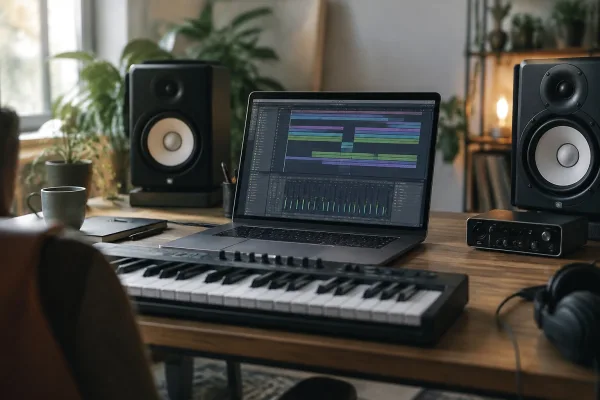
Some beat maker apps export MIDI files, letting you build patterns on your phone and refine them in desktop DAWs. This hybrid workflow is powerful: mobile experimentation feeds desktop production. Check whether a beat maker app supports this workflow if you maintain a desktop setup.
Compatibility with specific desktop software matters. If you use Ableton Live on desktop, a beat maker app that exports in Live's native format streamlines workflow. If you produce in Logic Pro, GarageBand integration is immediate and seamless.
Limitations and Realistic Expectations
Beat maker apps remain limited compared to full desktop DAWs. CPU power, screen size, and interface constraints create boundaries. You won't mix an album on a beat maker app; you'll create beats and patterns, then refine in desktop software.
Audio recording is sometimes limited. Some beat maker apps record drums and effects but don't offer traditional multitrack audio recording like desktop DAWs. This limitation matters less for beat-focused production but becomes problematic if you want to record vocals or live instruments.
A beat maker app is a creative tool optimised for specific tasks, not a universal production environment. Realistic expectations—understanding what each beat maker app excels at—prevent disappointment.
Cost Comparison and Value
Free beat maker apps offer genuine value but often include ads or limited samples. Paid beat maker apps (£5-50) eliminate ads and expand sound libraries. Compared to desktop DAW subscriptions (£10-100 monthly), beat maker apps offer superior value for focused beat production.
Many producers use a free beat maker app supplemented by free desktop DAW (like Reaper's 60-day trial that extends indefinitely, or entirely free options). This hybrid approach offers professional capability without subscription costs.
Final Thoughts on Beat Maker Apps
Beat maker apps have become genuinely powerful creative tools. They're accessible enough for curious beginners yet capable enough for serious music-makers. Whether you're exploring rhythm, producing hip-hop, or experimenting with electronic music, a beat maker app offers entry without gatekeeping costs. Start free or cheap, experiment, and upgrade if the creative process engages you. Many successful producers started exactly this way—with a simple beat maker app and curiosity about music-making.



Comments