


Disco Music article
The History of Disco Music
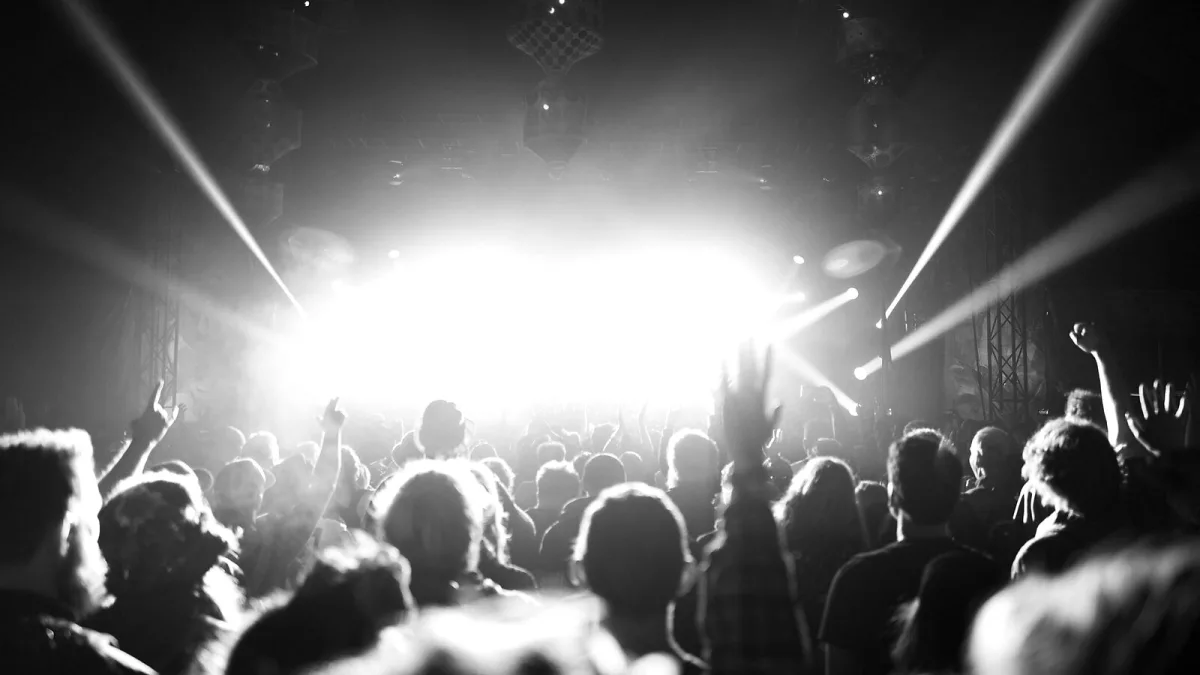
Understanding disco history means grasping how Black, Latino and LGBTQ+ communities built one of pop's most powerful sounds from the ground up. Starting in the early 1970s New York and Philadelphia nightclubs and reaching global dominance by the mid-to-late 1970s, the genre didn't follow the usual pop trajectory—it wasn't imposed by radio or invented in some corporate boardroom. Disco history shows us that it grew from the dance floor, was refined by the people who lived it, and became so culturally significant that its collapse and resurgence tell us plenty about America's musical shifts.
The Origins in Nightclub Culture
Before disco history really got going, there was just the dance floor. In the late 1960s and early 1970s, New York's underground nightclubs hosted DJs who played soul, funk and R&B, but they did something radical—they edited records, extended them, layered in live vocals and turned commercial singles into vehicles for dancing that could last ten, fifteen or twenty minutes. These weren't concert recordings. These were club tools that shaped what disco history would become.
Clubs like the Loft, the Paradise Garage and the Gallery became laboratories. DJs like David Mancuso, Larry Levan and Nicky Siano weren't just spinning records—they were remixing, re-editing and creating the extended formats that would define the entire genre. Philadelphia was developing its own approach simultaneously, with studio musicians and producers building orchestrated, arrangement-heavy productions that became the other pole of this musical development.
Philadelphia International and the Orchestra Sound
By the early 1970s, Philadelphia International Records had become central to disco's sound. Studio musicians including drummer Earl Young, alongside the collective known as MFSB (Mother Father Sister Brother), developed a disciplined, orchestral approach that treated every element—strings, horns, bass, drums, percussion—as a precision instrument. This approach defined one major strand of disco history and musicianship.
Producers like Thom Bell and Kenny Gamble created records with real string sections, horn sections and sophisticated harmonic architecture. The rhythm section was locked tight. The arrangements weren't accidental—they were composed, rehearsed and recorded with the same care a film composer might give to an orchestral score. This Philadelphia sound gave dance music legitimacy beyond the club and shaped how disco would be perceived in mainstream culture.
Donna Summer and the Crossover Moment
In 1975, Donna Summer's "Love to Love You Baby," produced by Giorgio Moroder and Pete Bellotte, arrived like a bolt of lightning. That track—sensual, electronic, hypnotic—proved that this sound could reach beyond clubs into mainstream radio and sales charts. Summer's voice, layered and intimate, gave the genre a face that mainstream audiences could connect with. This moment marks a crucial turning point in disco history when underground culture went stratospheric.
What made Summer crucial wasn't just her talent—it was that she showed pop audiences that dance music had emotional depth. The genre wasn't shallow or one-dimensional. Summer could deliver vulnerability and strength simultaneously, and that human element made the groove matter more to disco history as it evolved.
The Bee Gees and Saturday Night Fever
If Donna Summer opened the mainstream door, the Bee Gees kicked it off its hinges. The Australian-British trio had been pop fixtures since the 1960s, but their work on the "Saturday Night Fever" soundtrack in 1977 became the pivot point in disco history when underground club culture went global. "Stayin' Alive," "Night Fever," "How Deep Is Your Love"—these records weren't just dance music; they were the genre perfected, recorded at a level of production that made them impossible to ignore.
The film itself, released alongside the soundtrack, gave the music a narrative and a cultural moment. Tony Manero—John Travolta's working-class character escaping into the club on weekends—became the symbolic centre of the culture for mainstream America. That single year transformed disco history in ways nothing else could have, turning it from underground phenomenon to global pop dominance.
Studio 54 and Peak Visibility
In 1977, Studio 54 opened in New York, and the nightclub became shorthand for the genre's mainstream victory. The velvet-rope exclusivity, the celebrities, the opulent setting—Studio 54 was the music made spectacle. It was where TV executives rubbed shoulders with drag performers, where old money and underground culture collided on the same dance floor. It wasn't the only major venue, but it became the symbol because it was visible and impossible to ignore.
By 1978 and early 1979, the sound was everywhere. Radio formats shifted to accommodate it. Films featured it. Television shows integrated dance sequences. Fashion, marketing, advertising—every cultural product seemed touched by the music. This was the commercial peak, the moment when underground culture and mainstream pop became inseparable.
The Backlash and Disco Demolition
The resistance to the music's dominance had been building quietly. In 1979, it erupted publicly at Disco Demolition Night, held at Chicago's Comiskey Park on 12 July. Radio personality Steve Dahl invited fans to bring records to be exploded on the field. Thousands showed up. The imagery—records burning, crowds cheering—became the symbolic end point of the genre's mainstream era in popular imagination.
What cultural critics often fail to adequately explain is that the backlash wasn't purely musical. Hostility toward the sound was tangled up with hostility toward the Black, Latino and queer communities that had created it. Understanding this era means understanding that the decline wasn't just taste shifting—it was tied to questions of whose culture got celebrated and whose got dismissed.
Post-Disco and the Continuing Influence
After 1979, the story doesn't end—it transforms. DJs and producers didn't abandon the sound; they evolved it. Post-disco, garage, Hi-NRG and the emerging house music scene of Chicago all drew directly from the genre's foundations. Larry Levan at Paradise Garage developed garage music by pushing the sound deeper, stretching it further, making it more hypnotic and raw.
Chicago house music in the mid-1980s inherited the four-on-the-floor beat, extended instrumental sections and DJ-oriented remix culture. Producers like Frankie Knuckles built entire careers on these foundations. Contemporary electronic dance music, nu-disco and modern pop production all trace lineage back to this era.
Conclusion
Disco history shows us how real communities created something that served real needs and changed pop forever. It went from underground to mainstream to backlash to lasting influence in just over a decade—a trajectory no other major genre has matched. Whether you see this era as a glorious peak or as a complicated chapter in pop's story, the impact is undeniable. Every four-on-the-floor beat in contemporary electronic music, every string-heavy pop production, every DJ remix—they're still unfolding this legacy.






Comments