


Pitch Fork Pedal article
Pitch Fork Pedal for Beginners: A Complete Guide
A pitch fork pedal might seem intimidating at first, but it's actually one of the most straightforward effects you can add to your rig. This beginner-friendly guide walks you through everything you need to know.
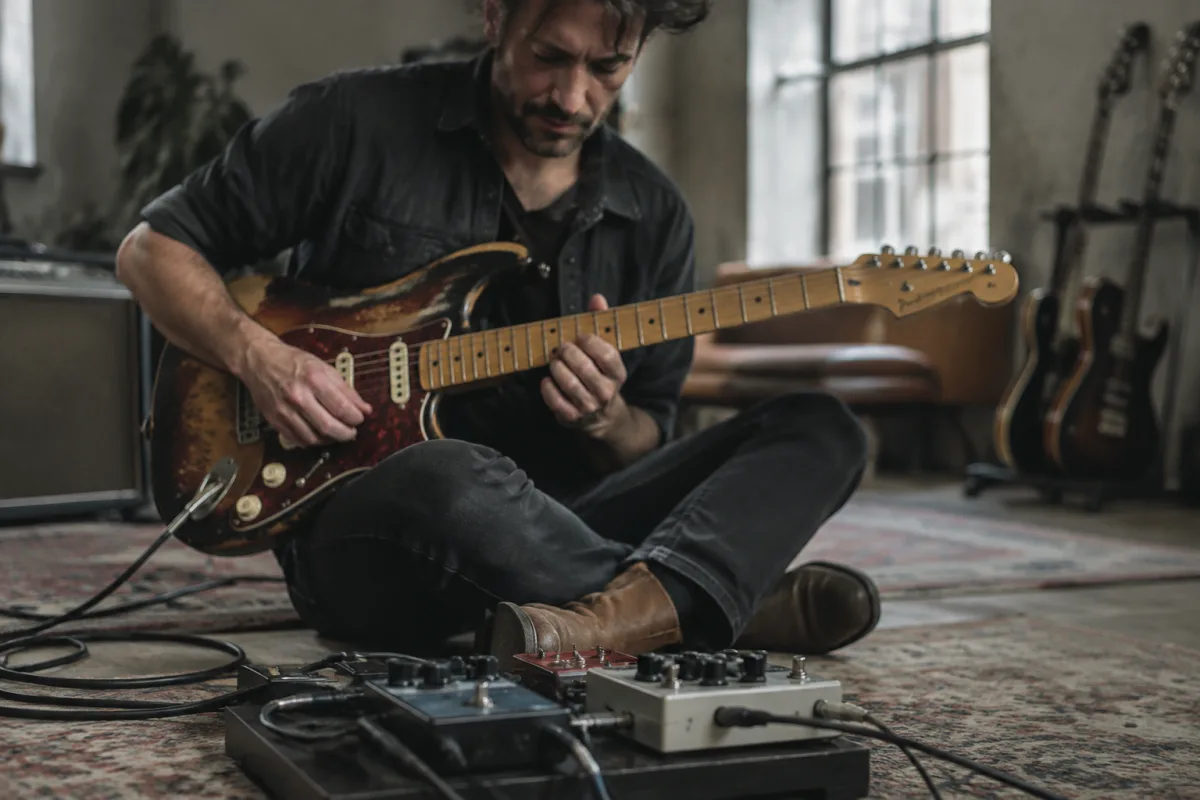
A pitch fork pedal might seem intimidating at first, but it's actually one of the most straightforward effects you can add to your rig. Whether you're a guitarist or bassist picking up your first effects pedal, this guide will walk you through everything you need to know to get started confidently.
What a Pitch Fork Pedal Actually Does
At its heart, a pitch fork pedal generates a harmonic note that plays alongside your original tone. Think of it as a digital harmoniser that plays in tune with whatever you play. Some pitch fork pedals let you select the interval (a fifth, a fourth, an octave) whilst others lock to a specific pitch. For beginners, this simplicity is wonderful—there's less to overthink, and you'll hear results immediately.
The beauty of starting with a pitch fork pedal is that you don't need to understand music theory to make it sound good. Simply plug it in, turn it on, and play a note. A harmonic accompaniment rings out alongside you, instantly thickening your tone or creating atmospheric textures.
Why Beginners Love Pitch Fork Pedals
Pitch fork pedals offer three things that make them perfect for first-time effects users:
- Instant gratification: You hear the effect working straight away, which builds confidence.
- Musical safety: The pedal stays in tune with your playing, so there's no risk of creating dissonant, jarring sounds.
- Versatility: Use it for lush harmonies, ambient drones, or dramatic solos—one pedal, countless textures.
Many beginners worry that effects pedals are complicated. Pitch fork pedals prove that wrong. They're designed to work intuitively from day one.
Getting Started: Your First Setup
Here's the straightforward process for connecting and using your first pitch fork pedal:
- Connect it correctly: Plug your instrument into the pedal's input, and the pedal's output into your amplifier. Power it with batteries or an adapter (check the manual for polarity).
- Start with default settings: Most pitch fork pedals ship with sensible factory presets. Engage the footswitch and start playing. Don't fiddle with knobs yet.
- Play a single note: Hold down one clear note on your instrument. Listen to how the harmonic sits alongside your original tone. This is your baseline sound.
- Experiment with intervals: If your pedal has selectable intervals, try switching between them (octaves, fifths, fourths). Hear how each one changes the texture.
- Turn off and compare: Toggle the pedal off and on. Notice the difference. This trains your ear to appreciate what the effect is adding.
After five minutes of this, you'll feel comfortable with the basics. Seriously—it's that quick.
Common Beginner Mistakes to Avoid
Learning from others' missteps will save you frustration:
- Drowning the original signal: Beginners often crank the mix level so high that their original tone disappears. Start with a 50/50 blend of original and harmonic. You can always adjust.
- Using it on every note: The effect is most musical when used tastefully. Try it on lead lines and solos, not constantly on rhythm parts.
- Ignoring latency: Some pitch fork pedals have a slight delay before the harmonic appears. This is normal. Understand your pedal's response so you're not surprised mid-performance.
- Forgetting to check tuning: A pitch fork pedal only sounds good when your instrument is in tune. Before your first session, ensure your guitar or bass is properly tuned.
- Not reading the manual: Ten minutes with the manual reveals where hidden features are. Features that seem mysteriously absent are usually just waiting in a menu.
Tips for the Nervous First-Timer
If you're feeling a bit uneasy about adding effects to your sound, here's what will calm your nerves:
You cannot break it: Pitch fork pedals are robust devices made to withstand performance pressure. Experimentation is safe. Try every control without fear.
Start at low volumes: Practice with your amplifier at a modest level whilst you adjust settings. This gives you headroom to learn without overwhelming yourself or others.
Trust your ears: If something sounds odd, it's usually too much effect or the wrong blend. Trust your instinct and dial it back. There's no "wrong" setting, only ones you like more and less.
Watch others: Spend ten minutes watching YouTube videos of pitch fork pedals in action. Hearing professional players use them confidently will inspire you and show you the range of possibilities.
Next Steps After the First Session
Once you're comfortable with the basics, you can deepen your skills gradually:
- Learn how different intervals sit in different musical contexts (solos, harmonies, ambient passages).
- Experiment with your pedal's expression pedal input, if it has one, to sweep the pitch smoothly.
- Combine it with other effects if you have them. A pitch fork pedal pairs beautifully with reverb or delay.
- Explore ambient and experimental playing. Pitch fork pedals shine in textural, atmospheric music.
For a deeper dive into how pitch fork pedals fit into the broader world of guitar and bass effects, check out our complete guide to pitch fork pedals. It covers history, comparisons, and advanced techniques.
The Bottom Line for Beginners
A pitch fork pedal is a gift for nervous beginners because it delivers immediate musical results without steep learning curves. The effect is intuitive, your mistakes are recoverable, and the sound is genuinely useful across many playing styles. Within five minutes, you'll feel confident. Within a session, you'll sound great. That's a confidence boost you'll carry forward as you explore other effects and grow as a musician.
Stop overthinking it. Plug it in, turn it on, and play. Your first pitch fork pedal moment is waiting to happen.


Comments