


Guitar Fretboard Cleaner article
Guitar Fretboard Cleaner for Beginners: A Complete Guide
Keeping your fretboard clean improves playability and tone. This beginner's guide covers which guitar fretboard cleaners work best, how to clean safely, and why regular maintenance matters.
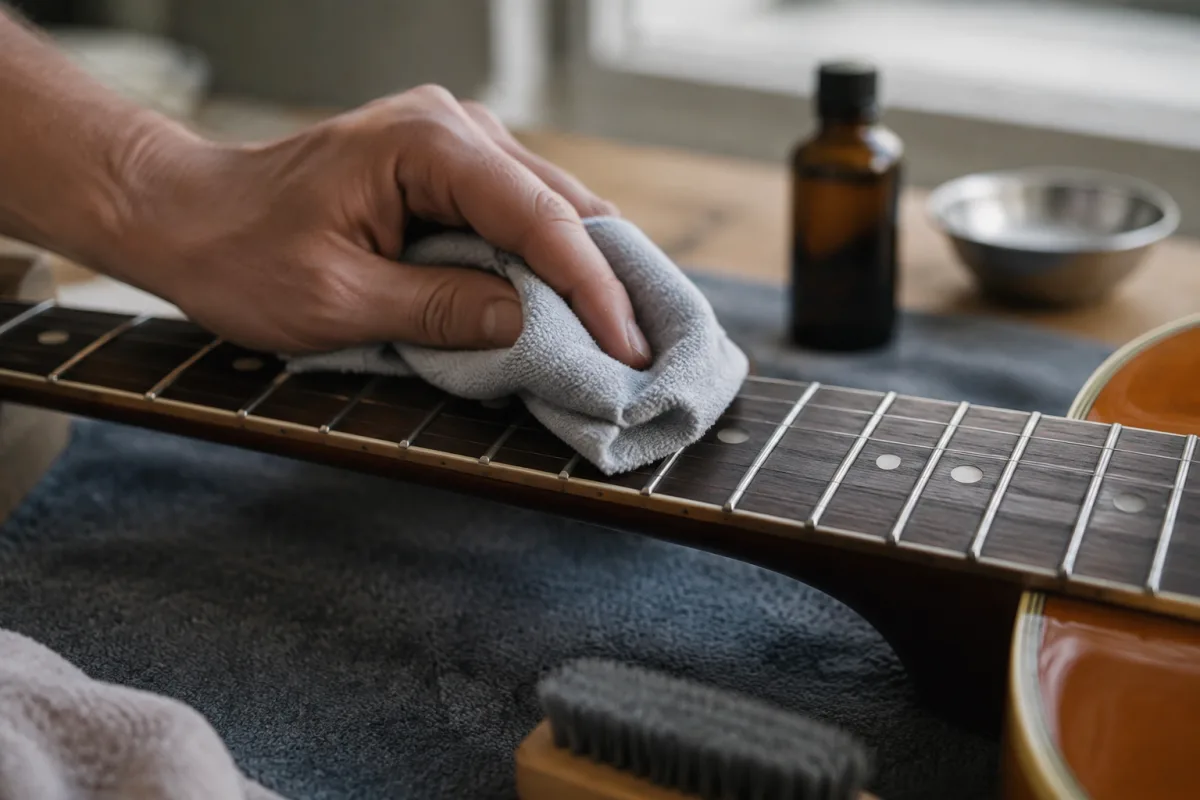
Why Cleaning Your Guitar Fretboard Matters
If you're a beginner guitarist, you might not have thought much about fretboard maintenance. The fretboard is where your fingers spend hundreds of hours—sweating, picking up oil and dust, leaving grime that builds up over months. A simple guitar fretboard cleaner keeps your neck feeling fresh, looking good, and prevents the dark build-up that deadens tone and makes playing uncomfortable.
This beginner's guide demystifies fretboard cleaning: what you need, which products work best, and how to do it safely without damaging your guitar.
What Happens to a Neglected Fretboard
A fretboard that's never cleaned accumulates:
- Dead skin cells from your fingers
- Sweat and natural oils (from your hands and arms)
- Dust and environmental particles
- Old string residue
- Dried blood from small cuts (common when learning)
This grime hardens into a dark, sticky layer that feels unpleasant to play on, reduces string vibration into the wood (deadening tone), and eventually attracts mould or bacteria in damp environments.
Regular cleaning prevents all of this. A clean fretboard feels smooth and responsive. Your fingers move effortlessly, bends feel natural, and the fretboard looks beautiful. It's one of the easiest maintenance tasks that yields noticeable improvements.
Types of Fretboard Cleaners
Commercial Fretboard Cleaners
Purpose-built products (Dunlop Fretboard Conditioner, Ernie Ball Wonder Wipes, Fender Fretboard Conditioner) contain mild solvents and conditioning oils. They dissolve grime, clean the wood, and leave a slight protective coat.
Pros: Convenient, fast-acting, specifically formulated for guitar fretboards. Most cost £8–£20 for a bottle that lasts months.
Cons: Adds cost; requires shipping or local shop purchase.
Natural Alternatives
Many experienced players use household items:
- Lemon oil: Natural solvent, mild, pleasant smell. Available in most homes or shops (£3–£8). Works beautifully on dark woods like rosewood and ebony.
- Mineral oil: Odourless, gentle, excellent for conditioning. Very cheap (£4–£6 for a bottle that lasts years).
- White vinegar (diluted): Strong cleaner for stubborn grime. Use very diluted (1:1 ratio with water) and sparingly. Not ideal for conditioning.
- Maple fretboards: These don't need oil—wipe clean with a soft, slightly damp cloth. Oil makes maple slippery and can trap grime.
Important caveat: Always test any new substance on a hidden area of the fretboard before applying it broadly. Some fretboard finishes are delicate, and overzealous cleaning can damage them.
Step-by-Step Fretboard Cleaning for Beginners
You'll Need:
- A soft, lint-free cloth (microfibre works best; old t-shirt material is fine)
- Fretboard cleaner or lemon oil/mineral oil
- A stiff brush or old soft toothbrush (optional, for stubborn grime)
- Your guitar, unstrung (easier, though optional)
The Process:
1. Prepare: Unstring your guitar, or at least loosen strings enough to access the fretboard. If you're a beginner, you might ask a more experienced player to help—restringing takes practice.
2. Dry wipe: Use a dry cloth to wipe away loose dust and debris. A stiff brush works well for stubborn grit in the fret grooves.
3. Apply cleaner: Dampen your soft cloth with fretboard cleaner (or lemon oil) and wipe the fretboard lengthwise, following the wood grain. Don't soak it—barely damp is enough.
4. Wipe down frets: Pay attention to the areas where your fingers sit—the lower frets, where most grime accumulates. Repeat passes if the cloth comes up dirty.
5. Dry finish: Use a clean, dry cloth to wipe away excess oil. The fretboard should look clean and slightly shiny, not wet or greasy.
6. Restring: If you removed the strings, restring carefully (or ask someone to help). If you only loosened them, tighten back to pitch. New strings are easier to install than old ones you've removed.
7. Let it settle: Wait 10–15 minutes before playing so the oil settles. Your fretboard will feel silky smooth.
How Often Should You Clean?
Frequency depends on playing intensity and climate:
- Casual player (1–2 hours per week): Every 2–3 months is fine.
- Regular player (1+ hour daily): Monthly or every 6 weeks.
- Heavy player or in humid climates: Every 2–4 weeks to prevent mould.
A simple rule: if the fretboard looks or feels dull, it's time to clean. You can't over-clean if you use gentle methods, but you also don't need to obsess.
Special Considerations
Maple Fretboards
Maple (found on many Fender Stratocasters and Telecasters) is a light wood, often finished with a protective coat. Do not oil maple fretboards—oil makes them slippery and dark. Simply wipe with a slightly damp cloth and dry thoroughly.
Rosewood and Ebony Fretboards
Dark woods benefit from conditioning with lemon oil or commercial fretboard conditioner. These woods are porous and soak up oil, which protects them and enhances appearance. Safe to condition every 1–2 months.
Pau Ferro and Other Exotics
Modern Fender guitars often use pau ferro (an affordable alternative to rosewood). Treat like rosewood—occasional light oiling is safe and beneficial.
Mistakes to Avoid
Using too much oil: A little goes a long way. Excess oil attracts dust and looks messy. Less is more.
Using furniture polish or wood stain: These contain chemicals unsuitable for fretboards where your fingers play. Stick to fretboard-specific products or food-grade oils.
Soaking the fretboard: Never pour liquid directly on the fretboard or leave it wet. Moisture can warp the wood or seep into the neck, causing structural damage.
Cleaning under high string tension: High tension makes the fretboard slightly curved and inaccessible. Always loosen or remove strings for proper cleaning.
Forgetting to protect the frets: When cleaning, focus on the wood fretboard itself, not the metal frets. Metal can scratch if over-abraded, and it doesn't need cleaning as much as the wood.
The Bigger Picture: Fretboard Care Beyond Cleaning
Cleaning is one part of fretboard care. Also remember:
- Wash your hands before playing: Clean hands mean less grime transfer to your fretboard.
- Change strings regularly: Old strings shed residue and dead fibres onto the fretboard. Fresh strings mean a cleaner fretboard.
- Store your guitar in a dry environment: Humidity promotes mould. A room at 40–50% humidity is ideal.
- Use a humidifier in winter: Heating dries air, which can crack fretboards. A room humidifier or in-case humidifier prevents this.
Your First Cleaning Session
Start simple: buy a soft cloth and a bottle of lemon oil (£4–£8). Loosen your strings, gently wipe your fretboard with barely damp cloth, and feel the difference. You'll be amazed at how much grime comes off and how smooth it feels after.
Once you've done it once, you'll understand the routine. It takes five minutes and rewards you with a guitar that feels and plays better. Regular fretboard maintenance is one of the most impactful beginner habits you can develop.
For detailed information about fretboard woods, specific product recommendations, and advanced maintenance techniques, read our comprehensive guide to guitar fretboard cleaners.
FAQ
Q: Is it necessary to unstring my guitar to clean the fretboard?
A: No, it's optional. Loosening strings gives better access; full removal is ideal but requires restringing. Beginners often find loosening easier than restringing, so start there.
Q: Can I use my guitar fretboard cleaner on other wooden items?
A: Most commercial fretboard cleaners are formulated specifically for guitar woods and finishes. Don't use them on furniture—they may discolour or damage finishes. Lemon oil and mineral oil are universal, though.
Q: Will cleaning damage my frets?
A: No, if you're gentle. Frets are hardened steel and very durable. Avoid abrasive scrubbing with rough brushes, but normal wiping is safe.
Q: How do I know if my fretboard needs cleaning?
A: If it looks dull or sticky to the touch, it's time. A clean fretboard looks glossy and feels smooth under your fingers.
Q: Is lemon oil safe for all fretboards?
A: Not maple—lemon oil makes maple slippery and dark. Use it on rosewood, ebony, and dark woods. For maple, use a dry cloth only.
Q: What if my guitar fretboard looks cracked or damaged?
A: Stop cleaning and consult a luthier. Cracks may indicate structural issues related to humidity or age. Professional assessment is wise before attempting repairs.


Comments