


Guitar Fretboard Cleaner Buying guide
Guitar Fretboard Cleaner: A Complete Buyer's Guide
Not all guitar fretboard cleaners are created equal. Discover which products are safe for your fretboard material and deliver real results.
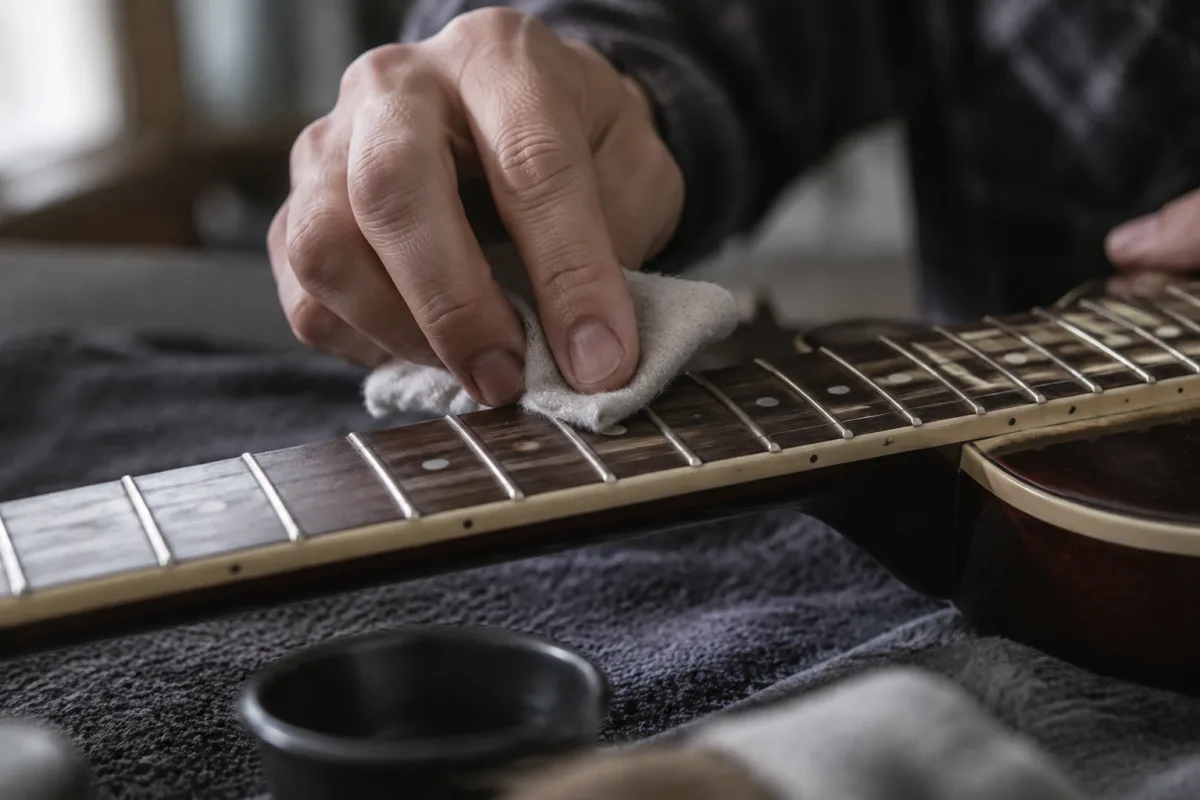
Choosing a guitar fretboard cleaner shouldn't be complicated, yet you'll find countless products with wildly different ingredients and instructions on the shelf. Some promise deep conditioning, others emphasise quick cleaning, and some warn against using anything but linseed oil. To buy the right guitar fretboard cleaner for your instrument and playing style, you need to understand what fretboards are made of, what actually causes grime buildup, and which products deliver results without damaging your guitar.
Understanding Your Fretboard Material First
Before buying any guitar fretboard cleaner, identify your fretboard wood. The material determines what's safe to apply.
Rosewood Fretboards. Traditional, found on most electric guitars and many acoustics. Rosewood is oily and accepts cleaner and conditioner well. Most fretboard cleaners designed for rosewood work beautifully on this wood.
Ebony Fretboards. Dense, dark wood used on premium instruments. Ebony doesn't need conditioning (it's naturally resistant to drying) and actually prefers minimal product application. Avoid heavy oils on ebony—they darken it further and can feel sticky.
Maple Fretboards. Bright, found on some electric guitars (notably Fenders). Maple is softer than rosewood and more porous. It benefits from conditioning but can soak up products excessively. Use lighter applications on maple.
Pau Ferro or Composite Materials. Increasingly common, modern alternatives to rosewood. Treat them like rosewood—they respond well to standard cleaners and conditioners.
Check your guitar's documentation or a qualified technician if you're unsure. Different fretboards need different care, and using the wrong product on the wrong wood can damage your guitar.
Types of Guitar Fretboard Cleaner: What Each Does
Dedicated Fretboard Cleaning Products. Brands like Lemon Oil (the generic term for many products, though true lemon oil is just one ingredient) combine gentle solvents with conditioners. They cut through grime, dead skin and sweat buildup effectively. Quality products cost £10–£20 and last months with regular use. Brands like Dunlop Formula 65 and Music Nomad are reliable choices.
Pure Lemon Oil or Mineral Oil. The traditional choice, very affordable (£5–£8 per bottle). Both work—lemon oil smells pleasant and cuts grease slightly better, whilst mineral oil is gentler and odourless. Both require careful application (use a cloth, not direct onto the fretboard) to avoid over-saturating.
Specialty Conditioning Treatments. Some products (such as Osmo PolyX Oil) are designed specifically for fretboards and neck finishes. These tend to cost more (£15–£30) but leave a more refined finish and deeper conditioning. Worth it if you want a premium feel and are maintaining an expensive instrument.
Natural or DIY Alternatives. Coconut oil, olive oil or diluted vinegar can work for light cleaning, though they're less effective than dedicated products and risk staining light woods. Save money and potential damage—buy an actual guitar fretboard cleaner.
What to Avoid in Guitar Fretboard Cleaner Products
Avoid Silicone-Based Products. Many household furniture polishes contain silicone. Never use these on guitar fretboards—silicone builds up, creates a sticky residue and is nearly impossible to remove. Only guitar-specific cleaners are safe.
Avoid Excessive Oils. Some products and well-intentioned players over-condition fretboards, leaving them slick and feeling unpleasant. A little goes a long way. Apply sparingly—you should barely see product on the cloth.
Avoid Direct Application to Unfinished Wood. If your fretboard is bare wood (no gloss finish), apply guitar fretboard cleaner to a cloth first, then wipe the fretboard. Never spray directly onto bare wood—it soaks in unevenly and can cause swelling or staining.
How to Choose the Right Product for Your Situation
For Casual Home Players (Budget Focus). Buy a bottle of pure lemon oil or mineral oil (£5–£8). It works, costs almost nothing, and lasts months. Follow instructions carefully: apply to a soft cloth, not directly to the fretboard, and use sparingly. This is sufficient for weekly or bi-weekly light cleaning.
For Regular Players or Gigging Musicians (Balanced Value). Invest in a dedicated guitar fretboard cleaner like Dunlop Formula 65 or Music Nomad (£10–£20). These products combine gentle cleaning with conditioning, leaving your fretboard feeling smooth and looking healthy. They're more effective than oil alone and safer than household products.
For Premium Instruments (Quality Focus). If you own a high-end guitar with a premium fretboard, consider specialty conditioners (£20–£35). These offer deeper nourishment and leave a refined finish that respects the instrument's investment. Examples include Osmo PolyX Oil or premium boutique products.
Frequency and Best Practices for Fretboard Cleaning
Clean your fretboard every 1–2 months with a soft, lint-free cloth. The exact frequency depends on playing time and environment—heavy players in humid climates need more frequent cleaning; casual players in dry studios need less.
Remove your strings entirely before applying guitar fretboard cleaner (or at least loosen them enough to access the full fretboard). Work in small sections, applying product to the cloth rather than the fretboard. Wipe gently, following the grain. Don't leave product sitting on the wood—it should dry to a subtle shine within minutes. If it feels sticky or greasy hours later, you've applied too much.
Avoid cleaning immediately before a gig or recording—fresh product on the fretboard can feel odd under your fingers and might transfer to strings or pickups. Clean the day before, or better yet, once a month on a regular maintenance schedule.
Budget and Value Considerations
A quality guitar fretboard cleaner (£10–£20) lasts 6–12 months with normal use, working out to pence per cleaning session. This is genuine value—why risk your guitar with cheap or wrong products to save £5? Spend the money on a proper cleaner and trust your fretboard's care to proven products.
Avoid bulk buying until you've confirmed a product works well on your specific fretboard. Every rosewood fretboard is slightly different; what works beautifully on one guitar might feel odd on another. Start with one bottle of a reputable brand, use it for a month, and if you love it, buy again.
Conclusion: Buy the Right Product for Your Fretboard
A good guitar fretboard cleaner is a small investment that extends your fretboard's life and maintains playability for years. Identify your fretboard wood first, choose a dedicated guitar product (not household alternatives), and apply sparingly. Whether you opt for traditional lemon oil (budget) or premium specialty products (luxury), consistent gentle cleaning with the right product keeps your fretboard healthy, responsive and looking great. Your guitar deserves it.


Comments