


Cleaning Guitar Fretboard article
The Complete Guide to Cleaning Guitar Fretboard
Regular fretboard cleaning removes grime, improves playability and maintains your guitar's appearance. Learn the right techniques and products for your wood type.
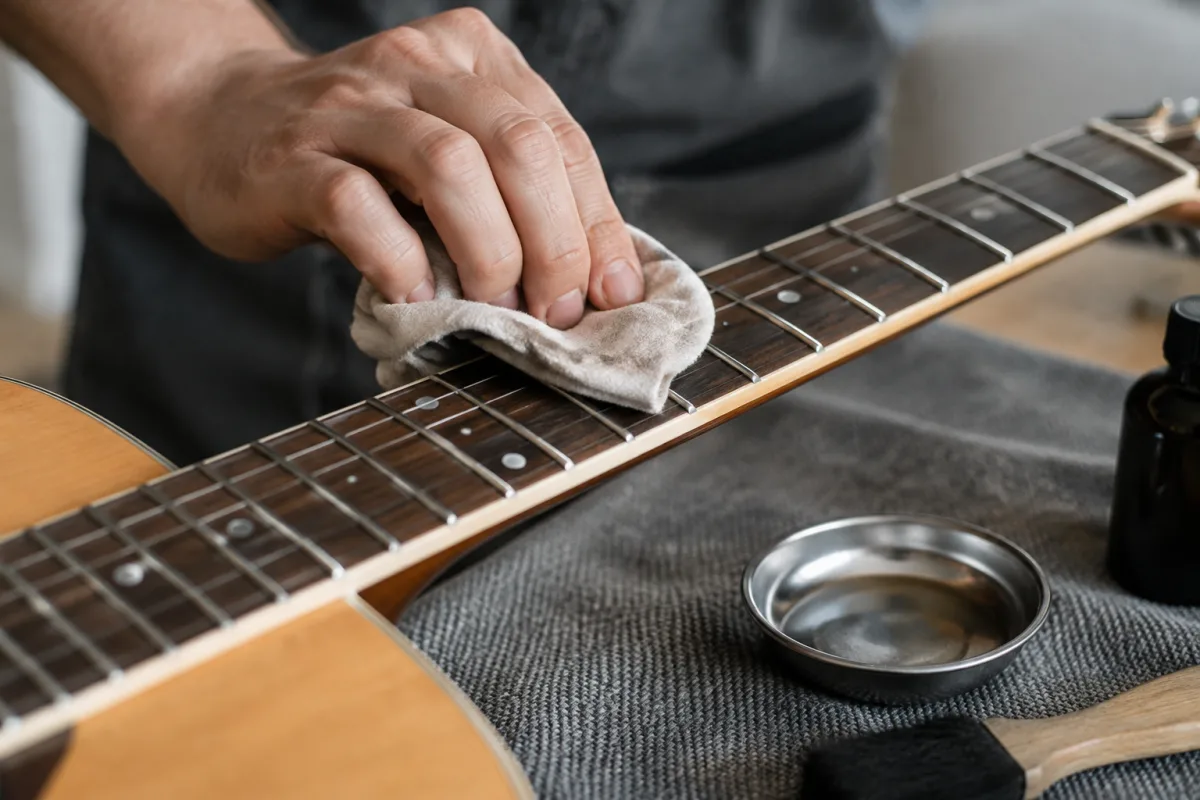
Your guitar's fretboard accumulates grime, dead skin cells, dried sweat, dust and the residue of countless hours of playing. A dirty fretboard not only looks neglected—it actually impacts playability, causes frets to dull and can eventually damage the wood underneath. Cleaning your guitar fretboard regularly is one of the simplest maintenance tasks you can perform, taking minutes and requiring only basic tools, yet it's the one thing most guitarists skip. Understanding how to clean your fretboard properly, what products to use and how often to do it keeps your guitar playing smoothly, looking beautiful and lasting decades.
Why Fretboard Cleaning Matters
A fretboard collects dirt through natural playing. Your fingers deposit sweat, oils and dead skin cells with every note. Dust and lint accumulate in the spaces between frets. Over time, this builds up into a grimy layer that damps the fretboard's natural sparkle, makes the guitar feel sticky or rough to play, and can eventually allow moisture and mildew to damage the wood. A clean fretboard plays better—smoother, faster, more responsive—and looks infinitely better. A well-maintained fretboard is a sign of a guitarist who takes care of their instrument.
How Often Should You Clean Your Fretboard?
For casual players (a few hours weekly), cleaning the fretboard monthly is adequate. For regular players (daily practice), every two weeks keeps it in good shape. For touring musicians or session players (hours daily), weekly cleaning might be necessary. If your fretboard is visibly dirty, clean it immediately—don't wait for a scheduled cleaning.
The frequency depends on your playing intensity, the wood type (some woods stain more easily), climate (humid climates encourage faster buildup) and your personal standards. There's no harm in cleaning more frequently; it only takes minutes.
Essential Tools for Fretboard Cleaning
You need very little to clean a fretboard properly. A soft, lint-free cloth (microfiber cloths are ideal) removes most dirt. A toothbrush or soft brass brush (for stubborn grime between frets) helps scrub without damaging the wood. An old toothbrush works fine if it's soft-bristled. That's actually all you need for basic cleaning—just dry methods.
For deeper cleaning, fretboard-specific cleaning products (usually linseed oil or proprietary conditioners) are available and worth considering if your fretboard looks really neglected. Never use water or household cleaners, which can swell the wood and cause damage. Lemon oil and specialty fretboard products are the safe options.
Dry Cleaning: The First Step
Start with dry cleaning, which removes 90% of surface grime without any products. Wipe the fretboard with a soft, lint-free cloth, working along the length of the fretboard and using firm pressure. Focus on the grooves between frets where dirt accumulates. For stubborn grime between frets, use a soft toothbrush to gently scrub, then wipe the residue away with your cloth. This dry method works for most regular cleaning and is completely safe.
Deep Cleaning with Fretboard Oil or Conditioner
If dry cleaning doesn't remove stubborn grime or your fretboard looks parched and dull, use a fretboard conditioner or linseed oil. Apply a small amount to your cloth (never pour oil directly onto the fretboard—you'll over-soak it), then wipe along the length of the fretboard. The oil brings out the wood's natural colour and provides a protective layer. Work methodically, fret by fret, using a fresh section of cloth as it gets dirty. One application typically goes a long way.
Rosewood, ebony and pau ferro fretboards benefit most from occasional oiling, as they're naturally porous. Maple fretboards (common on Fender guitars) typically have a protective finish, so conditioning is less critical—dry cleaning usually suffices. Check your guitar's documentation or ask your luthier about your specific fretboard wood.
Protecting Your Fretboard While Cleaning
When using oil or liquid cleaners, protect the body and pickups from drips. Many guitarists place a soft cloth under the fretboard or tape the pickups and body edges with painter's tape. This takes an extra minute but prevents oil from dripping onto your guitar's finish or electronics. It's not strictly necessary if you're careful, but it's good insurance.
What NOT to Do: Common Mistakes
Never use water or household cleaners, which can swell the wood and cause permanent damage. Never use acetone, alcohol or aggressive solvents that strip protective oils and damage finishes. Never soak your fretboard in oil; a small amount applied sparingly is all you need. Never neglect the sides of frets where they meet the wood—this is where dirt hides. Never use steel wool or abrasive materials that can scratch the frets.
The most common mistake is over-cleaning. You can't damage a fretboard by cleaning it too frequently with proper methods; you'll only damage it by using the wrong products or excessive force.
Types of Fretboard Wood and Special Considerations
Rosewood fretboards (warm, reddish-brown) are the most common and benefit from occasional oiling. Ebony fretboards (black) are extremely hard and durable; they benefit from gentle cleaning and rare conditioning. Pau ferro fretboards (dark brown, similar to rosewood) respond well to gentle oiling. Maple fretboards (light, usually found on Fender guitars) have a protective finish and rarely need conditioning—dry cleaning suffices.
If you're unsure about your fretboard wood, check your guitar's manual or contact the manufacturer. When in doubt, stick with dry cleaning—it's always safe and removes most grime without risk.
Maintaining a Clean Fretboard Between Deep Cleans
Between full fretboard cleanings, wipe your fretboard briefly with a dry cloth after each playing session. This removes fresh sweat and prevents dirt from hardening. This simple habit keeps your fretboard in good shape and extends the time between deep cleanings.
Conclusion
Cleaning your guitar fretboard is one of the easiest and most impactful maintenance tasks you can perform. A few minutes with a dry cloth monthly keeps your fretboard looking and playing great. Occasional deep cleaning with fretboard conditioner restores dull fretboards and provides protective nourishment. Treat your fretboard well and it'll reward you with decades of smooth, responsive playing and timeless beauty. Your guitar deserves the care, and your playing will be noticeably better on a clean fretboard.


Comments