


Cleaning Guitar Fretboard article
Cleaning Guitar Fretboard for Beginners: A Complete Guide
Cleaning guitar fretboard is simpler than you think. This beginner guide shows you the easy method, budget-friendly options, and how to avoid costly mistakes.
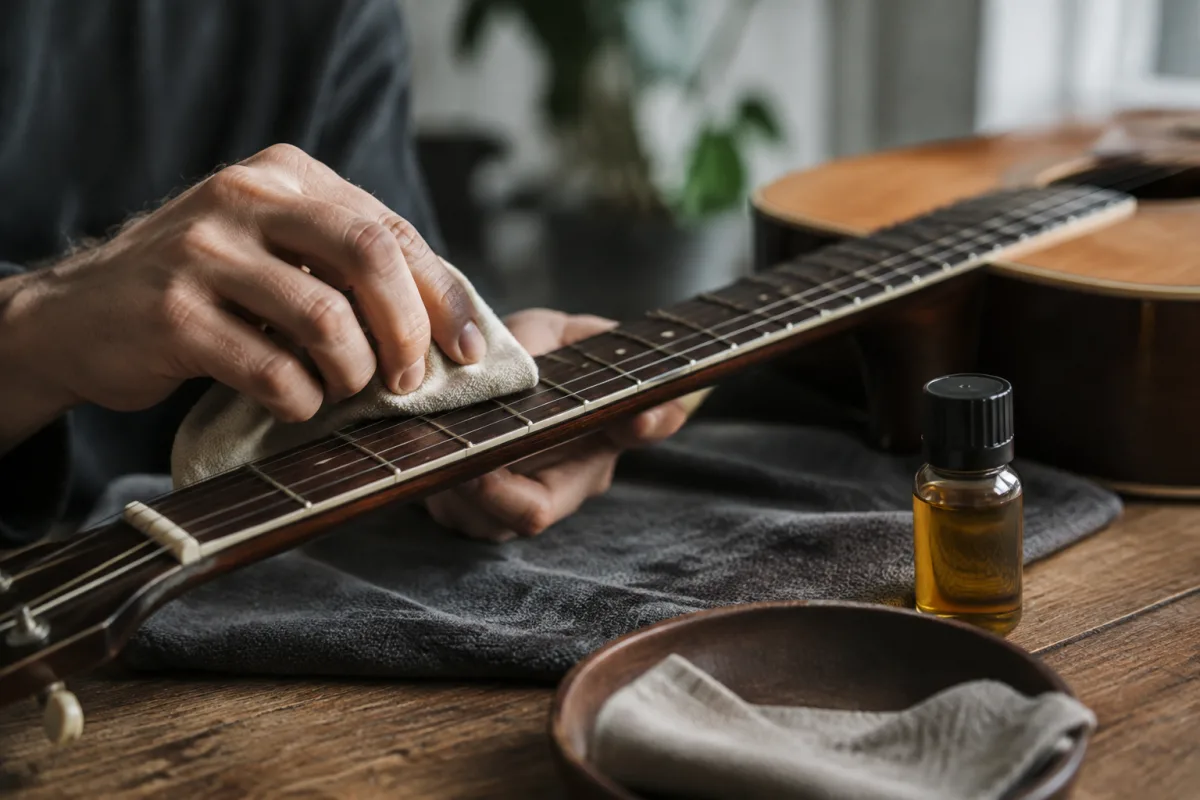
If you're new to guitar, fretboard maintenance might seem like a mysterious or intimidating task. Don't worry—cleaning your guitar fretboard is genuinely simple, doesn't require expensive products, and is one of the easiest ways to keep your instrument looking and playing beautifully. This beginner's guide walks you through the process step by step, explains why it matters without overwhelming you with technical detail, covers common mistakes, and shows you how to build a simple maintenance habit. You'll learn that cleaning a guitar fretboard isn't complicated; it's just something most beginners don't realise they can do themselves.
Why Bother Cleaning Your Fretboard?
Your fingers leave oil, dead skin, and sweat on the fretboard every time you play. Dust and dirt settle in the spaces between frets. Over weeks and months, this buildup makes your fretboard look dull and can slightly affect how the strings feel under your fingers. Cleaning your fretboard refreshes the wood, restores its appearance, and keeps your playing experience pleasant. It's not about obsessive perfection; it's simply maintenance. Think of it like washing your hands after work—nothing complicated, just basic hygiene.
You don't need to clean your fretboard constantly. Most beginners should clean their fretboard every few months, or whenever you notice it looking dark or grimy. That's genuinely all.
What You Actually Need to Clean a Fretboard
Here's the good news: you probably already have the main tool. You need:
- Soft cloth: An old T-shirt, microfibre cloth, or soft cotton. Not paper towels (they're too scratchy). You likely have one at home.
- Fretboard oil or lemon oil: For rosewood fretboards, this brings out the wood's natural beauty. Optional for maple fretboards. Cost: £3–£8 per bottle, and it lasts for years.
- Very light cleaning solution: A tiny amount of warm water mixed with a drop of dish soap works perfectly. Or skip this entirely and use a dry cloth if your fretboard isn't very dirty.
- Masking tape: Optional. Used to protect pickups and the body while cleaning. Only necessary if you're particularly cautious.
That's it. Genuinely, you can start with just a soft cloth and warm water. No specialist tools required.
The Basic Cleaning Method
Here's the step-by-step process, and it takes about 15 minutes:
Step 1: Lay your guitar on a soft surface. Use a pillow, blanket, or guitar stand. You're protecting your guitar's finish from the edge of a table or counter.
Step 2: Dampen your cloth very lightly. Use warm water with just a tiny drop of dish soap. The cloth should be damp, not wet. Water dripping onto the guitar's body is bad. Squeeze out excess water.
Step 3: Wipe the fretboard gently. Work along the length of the fretboard, going with the grain of the wood (if visible). Wipe between the frets, getting into the gaps where dirt hides. Don't scrub hard; gentle pressure is enough.
Step 4: Dry thoroughly with a clean, dry cloth. Remove all moisture immediately. Water left on the wood causes damage over time. Ensure every fret and the space between them are completely dry.
Step 5: Apply fretboard oil (optional but recommended). If your fretboard is rosewood, ebony, or other dark wood, put a tiny amount of fretboard oil on a cloth and gently rub the entire fretboard. One or two drops per cloth is plenty. Buff away any excess oil until it's barely visible. This restores the wood's appearance and provides light protection.
Step 6: Let it dry and play. Wait 5–10 minutes, then play as normal. Your fretboard feels refreshed, looks better, and is properly maintained.
Common Beginner Mistakes
Mistake 1: Oversaturating the cloth with water or cleaning solution. Water is wood's enemy. A damp cloth is all you need, never dripping wet. This is the mistake that causes actual damage. Use restraint.
Mistake 2: Using harsh products. Avoid bleach, strong chemical cleaners, or furniture polish. These damage guitar finishes and wood. Stick to fretboard oil, dish soap, or nothing. Simple works.
Mistake 3: Applying too much fretboard oil. A tiny amount restores beauty; too much makes the fretboard slippery and attracts dust. You want subtle restoration, not a pool of oil. Less is always better.
Mistake 4: Cleaning only the top of the frets. Dirt hides in the gaps between frets. Use your cloth to gently dig into those spaces. Work both sides of the fret, not just the top.
Mistake 5: Ignoring maple fretboards. Maple fretboards are usually finished with polyurethane. They need less frequent cleaning and no fretboard oil—just a damp cloth and dry thoroughly. Don't assume all fretboards need the same treatment.
Mistake 6: Cleaning obsessively. Beginners sometimes worry they haven't cleaned enough. You don't. A gentle pass with a damp cloth and dry wipe is perfectly adequate. Aggressive cleaning causes wear.
Understanding Your Fretboard Type
Most guitars have rosewood, ebony, or maple fretboards. Rosewood and ebony are porous dark woods that benefit from occasional oil to prevent drying and cracking. Maple is a light wood, usually finished with polyurethane, and doesn't need oil—in fact, oil can damage the finish. Check your guitar's specs to know which you have. When in doubt, apply oil only to dark fretboards, and use a damp cloth only on light ones. This simple rule keeps you safe.
How Often Should You Clean?
Clean your fretboard every 3–6 months if you play regularly, or whenever it visibly looks grimy. There's no magic schedule. Some players go months without noticing their fretboard; others play hard and accumulate buildup quickly. Inspect your fretboard occasionally and clean when it looks dull. That's your guide.
Budget-Friendly Alternatives
If you don't want to buy fretboard oil, alternatives work fine:
- Linseed oil: From hardware shops, about £3–£5. Works perfectly on rosewood. Slightly less convenient than dedicated fretboard oil but effective.
- Coconut oil: From your kitchen, completely free. Works on dark fretboards, though it's messier and attracts more dust than proper fretboard oil.
- Nothing but water and cloth: A damp cloth removes dirt; dry thoroughly. No oil needed. Your fretboard won't be as shiny, but it stays clean and plays perfectly fine. Many professionals use this simple method.
Don't feel pressured to buy expensive products. A damp cloth and patience accomplish most of what you need.
Building the Habit
The easiest way to maintain your fretboard is to make cleaning part of your regular guitar routine. Maybe every third or fourth time you play, do a quick fretboard wipe with a dry cloth. Then every few months, do a full clean with the damp cloth method. Before long, it becomes automatic and takes minimal effort. You're not adding complexity to your life; you're preventing buildup through small, regular actions.
Moving Forward With Fretboard Care
Cleaning your guitar fretboard is honestly one of the easiest and most rewarding maintenance tasks you can do. It takes 15 minutes, requires supplies you probably already have, and immediately improves how your guitar looks and feels. Start simple: dampen a cloth, wipe, dry thoroughly. Once you're comfortable, add fretboard oil if you want. For a deeper dive into fretboard maintenance, wood care, and other guitar upkeep, read our complete guide to cleaning guitar fretboards.
Right now, just know: your fretboard is tougher than you think, the process is simpler than you expect, and maintaining it makes playing more enjoyable. That's all that matters.


Comments