


Metronome article
Metronome for Beginners: A Complete Guide
Many beginners avoid metronomes, but they're simpler than you think. This guide shows you why metronome practice transforms your rhythm and how to use one effectively from day one.
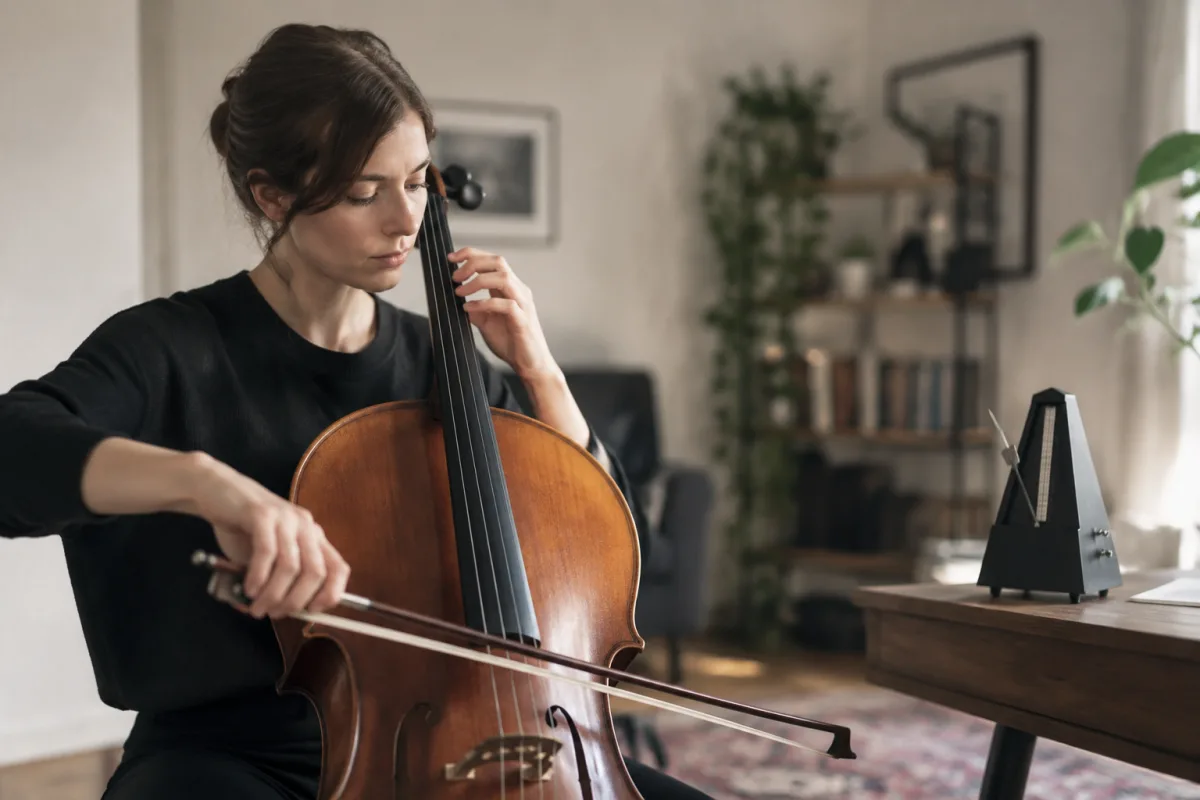
Many musicians avoid metronomes because they seem intimidating or tedious. You might worry that practising to a metronome feels mechanical, removes the musicality from your playing, or simply sounds boring. Here's the honest truth: a metronome is just a tool, and learning to use it properly transforms your practice from unfocused noodling into genuine skill-building. This guide removes the mystery and shows you how to make a metronome your practice partner—not your enemy.
What a Metronome Actually Does (It's Simpler Than You Think)
A metronome produces a steady click or beat at a set speed, measured in beats per minute (BPM). That's it. It doesn't judge you, doesn't expect perfection, and doesn't care if you're good or bad. It's simply a reference—like a tuning fork for rhythm. Your job is to play along with that click, keeping your own playing in sync.
Think of the metronome as a practice friend who never gets tired, never speeds up unexpectedly, and never lets you cheat by gradually getting faster. Most musicians initially find this frustrating. After a few weeks, they realise it's liberating: you're not fighting a changing tempo any more; you're just matching one steady pulse.
Why Beginners Struggle (And Why That's Normal)
Your first experience with a metronome might feel unnatural. Here's why, and why it gets better.
You Don't Actually Know Your Own Tempo Yet. Most beginners naturally speed up when they concentrate, slow down when they lose confidence, and wander all over the place without noticing. A metronome exposes this immediately. The click reveals that your "steady" playing isn't steady at all. This is shocking, then educational. Within days, you become aware of your natural tempo quirks and can correct them.
The Click Feels Awkward. Your ears aren't trained to the metronome's timing yet. The click might feel too fast, too slow, or just off somehow. This typically settles within a week of consistent use. Your nervous system adapts, and the click becomes background.
It Feels Robotic and Kills Musicality. This is the most common complaint. But here's the thing: practising sections slowly and precisely with a metronome isn't the final performance. It's the building block. You practise with the metronome to get technically solid, then you practise without it to add expression and dynamics. Robotic metronome practice creates the foundation that allows genuine musicality later.
Your First Metronome: Three Practical Setup Steps
Step 1: Choose a Tempo That Feels Too Slow. Seriously—slower than you think necessary. If you're learning a piece that eventually plays at 120 BPM, start at 60 or 80. You should feel bored by how slow it is. Slow practice with a metronome is where real learning happens; fast practice is just feeling good about yourself.
Step 2: Start with Just Beats, Not Subdivisions. If your metronome offers "subdivisions" (like clicking once per beat or four times per beat), choose once per beat. Beginners often make metronome practice harder by using too many clicks per beat. Four clicks per beat provides more reference points, but it's also more confusing when you're learning. Add complexity later.
Step 3: Pick a Simple Section to Start With. Don't practise an entire piece with the metronome on day one. Choose a small phrase—maybe 4 bars or 8 bars. Learn to sync with the click in a contained space. Once you're comfortable, gradually extend to longer sections.
Common Beginner Mistakes with Metronomes
Mistake 1: Expecting Perfection Immediately. You won't lock perfectly into the click on day one. That's okay. You're training a skill—internal rhythm—and it takes time. After a week of consistent use, you'll notice dramatic improvement. After a month, you'll forget what it felt like to be off-time.
Mistake 2: Cranking the Volume Too Loud. A loud, intrusive metronome click is mentally exhausting. You don't need to hear it blasting; you just need to hear it clearly. Set the volume so you hear it easily but not aggressively—roughly the volume of normal conversation.
Mistake 3: Using the Metronome for Everything You Play. Reserve the metronome for deliberate practice—learning new material or perfecting weak passages. Playing old, comfortable songs with a metronome is wasted practice time. Use it where you actually need the reference.
Mistake 4: Jumping to High Tempos Too Quickly. The tempo instinct is strong: you want to play fast because fast sounds impressive. Resist this. Practise slowly with the metronome until you're technically solid, then gradually increase tempo. A piece mastered at 60 BPM will feel natural at 120 BPM.
Mistake 5: Rushing Through Clicks You Miss. If you fall behind the metronome, resist the urge to catch up frantically. Stop or reset. The point of the metronome is maintaining steady time, not frantically recovering from mistakes. It's better to drop out and re-enter than to scramble.
Building the Rhythm Habit
Here's your practical schedule for the first month:
- Week 1: Practise a single 4-bar phrase with a metronome at 50% of your target tempo. Aim for 5–10 minutes daily. Don't worry about sounding good; focus on locking with the click.
- Week 2: Increase to 8-bar sections. Gradually increase tempo by 5–10 BPM. Your internal clock is adapting; you'll notice the difference.
- Week 3: Extend to 16-bar sections or short phrases. Continue increasing tempo gradually. You should now feel comfortable with the click—it no longer feels foreign.
- Week 4: Tackle longer sections or entire pieces at increasing tempos. By now, the metronome is your reference, not your enemy. Practise songs without the metronome for the final 5 minutes of each session to reintroduce dynamic expression.
Choosing Your First Metronome (Keep It Simple)
As a beginner, you have three options: a mechanical metronome, a digital metronome app, or a simple online metronome. For learning, any of these works. Here's the honest assessment:
Digital Apps and Online Tools. Free or cheap; always available on your phone. They work perfectly for beginners. The only downside is that your phone is distracting (messages, notifications). If you have the discipline to silence notifications, a free app is genuinely the best starting point.
Digital Metronome Devices. Small, dedicated metronome boxes cost £15–50. They provide focused practice without phone distractions. A worthwhile investment if you practise regularly and find phone distractions problematic.
Mechanical Metronomes. The classic pendulum metronome. Beautiful, no batteries, but bulky and a bit pretentious for beginners. Save this for later if you fall in love with metronome practice.
The Big-Picture Truth About Metronomes
Using a metronome isn't about sounding robotic or losing your musical personality. It's about building the technical foundation that lets your personality shine. Every professional musician practises with a metronome at some point in their development—not because it's fun, but because it works.
Your first week with a metronome will feel awkward. That's universal; everyone experiences it. Your second and third weeks, it'll become normal. After a month, you'll notice your playing is visibly better—tighter, more controlled, more confident. The payoff is genuine.
For a comprehensive look at metronome types, features, and how different tools serve different practice goals, see our complete guide to metronomes. That resource covers the full spectrum of options, useful once you've discovered that metronome practice accelerates your skill development.
Pick a metronome, choose a slow tempo, and commit to one month. The results will convince you it's worth the effort.



Comments