


Humidity Control Instrument article
The Ultimate Guide to Humidity Control Instrument
Humidity control is essential for protecting wooden instruments. This guide covers humidity requirements, humidifier types and long-term instrument protection.
Humidity Control Instrument: Complete Guide
Humidity levels have a profound impact on musical instruments, particularly those made from wood. Guitars, violins, and other wooden instruments swell and shrink with humidity changes, affecting playability, sound quality, and structural integrity. A humidity control instrument keeps your valuable instruments stable and protected. Understanding humidity control is essential for anyone with quality wooden instruments.
Why Humidity Matters for Instruments
Wood is hygroscopic—it absorbs and releases moisture in response to environmental humidity. When humidity is too low, wood dries out, causing cracks, fret sprout (frets protruding from the fretboard), and action changes. When humidity is too high, wood swells, causing warping, binding frets, and structural problems.
The ideal humidity range for most wooden instruments is 45-55 percent relative humidity. Maintaining this range preserves the instrument's structural integrity, playability, and sound quality. Neglecting humidity control can cause permanent damage costing thousands to repair.
Types of Humidity Control Devices
Case humidifiers sit inside your instrument case and release moisture gradually. Sponge-based humidifiers absorb water and release it as needed. Calcium chloride (silica gel) humidifiers absorb excess moisture, helping in humid environments. Electronic humidifiers provide precise control but are more expensive.
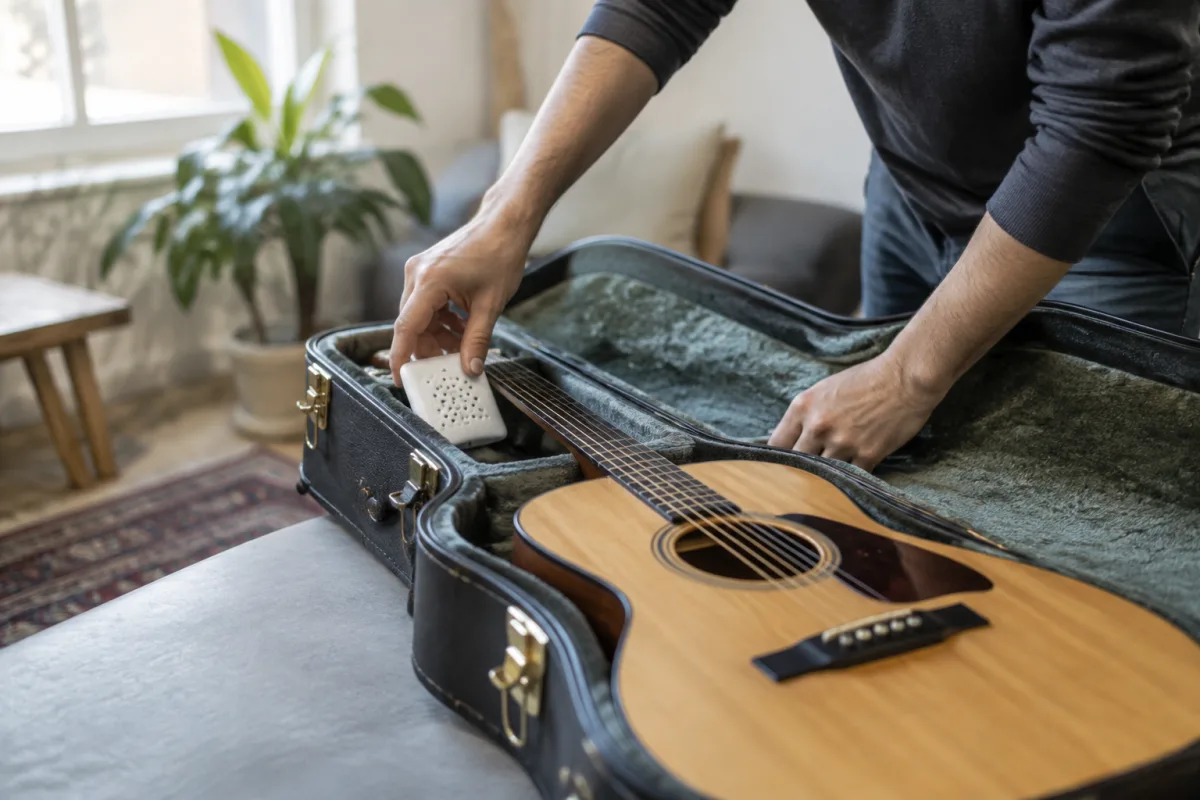
The most common approach for guitars and similar instruments is case humidifiers that maintain stable humidity within the closed case environment. These are affordable, simple to use, and effective for protecting instruments during storage and transport.
Humidifier Maintenance
Sponge-based humidifiers need regular watering. Check them every week or two, and add distilled water when they feel dry. Never overfill—the goal is keeping the sponge moist enough to release humidity gradually, not dripping wet. Replace humidifiers when they develop mold or stop working effectively.
Silica gel humidifiers need recharging periodically. When saturated, they release moisture no longer. Place them in a warm, dry environment or oven (low heat) to drive off moisture and reactivate them. Electronic humidifiers need power and occasional calibration checking.
Humidity Monitoring
Before implementing humidity control, measure your environment's actual humidity. Inexpensive hygrometers display current humidity levels. Place one in your instrument storage area to track humidity variations. If levels consistently fall outside the 45-55 percent range, implement humidity control.
Some areas naturally maintain good humidity (coastal regions with moderate climates). Others swing wildly between extremes (continental climates with cold winters and hot summers). Understanding your local conditions helps you implement appropriate humidity control.
Case Humidifiers vs. Room Humidifiers
| Approach | Cost | Coverage | Best For |
|---|---|---|---|
| Case humidifier | £10-30 | Single instrument | Individual instruments, storage |
| Room humidifier | £50-300 | Entire room | Multiple instruments, studio |
| Dehumidifier | £100-400 | Entire room | Humid climates, excess moisture |
Humidity and Specific Instruments
Guitars are extremely humidity-sensitive, particularly classical guitars with delicate tops. Violins and other stringed instruments require humidity control for structural stability and sound quality. Woodwind instruments (clarinets, oboes) are less sensitive but still benefit from controlled humidity. Piano owners with valuable instruments should maintain humidity control—pianos cost thousands and deserve protection.
Symptoms of Humidity Problems
Cracks in the wood indicate the instrument has dried excessively. Fret sprout (frets protruding from the fretboard at the head or body) is a classic sign of over-drying. Action changes (the string height becomes very low or very high) suggest humidity problems. Buzzing frets that appear and disappear seasonally indicate humidity fluctuations.
If you notice these symptoms, implement humidity control immediately. Professional repair can fix some humidity damage, but prevention is far preferable to repair costs.
Long-term Storage and Humidity
Instruments stored for extended periods face particular humidity risks. Even if they're playable now, storage without humidity control can cause damage that emerges years later. Place a case humidifier in any instrument case, whether storing for months or years.
If storing instruments in an attic, basement, or storage facility, monitor humidity carefully. These locations often experience extreme humidity fluctuations. Install a case humidifier in each instrument's case as insurance against damage.
Combination Approaches
Many serious musicians use multiple approaches: a case humidifier for individual instruments, a room humidifier in the music room, and periodic dehumidification during excessively humid seasons. This layered approach provides maximum protection, particularly in climates with dramatic humidity swings.
Spend a modest amount on humidification and monitoring now rather than thousands later on repairs. Professional repairs for humidity damage often cost more than replacement instruments.
Budget Considerations
Budget guitar owners might skip humidity control, but owners of quality instruments should invest. A £30 case humidifier protects a £500 guitar effectively. A £100 room humidifier protects multiple instruments. These costs are minimal compared to instrument value and repair costs.
Conclusion
Humidity control is essential maintenance for wooden instruments. Monitor your environment's humidity levels, implement appropriate control measures, and maintain your humidification system. A modest investment in humidity control protects your instruments' structural integrity, playability, and sound quality for decades. Don't neglect this simple but critical aspect of instrument care.




Comments