


Guitar Setup Tools Buying guide
Guitar Setup Tools: A Complete Buyer's Guide
Building a guitar setup tools collection need not be complicated or expensive. This guide covers essential equipment, specialised tools for specific tasks, pricing reality, and practical purchasing decisions.
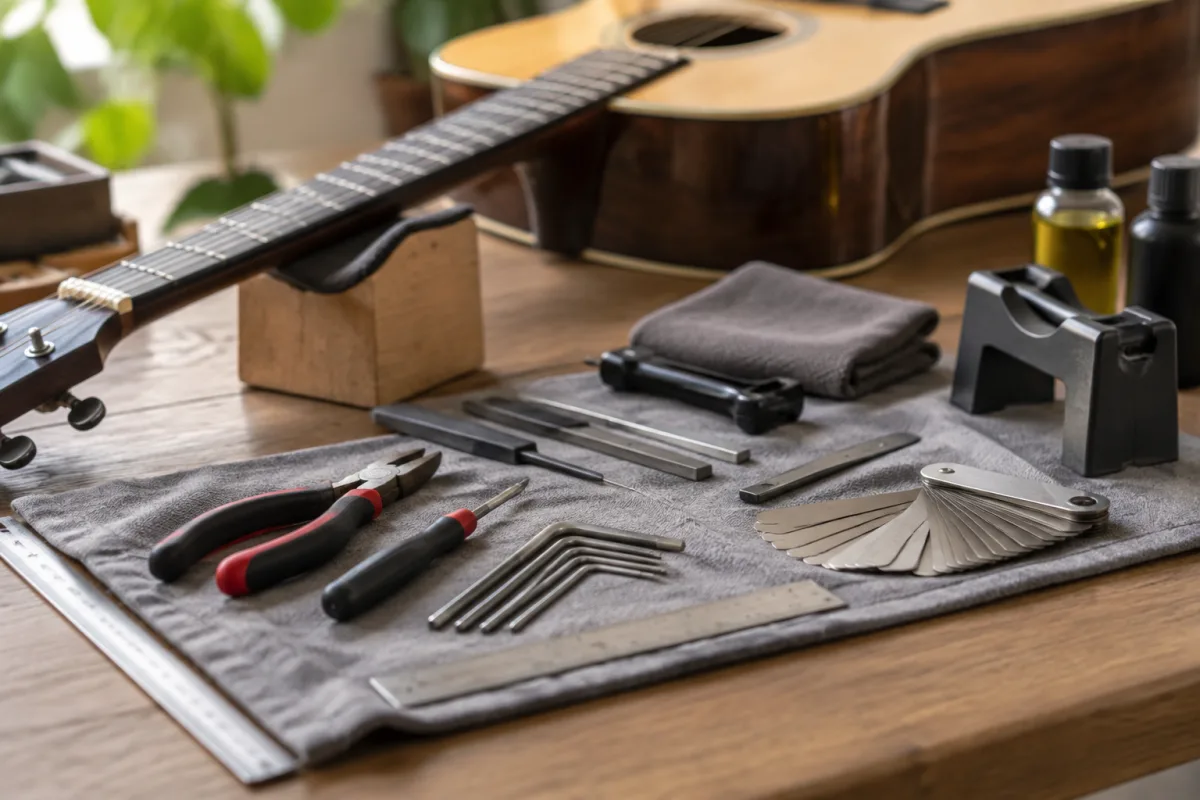
Assembling a guitar setup tools collection need not be complicated or financially crushing. Many musicians believe they require expensive professional luthier kits before maintaining their own instruments, but the reality is forgiving: essential guitar setup tools cost less than a single quality instrument upgrade. This buyer's guide separates genuinely necessary tools from aspirational extras, helping you build a practical kit matching your specific needs and skill level.
Understanding Your Actual Guitar Setup Needs First
Before purchasing any guitar setup tools, establish what maintenance tasks you'll realistically perform yourself. Occasional string changes demand minimal tools. Regular intonation adjustments, fret levelling, and truss rod tweaks require increasingly specialised equipment. Professional bridge work and fret crowning usually justify professional luthier services. Matching your tool collection to your actual needs prevents accumulating expensive unused equipment.
Many players discover that professional setup services (£40-£150 depending on scope) cost far less than assembling comprehensive tool kits used irregularly. Factor this comparison into purchasing decisions. Owning a complete guitar setup tools collection makes sense for frequent users or luthiers; casual players sometimes save money by outsourcing setup work.
Essential Guitar Setup Tools Everyone Should Own
A decent guitar tuner represents your foundational tool investment. Digital tuners (£8-£25) work reliably and display precise frequency measurements. Clip-on tuners suit acoustic guitars and live performance. Pedal-format tuners suit studio environments where accuracy matters most. Any quality tuner from mainstream manufacturers handles standard tuning accurately—premium options add features rarely needed for basic setup work.
Screwdrivers in appropriate sizes prevent damage to truss rod covers, bridge pins, and hardware. Invest in quality screwdrivers with properly-fitting tips matching your guitar's fasteners. Cheap screwdrivers strip screw heads, creating expensive repair situations. A basic set covering common guitar sizes (Phillips #1 and #2, flathead sizes) costs £15-£30 and serves for years.
String action gauge helps you set playable action heights objectively. Feeler gauges (£5-£15) indicate exact action measurements at specific fret locations. Without precise gauges, you're guessing based on feel alone—sometimes satisfactory, but inconsistent across multiple guitars. Affordable feeler gauge sets simplify achieving consistent action.
Allen wrenches (hex keys) adjust bridge saddles, pickup heights, and truss rods on most guitars. Quality hex key sets (£8-£20) outlast cheap alternatives. Verify that your guitar's hardware uses hex key adjustment before purchasing—some vintage instruments use different fastener types requiring specialised tools.
Core Setup Tools for Serious Maintenance
A straight edge determines whether your frets require levelling. Professional-grade aluminium straight edges (£20-£50) provide accuracy for professional work. For personal use, a quality steel straight edge or even a precision metal ruler works adequately. Test straightness frequently during fret work—an imprecise straight edge creates more problems than it solves.
An adjustable bridge or bridge saddle files handle routine nut and saddle work. Dedicated nut files (£30-£80) represent professional-grade investment. Lower-cost files sometimes chip or wear rapidly, requiring replacement within months. If you'll file nuts regularly, invest in quality tools. For occasional nut work, consider whether professional nut installation (£40-£80) makes financial sense.
A reliable tape measure prevents measurement errors during setup work. Quality measuring tapes (£8-£15) include locking mechanisms preventing inadvertent retraction. Fret spacing verification and neck measurements demand accuracy—cheap tapes sometimes introduce errors affecting subsequent calculations.
Masking tape protects guitar finishes during aggressive setup work. Painter's masking tape (£2-£5) prevents file slips and tool marks from damaging lacquer or other finish types. This single-use consumable proves invaluable when working on valuable instruments.
Specialised Tools for Specific Adjustments
Truss rod wrenches adjust neck relief, addressing high fret conditions and playability issues. Guitars use various truss rod nut sizes—verify your guitar's specification before purchasing. Universal adjustable truss rod tools (£15-£40) work across multiple sizes. Brand-specific wrenches (£5-£15) cost less but require separate purchases for each guitar type.
Fret crowning files reshape worn or flattened frets, restoring playability. Professional fret crowning files (£50-£150) represent serious investment. Casual players rarely justify these costs—professional fret work (£100-£300) often makes more financial sense. Buy fret files only when you'll perform crowning work regularly.
Pickup height tools and feeler gauges help optimise magnetic pickup positioning. Dedicated pickup gauge sets (£10-£25) simplify adjustments. Many musicians use improvised spacers or feeler gauges instead, saving cost whilst achieving identical results.
Bridge pin pullers prevent damage when removing or replacing bridge pins on acoustic guitars. Specialised pin pullers (£8-£20) cost only slightly more than improvised alternatives. This inexpensive tool prevents accidentally splintering bridges during pin extraction.
Price Tier Reality for Guitar Setup Tools
Budget guitar setup tool kits (£20-£50) from unknown manufacturers sometimes contain low-quality components failing after limited use. Avoid comprehensive budget kits—individual quality purchases outperform cheap "everything in one kit" offerings.
Professional-grade individual tools (£8-£50 each) from established manufacturers like Fender, Martin, and specialty luthier suppliers provide reliability matching professional expectations. Purchasing individually lets you start minimally and expand gradually as needs emerge.
Premium luthier-specific tool collections (£200-£500+) include workshop-quality equipment rarely needed outside professional settings. Professional lutheries justify this investment through frequent use. Hobbyists accumulate unnecessary expense.
Avoiding Common Guitar Setup Tool Mistakes
Purchasing comprehensive tool kits before establishing actual needs creates wasted expense and storage challenges. Start with essentials—tuner, screwdrivers, straightedge, feeler gauge. Expand only when specific maintenance tasks demand additional tools. This approach builds practical collections aligned with your playing reality.
Buying cheap tools expecting to upgrade later often fails financially. Cheap screwdrivers strip fasteners, requiring professional repair (£50-£100). Cheap files dull rapidly, producing poor results and wasting time. Invest in quality immediately, particularly for tools contacting your guitar directly.
Neglecting tool maintenance shortens lifespan and reduces effectiveness. Files dull with use; screwdrivers develop blunt tips; straight edges develop dings. Proper storage in protective cases (£15-£40) preserves tool quality and ensures reliable function across years of use.
Essential Tools Purchasing Checklist
Build your initial guitar setup tool collection around these priorities:
- Quality digital tuner (£10-£25)
- Precision screwdriver set (£15-£30)
- Feeler gauge set (£5-£15)
- Quality hex wrench set (£8-£20)
- Accurate ruler or straight edge (£8-£30)
- Adjustable truss rod wrench for your guitars (£5-£40)
- Masking tape roll (£2-£5)
- Protective tool storage case (£15-£40)
This foundational collection costs £68-£215, providing capability for most routine maintenance. Expand with specialised tools only when specific projects demand them.
Reputable Brands for Guitar Setup Tools
Fender offers quality basic tools through authorised dealers at reasonable prices. Martin manufactures excellent setup tool collections for acoustic specialists. Specialty luthier suppliers like Lutherie.net and other focused retailers often provide superior quality compared to general music retailers.
Avoid generic "guitar tool kits" from unbranded online sellers. Quality control varies wildly, and returns often prove complicated. Stick with recognisable brands sold through established music retailers offering straightforward return policies.
Tool Storage and Maintenance Considerations
Investing in protective tool cases (£15-£40) extends equipment lifespan significantly. Foam-lined cases prevent dings, corrosion, and loss. This storage investment proves worthwhile if you're committing to a quality tool collection.
Clean and dry tools before storage. File rust prevents; screwdrivers oxidise when stored damp. Simple preventive maintenance—wiping tools dry, occasional oil application—preserves quality across decades of use.
For comprehensive exploration of guitar setup theory, neck fundamentals, and professional techniques beyond purchasing considerations, consult everything you need to know about guitar setup tools, which explores complete setup methodology and advanced technical work.
Making Your Purchase Decision
Start with essential tools matching your actual maintenance plans. Quality basic equipment outperforms comprehensive cheap kits. Resist aspirational purchasing of professional-grade luthier equipment unless you genuinely plan regular use. Build your collection gradually, allowing experience to guide later purchases. The guitarists you admire started exactly where you are—with minimal tools and gradually expanding as their skills and needs evolved.


Comments