


Guitar Setup Tools article
Everything You Need to Know About Guitar Setup Tools
Whether you're adjusting truss rods or measuring action, having the right guitar setup tools transforms maintenance from risky guesswork into confident, precision work. This guide covers the essentials for every player.
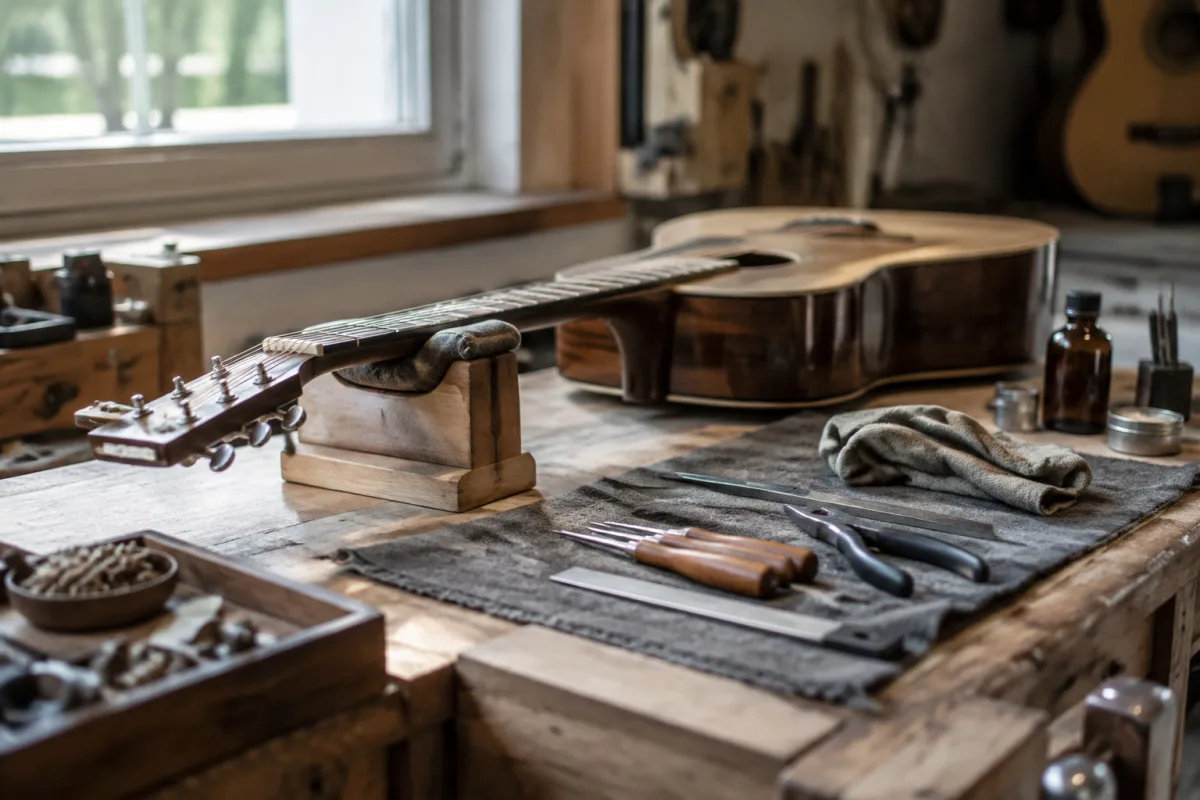
Proper guitar setup is the foundation of playability, tone and instrument longevity. Whether you're adjusting truss rods, filing frets, changing strings or tweaking bridge saddles, you'll need the right guitar setup tools for the job. These essential instruments range from simple items any player should own to specialist gear used by professional technicians. This guide covers the essentials and explains what each one does.
Essential Basic Setup Tools
Every guitarist should have a few items in their toolbox. An Allen key (hex wrench) set is non-negotiable—most truss rod adjustments, pickup height screws and bridge saddle screws use standard metric or imperial sizes. A quality set with sizes 1.5mm to 10mm covers almost every job during basic maintenance.
A straightedge is indispensable for assessing neck relief and fret levelness. A 24–36-inch metal straightedge lets you sight down the fretboard to spot high or low spots. Feeler gauges measure string action, neck relief, and bridge saddle clearance; a set from 0.002" to 0.028" handles most common tasks. These are essential additions to any technician's toolkit.
Screwdrivers—a Phillips head and a flathead—are essential for truss rod access panels, bridge pin removal (on acoustic guitars), and tuning peg adjustments. A precision screwdriver set with multiple blade widths prevents stripping screw heads. Quality screwdrivers are among the most-used items you'll own for guitar setup work.
String and Action Tools
A good capo is practically a setup tool when you're measuring action at different frets. A spring-loaded capo lets you replicate the open-string tension at any fret, making it easier to spot relief or high frets.
A string action ruler (also called a machinist's rule or bridge pin gauge) is a thin, straight metal ruler calibrated in 1/64ths of an inch. Place it flat on the frets beneath a string to measure exact clearance. Digital calliper gauges are more expensive but faster and more precise, and many experienced players add them to their collection of guitar setup tools.
Guitar-specific setup tools like a neck relief gauge let you measure the gap between your straightedge and the frets precisely, quantifying the amount of relief in your neck. Luthier's fret rocker gauges do the same job and are affordable purchases for anyone serious about maintenance.
Fret Work and Finishing
If you're levelling, dressing or crowning frets, you'll need fret files—a fret rocker file (for initial levelling), a crowning file (to reshape the fret crown), and fine abrasive papers (120 to 2000 grit). Fret crowning files are expensive and specialised; most players send complex fret work to a technician with professional equipment and expertise.
Fret polishing compounds and microfibre cloths bring out the shine and remove oxidation after dressing. A fret protector tape guards fretboard inlays and binding from file marks during crowning.
Bridge and Saddle Adjustments
On acoustic guitars, a saddle compensator tool (or saddle shaper) lets you modify saddle angles without removing it entirely. For electric guitars, bridge saddle file sets in various sizes let you adjust string-to-string action independently. These specialised items are often sold as part of luthier kits and professional setups.
A depth gauge measures saddle height precisely, ensuring even action across all strings. A radius gauge (also called a fret rocker with radius profiles) checks whether your saddles match your fretboard radius.
Nut Work
Nut slotting files are specialised tools for cutting or widening nut slots to accommodate string gauges or reduce action at the first fret. They come in a set of ten or twelve, one per string size. This is specialist work best left to professionals unless you're experienced, as mistakes are costly.
A nut crowning file shapes the top surface of a nut to match your fretboard radius, ensuring even contact with all strings. Again, this is precision work suited to experienced technicians with proper equipment and years of experience.
Checking and Measuring Devices
A neck-relief gauge gives a visual and tactile sense of how much relief is in your truss rod. A budget version is just a straight edge with a feeler gauge taped to it; commercial versions cost more but are sturdier and represent worthwhile investments for serious players who build a collection of guitar setup tools.
A fret-rocker gauge (a straightedge with a specific length to pinpoint high frets) is essential for any serious fret inspection. Radius gauges in common fretboard radii (9.5", 12", 15", 17.5") help match saddle and nut curves to your fingerboard and provide consistent results.
Specialty and Power Tools
For serious repair work, a Stewmac fret crowning system or a specialised fret press speeds up fret replacement and crowning. Digital callipers measure everything from saddle height to fret wire dimensions, and they're worth acquiring if you pursue more advanced maintenance work.
Rotary tools (like a Dremel) with the right bits can speed up fret polishing, nut slot cleaning, and bridge pin shaping. A benchtop belt sander handles fret levelling on a large scale, though such power tools aren't ideal for one-off jobs with basic equipment.
Organization and Storage
Invest in a dedicated toolbox or drawer organiser to keep your guitar setup tools in one place. Protect precision items—straightedges, gauges, files—from dust and moisture. Quality tools are investments that last decades if properly maintained and stored carefully.
When to DIY and When to Call a Pro
Simple tasks like adjusting truss rods, swapping strings, tweaking saddle heights and changing pickup heights are safe for any player with basic setup knowledge and patience. Fret levelling, fret crowning, nut slot cutting and fret replacements require years of experience and specialist equipment—mistakes are expensive and hard to repair. If you're uncertain, consult a professional luthier or technician rather than risk damaging your instrument.
Conclusion
Guitar setup tools represent a worthwhile investment for any serious player. A basic starter kit—straightedge, feeler gauges, hex wrenches, screwdrivers and an action ruler—costs under £50 and solves most playability issues. Specialist fret files, crowning tools and gauges come later if you pursue advanced luthier work. The key is understanding what each tool does and knowing the limits of home setup before you risk your instrument.




Comments