


Guitar Humidifier article
Guitar Humidifier for Beginners: A Complete Guide
Protect your guitar investment with a humidifier. Discover why wooden guitars need humidity control, types of humidifiers, placement strategies, and beginner-friendly maintenance habits.
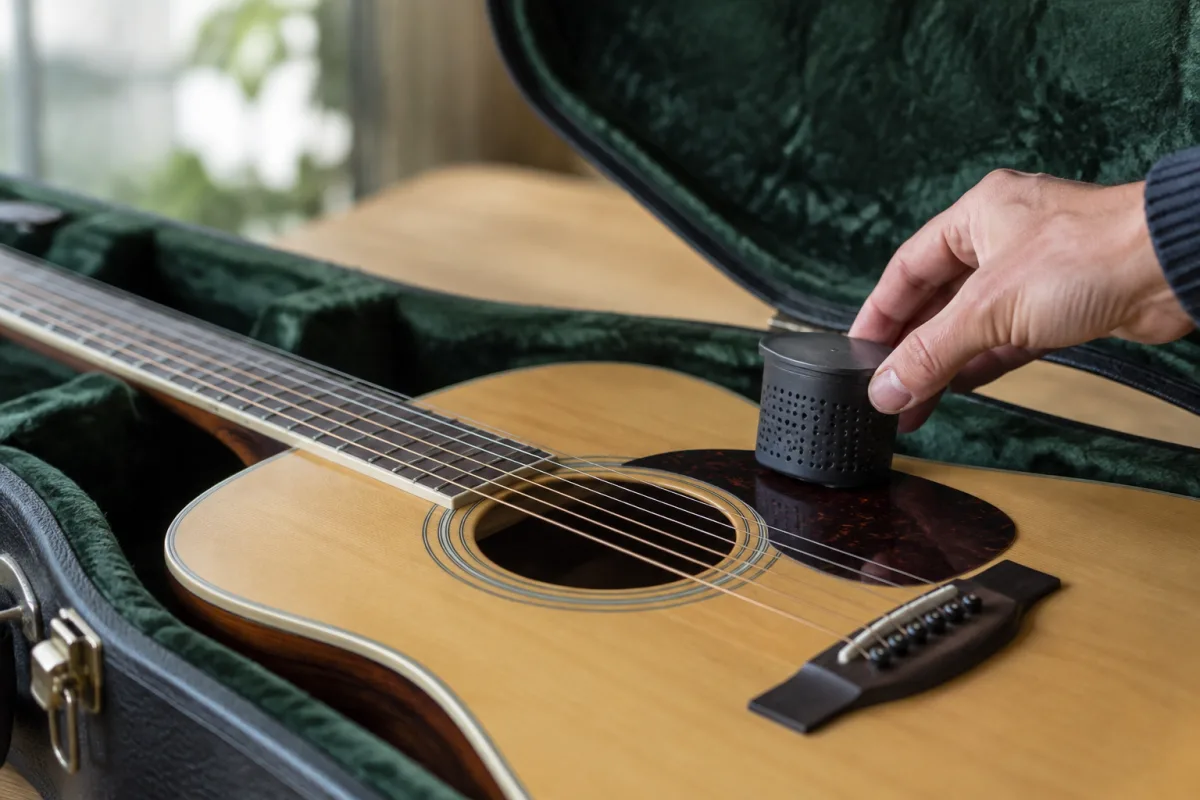
As a new guitarist, you've likely invested in your first decent instrument. Now you're learning that wooden guitars are living things that respond to their environment—especially moisture. A guitar humidifier sounds like optional gear until your instrument cracks or sounds dull because the wood dried out. This guide explains why a guitar humidifier matters, removes the complexity, and helps you protect your investment confidently.
Why Wood Matters: The Simple Story
Guitar wood expands and contracts based on humidity. Too dry, and the wood shrinks, pulling itself apart and creating cracks that permanently damage tone and playability. Too humid, and the wood swells, potentially warping the neck or causing frets to pop. The goal is stable humidity—ideally 45–55%—where your guitar remains dimensionally stable and sounds its best.
A guitar humidifier maintains that stability. It's insurance against environmental damage that would otherwise require expensive repairs or, worse, replacement. As a beginner, understanding this is foundational knowledge that separates careful instrument care from careless neglect.
What Humidity Problems Look Like
Dry environments (below 40% humidity) are the primary concern for guitarists. You'll notice fret sprout—frets protruding beyond the fretboard edges—which makes playing uncomfortable. The action (string height) drops as the neck flattens. Worst case: visible cracks appear in the body, soundboard, or back. These problems are expensive to repair and sometimes unfixable.
Excessively humid conditions (above 60%) cause different problems: swelling of the body, potential warping of the neck, and sometimes buzzing frets as the wood shifts. Most beginners live in climates where drying (not excess humidity) is the real threat. That said, awareness prevents careless storage in damp basements.
Sound quality deteriorates as wood moisture changes. Your guitar will sound duller, lose projection, and feel unresponsive. This discourages beginners who might blame their technique when the problem is environmental. Maintaining proper humidity preserves the tone your instrument was designed to produce.
Types of Guitar Humidifiers for Beginners
Sponge-based humidifiers are the simplest and cheapest option (£5–£15). You soak the sponge, place it in the guitar's sound hole, and it gradually releases moisture. No electricity needed; no moving parts to fail. The catch: you must remember to soak and refresh the sponge regularly, typically weekly. If you're forgetful, this approach will fail.
Active humidifiers plug in or use batteries and maintain humidity automatically (£40–£100). They're more reliable and require less maintenance. Some mount on a guitar stand or sit in a guitar case. These suit players with busy schedules or those living in very dry climates. As a beginner investing in your instrument's care, this is often worth the extra cost for peace of mind.
Case humidifiers work passively inside a guitar case, maintaining a stable internal environment (£15–£30). These are excellent for acoustic guitars stored in cases, particularly important if you gig regularly and your guitar moves between venues. They won't help if your guitar sits on a stand in your bedroom.
Hybrid systems combine sponge convenience with sensor technology (£25–£50). These show humidity levels and trigger alerts when moisture is needed. They're more active commitment than pure sponge systems but less fussy than plugged-in humidifiers.
Where to Place Your Guitar Humidifier
Sponge humidifiers insert into the sound hole, positioned toward the guitar's interior. Insert gently to avoid touching the bracing or soundboard. A sponge that's too wet might drip—position it carefully.
Active humidifiers mount on guitar stands or rest on a shelf near your instrument. They work best in relatively enclosed spaces—a room corner or stand enclosure—rather than the middle of a large, open room where humidity diffuses inefficiently.
Never place humidifiers directly against the guitar body or in contact with the finish. Position everything to allow airflow around the instrument.
Practical Tips for Beginners
Check humidity weekly. Inexpensive humidity metres cost £5–£10 and take the guesswork out of maintenance. Position it near your guitar to monitor conditions. Many beginners use these and discover their homes are far drier than they assumed.
Use a humidifier year-round if you live in a dry climate. Winter heating particularly dries indoor air—don't assume the problem disappears when weather warms. Consistent humidity is the goal.
Invest in a humidifier immediately when you bring a new guitar home. Many beginner guitars have already experienced months of potentially dry conditions at retail. Stabilising humidity should be your first maintenance step.
Combine humidification with smart storage. Store your guitar on a stand in a climate-controlled room rather than near heaters, air conditioning vents, or windows where temperature and humidity fluctuate wildly. The humidifier handles humidity; positioning handles temperature stability.
Common Beginner Mistakes
Assuming a cheap guitar doesn't need humidification is a false economy. Inexpensive instruments are often more susceptible to humidity damage because wood quality is lower. This is exactly when humidification matters most.
Forgetting to refresh your sponge humidifier leads to failure. Set a phone reminder for weekly maintenance. If you can't commit to that discipline, choose an active humidifier instead.
Over-humidifying causes problems as serious as under-humidifying. Don't soak your sponge until it's dripping. The goal is stable humidity (45–55%), not maximum moisture. Your humidity metre tells you when you've reached that target.
Ignoring humidity during season changes often results in problems. Humidity swings wildly when heating or air conditioning kicks in. Increase humidifier maintenance during transitional seasons.
Building Long-Term Instrument Care Habits
Your first guitar humidifier marks the beginning of instrument stewardship. It's one of the easiest, most cost-effective ways to protect your investment. Many beginner guitarists never think about humidification until a crack appears and repair costs dwarf what they paid for the instrument.
By establishing humidification habits early, you're developing the kind of consistent care that keeps guitars healthy for decades. Your future self will thank you when your guitar still sounds great and plays comfortably years into your playing journey.
For detailed information about humidity science, long-term storage strategies, and advanced humidification systems, explore our complete guide to guitar humidifiers. You'll understand the physics and engineering behind keeping your guitar stable and sounding great.


Comments