


Guitar Humidifier Buying guide
Guitar Humidifier: A Complete Buyer's Guide
A guitar humidifier prevents costly damage from dry air. This guide explains what actually matters when selecting one and which models deliver real value.
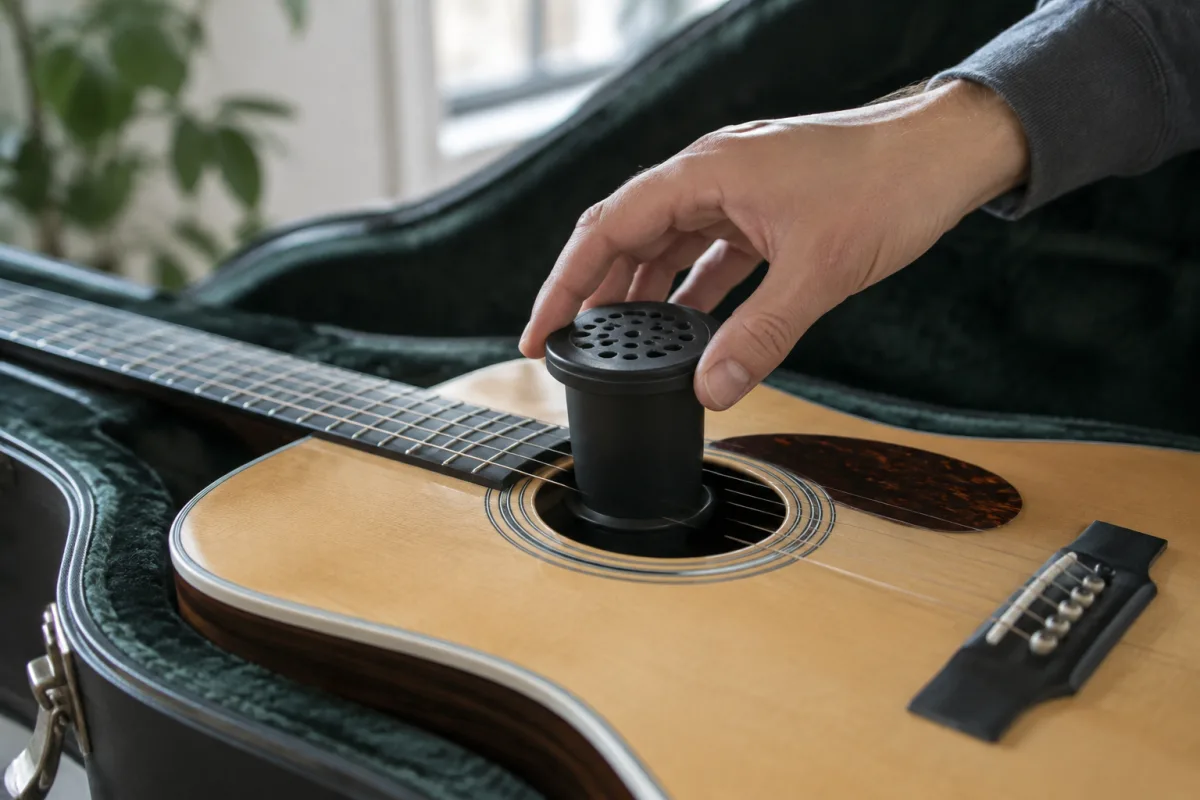
A guitar humidifier is essential protection against dry air, especially during winter or in arid climates. Choosing the wrong one wastes money and leaves your instrument vulnerable. The right guitar humidifier maintains optimal moisture levels without overdoing it—preventing warping, cracking, and fret sprout whilst keeping your guitar's tone intact. This guide explains what actually matters when selecting a guitar humidifier and reveals which price brackets deliver real value.
Understanding Humidity and Your Guitar
Wood responds to humidity changes by swelling when moist and shrinking when dry. A guitar's soundboard (top), back, and sides are especially vulnerable. Humidity below 40% causes wood to shrink, leading to cracks along the grain, separation of wood layers, and raised frets that make playing uncomfortable. Humidity above 60% causes swelling, which warps the neck and body, creating buzzing strings and unplayable instruments. The goldilocks zone for guitars is 45–55% relative humidity.
This is why a guitar humidifier matters—it stabilises humidity around that safe zone during dry seasons. Geographic location and season determine whether you actually need one. London's maritime climate rarely drops below 50% humidity indoors; Arizona and heated homes during winter plummet to 20–30%. If your local humidity naturally stays 45–55%, you don't need a humidifier. If it drops below 40% for more than a few weeks, you do.
Key Specifications That Matter
Humidifier Type. Three main categories dominate the market: in-case humidifiers (sit inside the guitar case), sound-hole humidifiers (hang inside the guitar's sound hole), and room humidifiers (manage the entire room's humidity). For guitars, in-case models are most practical and widely used. Sound-hole models work but risk water damage if overfilled. Room humidifiers are overkill unless you're controlling humidity for multiple instruments or an entire studio.
Humidification Duration. How long does the humidifier maintain moisture between refills? Budget models release humidity for 2–4 days; mid-range models last 7–14 days; premium models claim 30+ days. Real-world duration depends on initial filling, local humidity, and how tightly sealed your case is. Always aim for weekly refills minimum; anything requiring monthly maintenance often fails when people forget.
Moisture Release Mechanism. Two primary designs: passive humidity packs (sodium chloride-based) and active refillable tube humidifiers. Passive packs maintain humidity passively through absorption; they work fine but aren't adjustable. Refillable tube humidifiers let you control saturation by adjusting the water level; they're more reliable but require manual maintenance. Both work equally well when used correctly.
Case Compatibility. Your humidifier must fit inside your case without interference—either sitting in the side pocket (passive pack style) or hanging beside the guitar (sound-hole style). Measure your case before buying. Hard cases have more predictable space; soft cases and gig bags often lack dedicated humidifier compartments. Some humidifiers are universal; others are size-specific.
Humidity Stability and Control. Premium humidifiers maintain steady humidity ±5%; budget options fluctuate more. If you care about precise control, invest in a humidifier with easily adjustable saturation. If you just want "good enough" protection, basic models suffice.
Guitar Humidifier Comparison Table
| Type | Typical Price | Duration Between Refills | Maintenance Level | Space Required | Best For |
|---|---|---|---|---|---|
| Passive Humidity Pack | £8–15 | 2–4 days | High (frequent refills) | Small pocket slot | Budget buyers, tight cases |
| In-Case Tube Humidifier | £12–25 | 7–14 days | Medium (weekly refills) | Case side pocket | Most guitarists, reliable maintenance |
| Sound-Hole Humidifier | £15–30 | 7–21 days | Medium (careful use) | Inside sound hole | Hard cases, visible storage |
| Premium Adjustable Humidifier | £25–50 | 14–30 days | Low (monthly checks) | Case pocket or sound hole | Professional players, precise control |
What to Check Before Buying
Verify Case Compatibility. Measure your guitar case's interior pocket space and sound hole diameter. Some humidifiers are designed for concert guitars; others suit dreadnoughts or parlour guitars. Incompatibility means buying something you can't use. Always confirm fit before purchasing.
Test the Saturation Release Rate. If buying in-store, fill the humidifier and let it sit for an hour. Does it release moisture evenly, or does water drip out rapidly? Consistent, steady release is key. Rapid dripping indicates poor design; you'll lose all moisture within hours.
Check Material Quality. Budget humidifiers use thin plastic; premium models use durable plastic or gel materials. Cheap materials crack or degrade within months, especially with repeated refilling. Feel the material—does it feel flimsy or sturdy? Brittle plastic is a red flag.
Confirm Humidity Range Control. Can you adjust how much moisture the humidifier releases, or is it fixed? Adjustable models let you fine-tune based on your climate; fixed models are set-and-forget but less flexible. Neither is wrong, but adjustable models suit variable climates better.
Read Real-World Reviews Carefully. Online reviews mention leaks, durability issues, and humidity accuracy. Look for patterns (many complaints about leaks = avoid; widespread praise for stability = good sign). Manufacturer specs are optimistic; customer experiences are more reliable.
Check Whether Refill Supplies Are Available Locally. Some premium humidifiers use proprietary refill cartridges that are hard to find. Verify that refills are available in the UK and reasonably priced. A humidifier requiring expensive imported refills becomes costly to maintain.
Common Buying Mistakes to Avoid
Mistake 1: Assuming More Expensive Always Means Better. A £50 premium humidifier works only slightly better than a £15 mid-range model. Higher prices often reflect brand reputation and precise control features that most guitarists don't need. Don't overspend on features you won't use.
Mistake 2: Choosing Based on Duration Alone. A humidifier claiming 30-day duration is attractive, but only if you'll remember to check it monthly. A 7-day humidifier you refill weekly becomes routine; a 30-day one you forget about for two months fails catastrophically. Choose based on realistic maintenance habits.
Mistake 3: Ignoring Case Compatibility. Buying a beautiful sound-hole humidifier only to discover it doesn't fit your soft case is frustrating. Measure and confirm compatibility before purchasing. This prevents wasted money and ensures the humidifier actually protects your guitar.
Mistake 4: Overfilling the Humidifier. More water doesn't equal better protection. Overfilled humidifiers release moisture too quickly, then go dry within days. Follow manufacturer instructions on fill level. Too much water is as bad as too little.
Mistake 5: Neglecting to Monitor Humidity. A humidifier works best with feedback. Buy an inexpensive humidity gauge (£5–10) and place it in your case. Check weekly to ensure humidity stays in the 45–55% zone. A humidifier without monitoring becomes a guess—you won't know whether it's working.
Price Tiers Explained
Budget (£8–15): Basic passive humidity packs or simple tube humidifiers. They work but require frequent refilling (2–4 days). Suitable for occasional players or those willing to maintain weekly refills. Durability is moderate; expect replacement every 2–3 years.
Mid-Range (£15–25): Reliable in-case tube humidifiers with 7–14 day duration. The sweet spot for most players. Balanced durability, reasonable maintenance, and proven reliability. Most guitarists start and stay here.
Premium (£25–50): Advanced humidifiers with precise control, 14–30 day duration, and superior materials. Worth the investment for valuable guitars or professional players. The difference from mid-range is refinement, not necessity.
Specialised (£50+): Digital humidifiers, high-end systems, or professional-grade equipment. Overkill for home players but invaluable for studios or collections of multiple guitars.
Buying Checklist
Before committing your budget, address these practical questions:
- What's your local humidity range during winter? If above 45%, you may not need a humidifier.
- Do you have a humidity gauge to monitor conditions, or will you buy one alongside the humidifier?
- What type of case do you use (hard, soft, gig bag)? Is there dedicated humidifier storage space?
- Are you willing to refill weekly (mid-range), or do you need minimal maintenance?
- How valuable is your guitar? Budget players might accept less precise humidity control; expensive instruments warrant better protection.
- Will you refill and maintain regularly, or does maintenance need to be near-automatic?
For a comprehensive overview of guitar humidification, see our complete guide to humidifying your guitar. That resource covers humidity science, damage prevention, and how different approaches work together to protect your instrument.
The right guitar humidifier prevents costly damage and keeps your instrument playable for decades. Invest based on your climate, maintenance habits, and how much your guitar matters to you. Weekly refill discipline beats expensive set-and-forget solutions.


Comments