


Fret Polishing Kit Buying guide
Fret Polishing Kit: A Complete Buyer's Guide
Buying the right fret polishing kit means matching your needs to the correct tools. This guide shows you what specs matter, where pitfalls hide, and which price point offers genuine value.
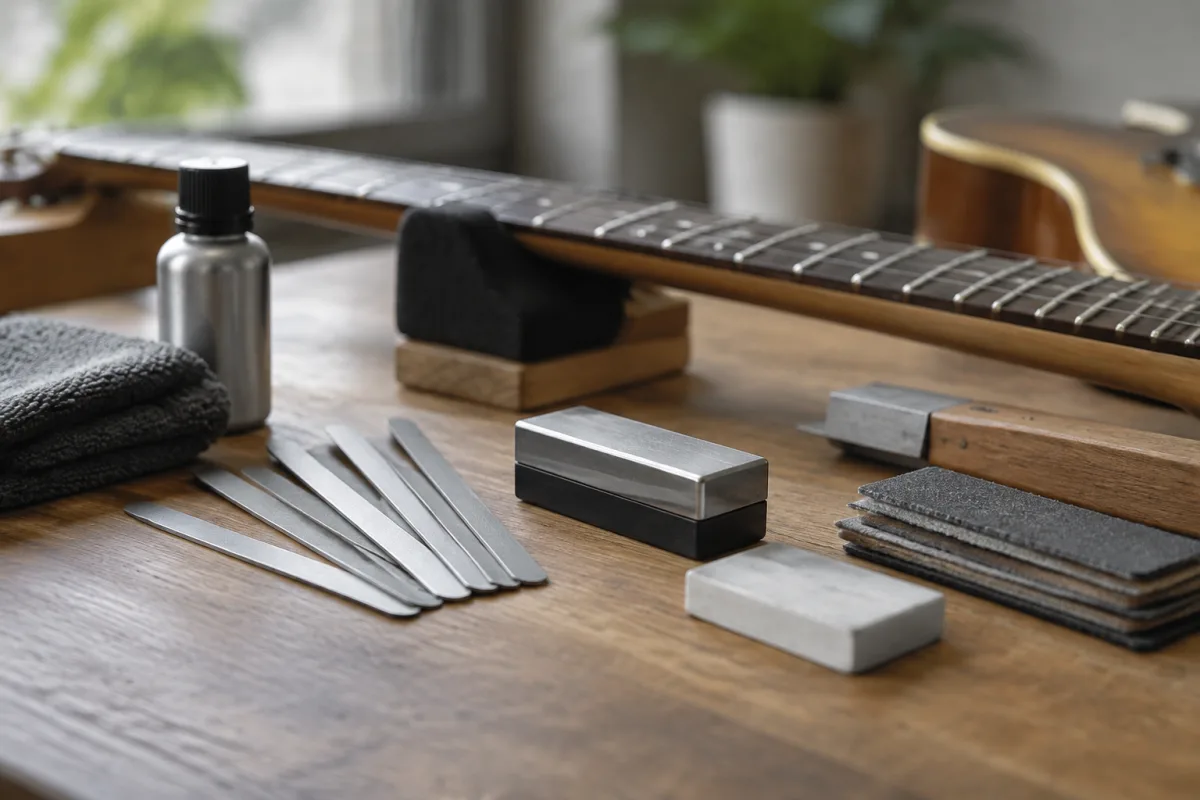
Buying a fret polishing kit means matching your needs to the right tool at the right price. The market is crowded—everything from basic kits you can use once and forget about, to professional-grade systems that demand real commitment. This guide cuts through the noise and shows you exactly what to prioritise when choosing a fret polishing kit for your guitar or bass.
The Price Tiers: What You Actually Get at Each Level
Budget fret polishing kits (£15–30) typically include a few abrasive papers, a masking tape roll, and maybe a polishing cloth. These are honestly fine if you only need to touch up frets occasionally. Don't expect precision—these kits are forgiving, which means you're less likely to damage your frets if you're not experienced. But results are modest.
Mid-range fret polishing kits (£30–70) are where most players end up. You get a proper selection of grits (usually 400, 600, 1000, 1500, 2000), decent masking tape, a straightedge (crucial—see below), and quality cloths. A fret polishing kit at this price point gives you real results without requiring professional-level skill. This is the sweet spot for a guitarist or bassist who wants noticeably improved playability.
Premium fret polishing kits (£70–150+) include everything above, plus specialist tools. You might get a specialised fret crowning file, precision straightedges, or even a fret rocker. A fret polishing kit at this level is what luthiers use. Don't buy this unless you're planning to polish frets regularly—it's investment territory.
Grits: The Most Important Spec
When you're evaluating a fret polishing kit, the grit progression is your first filter. A complete fret polishing kit must include grits from coarse (400–600) up to fine (1500+). Why? Because you start coarse to level the frets and remove corrosion, then progressively move to finer grits to restore shine.
The best fret polishing kits include at least five grits: 400, 600, 1000, 1500, and 2000. Anything less is cutting corners. A fret polishing kit that skips straight from 400 to 1000 will leave scratches that take forever to buff out—you're working backwards, not forwards.
Also check: are the abrasive papers actual sanding papers (like you'd use on wood), or are they specialty abrasives made for frets? A fret polishing kit using proper fret-specific papers will give you better, more controlled results. Cheap papers clog with fret dust quickly; good ones in a fret polishing kit last much longer.
What to Look for: Essential Components
The masking tape in your fret polishing kit matters more than you'd think. Low-quality tape leaves residue, tears when you peel it, or fails to protect the fretboard. Check reviews specifically for tape performance—a fret polishing kit with rubbish tape will frustrate you on day one. Proper masking tape is sticky enough to stay put but comes off cleanly. It's a small thing that defines the whole experience of using a fret polishing kit.
The straightedge is your fret polishing kit's most important tool (beyond the abrasives themselves). It shows you which frets are high and which are low. Without it, you're guessing. A decent straightedge in your fret polishing kit should be rigid (not plastic), long enough to span multiple frets, and precise. Some kits include a laser straightedge—worth the extra cost if your budget allows it. Frankly, a fret polishing kit without a usable straightedge is half a kit.
Cloths matter. A fret polishing kit should include at least one good microfibre cloth for final buffing. Some kits add cotton cloths for dusting between grits. Quality cloths don't shed lint (lint particles create new scratches on polished frets). A fret polishing kit with proper cloths saves you from this hidden frustration.
Pitfalls When Buying a Fret Polishing Kit
The most common trap: buying a fret polishing kit marketed as a "complete system" that's actually missing a crucial grit. If you've got 400, 1000, and 2000, but nothing in between, you're filling gaps with improvised solutions. Check the exact grit lineup before you buy a fret polishing kit.
Another pitfall is assuming a fret polishing kit includes everything you need for your specific instrument. A kit designed for guitars (typically checking frets 1–22) might not be ideal for a bass with 24 frets or a short-scale instrument. Check length and scope when selecting a fret polishing kit. Some kits are genuinely one-size-fits-all; others are optimised for a specific instrument family.
Watch out for fret polishing kits that promise automatic results. A fret polishing kit is a tool, not a magic box. Poor technique ruins frets regardless of how good the kit is. Read reviews that mention ease of use and learning curve. A fret polishing kit with clear instructions, videos, or support from the maker is worth more than a kit that assumes you know what you're doing.
Finally, don't buy a fret polishing kit based on price alone if your budget allows for a mid-range option. A cheap fret polishing kit saves money upfront but costs you in frustration, time, and potentially a damaged fretboard if something goes wrong. A mid-range fret polishing kit is far better value.
Specific Features Worth Paying Extra For
Fret crowning files are brilliant additions to a fret polishing kit, but they're not essential for beginners. If you're serious about maintaining multiple instruments, a fret polishing kit with a crowning file justifies the cost. For casual use, skip it.
Some fret polishing kits include fret guards—shaped templates that protect the fretboard whilst you work on the frets themselves. These are genuinely helpful and definitely worth having in your fret polishing kit, especially if you're nervous about scratching the fretboard. They're not standard, but they make a real difference in confidence and results.
Digital straightedges or laser tools appear in premium kits. If you're only polishing frets once or twice, you don't need this precision. If you plan to maintain multiple instruments regularly, a fret polishing kit with a laser straightedge is a legitimate investment—it makes the whole process faster and more accurate.
Matching a Fret Polishing Kit to Your Needs
Ask yourself: How often will I use this? Occasional maintenance? Annual refresh? Regular professional-level work? A casual player needs a mid-range fret polishing kit with decent grits, good tape, and a functional straightedge. That covers 95% of home maintenance needs.
A technician or active musician who maintains multiple instruments might justify a premium fret polishing kit or even professional-grade tools. A fret polishing kit at that level is a business expense with recurring use.
Don't overthink it. Check that the fret polishing kit has grits you need, quality abrasives, proper masking tape, and a decent straightedge. Anything beyond that is nice-to-have. Buy within your budget but don't cheap out entirely—a fret polishing kit at the mid-range price point delivers excellent value and real results. For a deeper understanding of your options, see the complete fret polishing kit guide.
The right fret polishing kit for you isn't the most expensive or the cheapest—it's the one that matches your instrument, your skill level, and your maintenance plans. Pick accordingly, follow instructions carefully, and you'll get genuinely impressive results that make your fretboard look and play noticeably better.


Comments