


Yamaha PA Speaker article
Yamaha Powered Pa Speakers: A Complete Guide
Yamaha PA speakers deliver professional-grade audio performance for live sound reinforcement. From compact portable systems to large-venue installations, Yamaha's reliable engineering makes them the standard choice across touring, festivals, and venues worldwide.
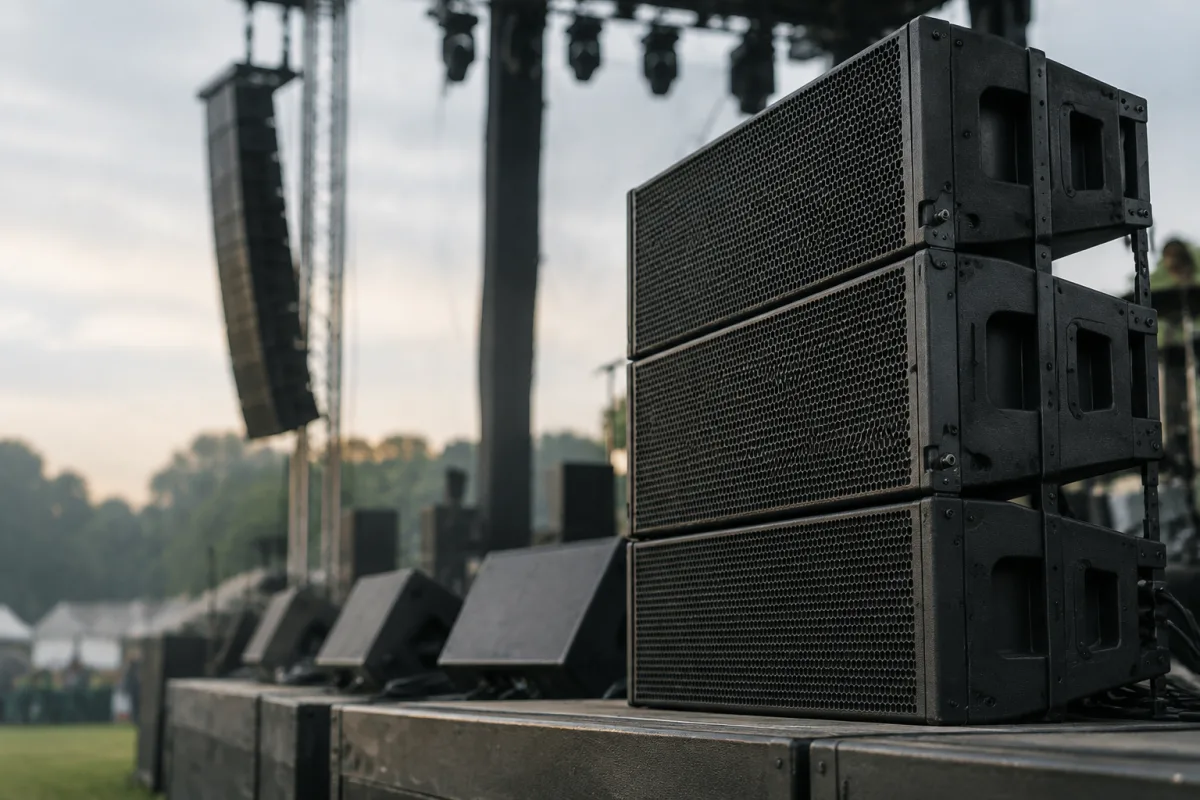
Yamaha PA speakers: reliable amplified systems for live sound
Yamaha PA speakers combine professional-grade audio performance with practical affordability, making them essential equipment for venues, mobile engineers, and touring musicians. Whether you're amplifying a small venue, outdoor festival, or full-scale concert production, Yamaha's comprehensive speaker range delivers consistent sound quality and reliability that professionals trust worldwide.
Yamaha's approach to PA speaker design
Yamaha has engineered professional audio equipment since the 1960s, building reputation through consistent quality and engineering rigour. Yamaha PA speakers reflect this heritage—carefully tuned frequency response, robust construction, and proven reliability across touring demands and environmental challenges.
Rather than pursuing novelty, Yamaha focuses on fundamental audio engineering: neutral frequency response that translates accurately across venue acoustics, efficient amplification delivering maximum SPL from modest power, and durable construction that endures repeated setup and breakdown cycles inherent to touring work.
Yamaha PA speaker categories
| Series | Application | Typical output |
|---|---|---|
| Stagepas | Small venues, rehearsals, busking | 50–400 watts |
| DBR (Powered) | Bands, smaller touring productions | 350–1000 watts |
| MSR (Touring speakers) | Medium to large venues, festivals | 800–3000 watts |
| CZX (Compact) | Portable, high-output systems | 1000–3000 watts |
Yamaha's structured lineup allows venue managers and engineers to match equipment to specific acoustic requirements and budget constraints.
Powered versus passive Yamaha PA speakers
Yamaha manufactures both powered (built-in amplifier) and passive (requiring separate amplification) PA speakers. Powered Yamaha PA speakers simplify system setup—fewer cables, reduced weight, integrated equalization—making them ideal for smaller productions and touring. Passive speakers offer flexibility in amplifier choice and typically higher maximum SPL, preferred for large-scale productions.
Most modern Yamaha PA speakers are powered designs, reflecting industry trends toward simpler system architecture and reduced technical requirements for operation.
Speaker construction and reliability
Yamaha PA speakers use quality drivers, crossovers, and enclosures rated for professional touring. Cabinet construction combines strength with practical weight—heavy enough for acoustic integrity, light enough for transport. Tolex covering withstands outdoor exposure and repeated handling. Amplifier components use automotive-grade electronics rated for temperature extremes and electrical stress.
This construction philosophy means Yamaha PA speakers age gracefully, remaining functional after years of touring. Many venues maintain systems from the 1990s and 2000s, testament to engineering longevity.
Sound characteristics of Yamaha PA systems
Yamaha PA speakers prioritise neutral, accurate reproduction rather than flattering coloration. This character suits live sound reinforcement where accuracy matters more than personality. A spoken-word event requires intelligible speech; a concert requires honest frequency response that engineers can shape with mixing and EQ.
Experienced sound engineers appreciate this neutrality—the speakers neither hide problems nor mask inadequate mixing. The sound you mix is the sound you get, enabling confident operation across diverse venues.
Yamaha PA speakers for different applications
Small venues and rehearsals
Stagepas compact systems provide portable amplification suitable for rehearsal studios, small clubs, and busking. These all-in-one systems eliminate complex system design, requiring only audio inputs and speaker placement. Sound quality remains respectable for intimate venues despite compact size.
Touring bands
DBR series powered speakers suit touring bands, providing sufficient output for medium venues with manageable equipment weight. A pair of DBR12 speakers handles most band mixing requirements; larger productions add DBR15 or DBR-S subwoofers for bass reinforcement.
Festival and large-venue productions
MSR series speakers serve festival productions, outdoor concerts, and large venues. Their high SPL capability, sophisticated crossover design, and professional input options support complex mixing scenarios. Many festivals standardise on Yamaha PA systems across their venue portfolio, enabling consistent engineer expectations.
Integration with modern mixing systems
Contemporary Yamaha PA speakers integrate with modern mixing consoles and networked audio systems. XLR inputs, combination input connectors, and digital audio interfaces accommodate diverse audio sources. Some Yamaha systems include Dante networking capability, enabling long-distance audio distribution and system synchronisation.
Budget and value proposition
Yamaha PA speakers offer excellent value—professional sound quality and proven reliability at lower cost than boutique alternatives. Venues and touring engineers choose Yamaha through pragmatism: the money saved compared to premium brands funds additional equipment or improved system design.
Yamaha PA speakers hold resale value well, enabling depreciation-conscious venue managers to upgrade systems periodically whilst recovering reasonable value from previous equipment.
Maintenance and support
Yamaha's established support network ensures availability of spare parts and professional service worldwide. Amplifier modules, drivers, and crossovers are replaceable, extending system lifespan beyond initial equipment. Many venues maintain equipment relationships with local Yamaha dealers, enabling rapid troubleshooting and component replacement.
Comparison with alternatives
Competing PA speaker brands include JBL, Electro-Voice, QSC, and RCF. Each offers merits; Yamaha's distinction lies in consistent engineering across product ranges, strong support infrastructure, and balance between affordability and professional capability. Listening tests in your venue remain the definitive assessment method.
Conclusion
Yamaha PA speakers represent practical professionalism—engineered sound quality, proven reliability, and pragmatic affordability that make them standard equipment across touring, festival, and fixed-installation contexts worldwide. Whether you're amplifying a small event or managing a festival's PA system, Yamaha's comprehensive speaker lineup provides solutions matching your technical requirements and budget. The consistency of engineering and proven longevity make Yamaha PA speakers a confidence-inspiring choice for professional sound reinforcement.




Comments