


Streaming Mixer Buying guide
Streaming Mixer: A Complete Buyer's Guide
Choosing the right streaming mixer is about matching your content, your audience platform, and your budget. This buying guide tells you what actually matters, where to spend and where to save.
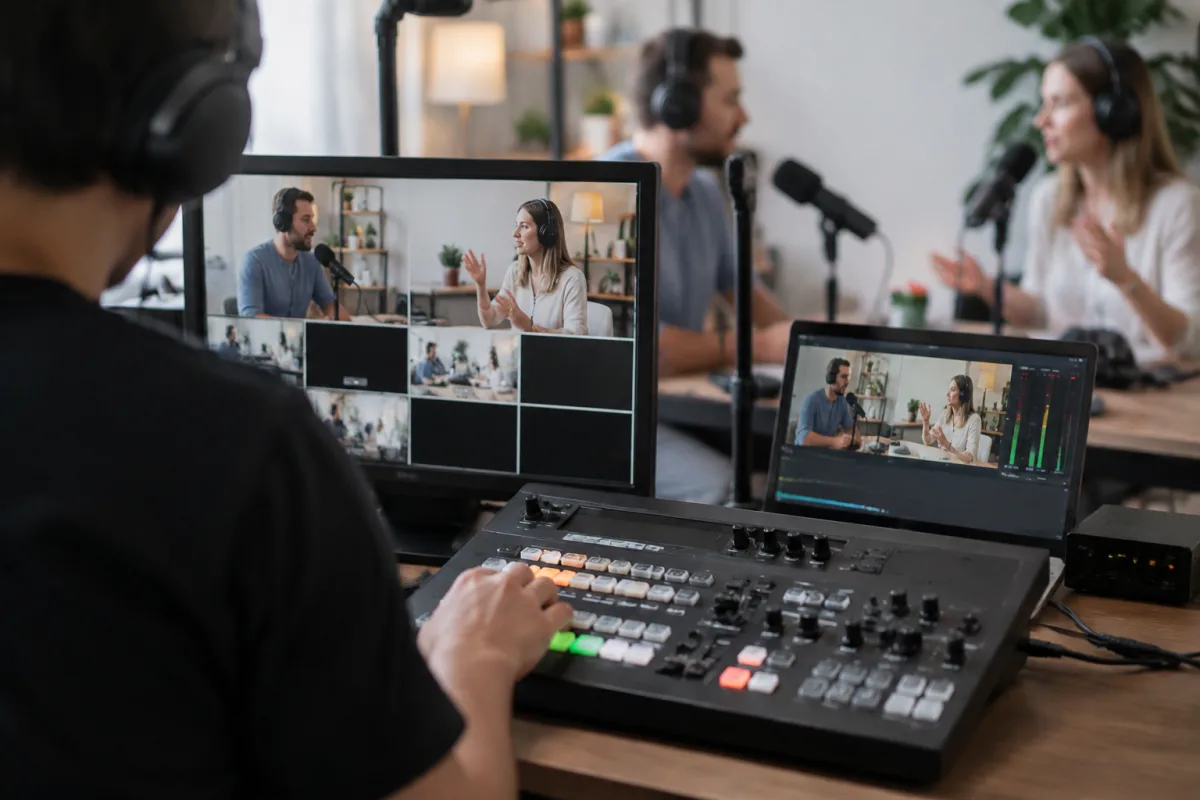
Choosing the right streaming mixer is about matching your content, your audience platform, and your budget. If you're serious about live streaming, whether gaming, music production, podcasts or creative broadcast, a dedicated mixer transforms your audio from flat smartphone sound into something genuinely professional. This buying guide cuts through the specs and tells you what actually matters, where to spend and where to save, and the pitfalls that catch most first-time buyers.
What specs actually matter for your streaming mixer
When shopping for a streaming mixer, the core spec that changes everything is channel count. A 4-channel mixer handles stereo playback plus a microphone and one other input; an 8-channel lets you mix game audio, music, Discord calls and multiple mics all at once. Don't buy more channels than you'll use immediately — each extra channel is cost you don't need and complexity you won't benefit from.
The second deciding spec is connectivity. Look for USB output (so the mixer appears as a single audio device to OBS, Streamlabs or whatever goes live); optical S/PDIF input if you'll connect gaming consoles; and enough 3.5mm / RCA inputs for your current setup. Bluetooth is nice on paper but rarely essential; network audio (Dante, AES67) only matters at professional scale.
Faders matter more than you'd think. A 100mm fader is tall enough to feel responsive and precise; 60mm is cramped and invites level overshoots during a live stream. If you're mixing live, tactile control beats on-screen sliders.
The real-world pitfalls of streaming mixer buying
The biggest mistake is buying a mixer that feels "professional" but lacks USB output. A beautiful hardware mixer from a reputable brand might still need a separate audio interface to reach your streaming software, turning one box into two and complicating your cable nest. Check the box: does it say "USB audio interface" or "USB output"? If not, you've bought a second problem.
The second trap is confusing a streaming mixer with a DJ mixer or live sound board. A DJ mixer excels at beatmatching and long crossfades; a live sound board is built for unattended touring. A streaming mixer optimises for multiple simultaneous sources (your voice, a guest, game audio, background music, Discord notifications) at broadcast quality. They're different tools. Read reviews specifically for streaming workflow, not general audio gear sites.
Don't assume fancier always means better. A mid-range streaming mixer will outlast a budget model and handle edge cases (latency, driver updates, input impedance mismatches) far better. But a £400 mixer is not necessarily twice as good as a £200 one. Look at professional streamer reviews and choose proven models, not brand names.
Finally, test latency before committing. Some mixers introduce a tiny delay between input and output; at even 20–30 milliseconds, you'll notice your own voice echoing back on headphones. This isn't usually a dealbreaker, but it becomes maddening after four hours of streaming. Reviewers often measure it; if they don't mention it, ask in the comments.
Price tiers: what you get for your money
| Budget tier | What's included | Best for | Typical cost |
|---|---|---|---|
| Entry level (2–4 channels) | Basic faders, USB output, 3.5mm inputs, headphone monitoring | Solo streamers, podcasters, one voice plus game audio | £80–150 |
| Mid-range (4–8 channels) | Better faders, more input types (XLR, RCA), some onboard effects, pad/gain controls per channel | Music production, guest interviews, small group streams | £150–350 |
| Professional (8+ channels) | Motorised faders, full metering, multi-band EQ per channel, ADAT/optical I/O, broadcast-grade preamps | Multi-camera setups, live band recording, sports broadcast, large productions | £350+ |
XLR versus line-level inputs: which do you need?
XLR connectors are the studio standard for microphones and provide a balanced, low-noise connection. If you're using a real microphone (not a USB mic), you need XLR. Line-level 3.5mm inputs work for keyboards, audio interfaces and pre-amplified gear. Most streaming mixers include both; the question is how many of each you actually need.
If you're streaming solo with a USB microphone and a computer, 3.5mm is probably enough. If you're streaming with a professional microphone, a guest, backing music and game audio all mixed live, you'll want at least one XLR input, one line-level stereo input (3.5mm or RCA) and perhaps a second XLR for a guest's microphone.
Onboard effects and equalization
Budget streaming mixers often skip EQ and effects. Mid-range models typically include a 3-band EQ (bass, mid, treble) per channel and maybe a reverb or compression for polish. Professional models add multi-band parametric EQ, full racks of effects chains and sidechain control.
For most streamers, a 3-band EQ is more than enough. You can warm up a tinny microphone or tame harshness without leaving the mixer. Reverb is genuinely nice if you're singing or speaking; it glues your voice to the stream. Compression is handy to stop surprise peaks (a guest shouting), but it takes practice to tune well. Don't overpay for effects you won't learn to use.
How to test a streaming mixer before you commit
Check the return policy before ordering. Major retailers give 14–30 days. Set it up with your actual microphone, your actual inputs and your actual streaming software. Run through a mock stream: check that latency feels right, that faders have the responsiveness you want, that switching between inputs is intuitive, and that headphone monitoring works as you expect.
Listen for noise. Bump each input to full volume; if you hear hiss or hum, the preamps are poor or the shielding is lacking. Quality streaming mixers are nearly silent until you send them a signal.
Test edge cases. Plug in a Bluetooth speaker on one input and a microphone on another at the same time. Unplug something mid-stream and plug it back in. Does the mixer forget its levels? Does the software see the audio flow correctly? These aren't glamorous tests, but they'll tell you whether it'll survive a chaotic live show.
Should you buy used or refurbished?
A used streaming mixer from a trusted seller can save 30–50% and is usually perfectly safe. Mixers have no moving parts besides faders (which wear in, not out), and they tolerate road bumps well. Refurbished models from the manufacturer carry a guarantee and sometimes are nearly identical to new stock for 20% less. Dodgy resellers and ungraded second-hand units are riskier; you lose the warranty and may inherit fader wear or missing cables.
New is the sensible choice if you're buying your first mixer, because you get the manual, the warranty and peace of mind. Once you know what you want, the second-hand market is fair game.
Where a streaming mixer fits in your setup
A streaming mixer sits between your audio sources and your streaming software. Your microphone (XLR), your game console or music keyboard (3.5mm), your backing track (USB or 3.5mm) all feed into the mixer. The mixer then sends a single stereo output to your computer via USB, and your streaming software treats it as one high-quality audio device. This is cleaner and more reliable than trying to route four different cables into a computer's built-in sound card.
If you're new to this, the overlap with our overview of streaming mixers might be useful — it covers the basic concepts and how mixers work. This guide focuses on how to choose the right one for your specific workflow.
The bottom line
Buy a streaming mixer with enough channels for your current setup plus one spare, prioritise USB audio output above brand names, and pick models that real streamers recommend, not just general audio sites. Test it before you commit, pay a bit more for better faders and preamps if you'll mix live, and don't assume professional price means professional reliability. A £150 mixer that does one job brilliantly beats a £500 mixer that tries to do everything and masters none.


Comments