


Rcf Powered Speaker article
Rcf Powered Speaker for Beginners: A Complete Guide
Your first experience with an RCF powered speaker can feel intimidating, but these systems are engineered to be beginner-friendly and deliver professional sound.
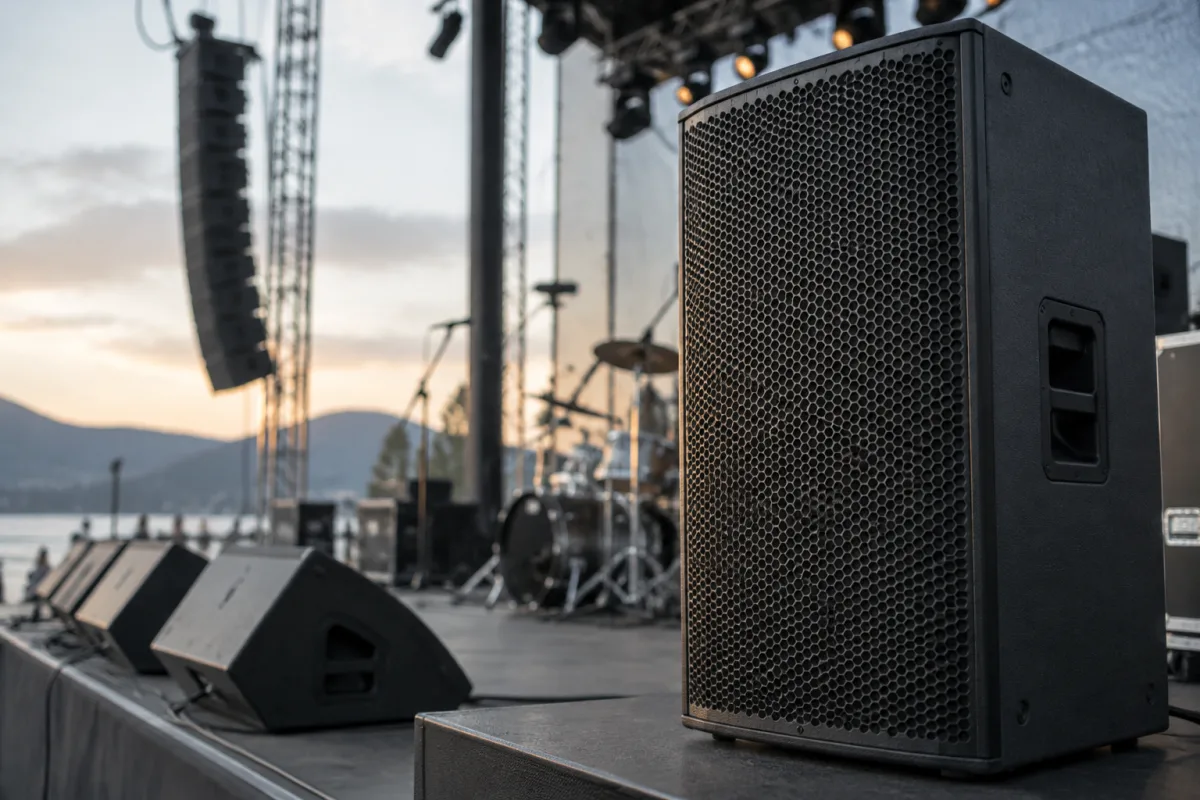
Your first experience setting up and using a powered speaker system can feel intimidating, but RCF powered speakers are specifically engineered to be beginner-friendly and forgiving. Whether you're setting up a small rehearsal space, running sound for a local venue, or amplifying live performances, RCF powered speakers deliver professional sound without requiring you to become a sound engineer overnight. This guide walks you through the essentials, removes the confusion, and builds your confidence to deploy RCF powered speakers successfully.
What Is a Powered Speaker, and Why Choose RCF?
A powered speaker combines amplification and speaker drivers in one cabinet. Unlike passive speakers that need a separate amplifier, an RCF powered speaker is self-contained. You connect your mixer, microphone, or audio source, and it amplifies and reproduces the sound. This simplicity is perfect for beginners. RCF powered speakers are renowned for reliability, clear sound, and foolproof operation. They're used in everything from small clubs to large festivals because they simply work. The company builds equipment for professionals, which means you're getting military-grade reliability in an intuitive package.
Understanding Your RCF Powered Speaker: The Connections and Controls
Every RCF powered speaker shares a similar design. Once you understand one model, you understand them all. Here's what you're looking at:
Input connections (back panel). Most RCF powered speakers feature both XLR and 1/4" (jack) inputs. XLR is the professional standard for microphones and balanced audio. The 1/4" is for guitars, keyboards, and unbalanced sources. Identify which input matches your audio source before you plug in. Having multiple input types means flexibility.
Input sensitivity/gain control. This knob (often called input gain or master input) controls how much signal the speaker amplifies. Start with this control around 12 o'clock (neutral). Turn it up if you need more volume. Turn it down if the audio distorts. This single knob is your primary level control.
Treble and bass controls. Most RCF powered speakers include simple EQ controls—usually treble and bass knobs. These shape tone. As a beginner, leave these at neutral (12 o'clock) for your first week. After hearing how the speaker responds, you can adjust if needed.
Phantom power switch (if equipped). Some RCF models include phantom power for condenser microphones. If you're using dynamic microphones (the common, durable kind), you can ignore this. If using condenser mikes, turn phantom power on. Always confirm your microphone needs phantom power before enabling it.
Output connections (if applicable). Some RCF powered speakers include auxiliary outputs to daisy-chain additional speakers. Beginners rarely need this. It's there if your system grows later.
Power indicator light. Most RCF powered speakers have a small LED showing when power is active. Use this to verify the speaker is on before troubleshooting audio issues.
Your First Setup: The Simple Three-Step Method
Getting sound from an RCF powered speaker is straightforward:
Step 1: Power and connections. Plug your RCF powered speaker into mains power. Verify the indicator light comes on. Connect your audio source (microphone, mixer, or instrument) to the appropriate input jack. Use balanced XLR for microphones. Use 1/4" for guitars and keyboards.
Step 2: Set gain correctly. Turn the input gain/sensitivity knob to 12 o'clock. This is a safe starting point. If you hear distortion, turn gain down. If volume is too quiet, turn gain up slowly. You're looking for a clean signal at appropriate volume. This single step prevents 90% of beginner problems.
Step 3: Test and adjust. Speak or play through the microphone or instrument. The RCF powered speaker should reproduce sound clearly. Fine-tune volume by adjusting the gain. Leave treble and bass at neutral unless you hear specific problems (too bright or too muddy).
That's it. You're successfully using an RCF powered speaker.
Common Beginner Mistakes with RCF Powered Speakers
These are the slip-ups that catch newcomers:
Mistake: Cranking the gain control to maximum. Maximum gain creates distortion and muddy sound. RCF powered speakers sound best at moderate levels with clean signal. Start at 12 o'clock. Increase only if you need more volume, one small increment at a time.
Mistake: Using the wrong cable type. Using unbalanced 1/4" cables for long microphone runs causes noise and signal loss. Use balanced XLR cables for microphones, even if your RCF speaker has 1/4" inputs. The extra effort is worth the clean signal.
Mistake: Ignoring input source levels. If your mixer or audio interface is sending signal too hot (too loud), even the RCF powered speaker can't fix it. Set your source device to appropriate output levels before connecting to the speaker. Work from the source backward.
Mistake: Pointing the speaker at a wall or corner. Speaker placement matters significantly. Point your RCF powered speaker toward the audience or listening area, not at a reflective surface. Corners amplify bass frequencies. Mid-room or aimed-out positions sound cleaner.
Mistake: Leaving the speaker on during setup or breaks. Powered speakers generate heat when amplifying. Let them cool between sets. Turn them off if you're not using them for more than a few minutes. This extends speaker lifespan significantly.
Mistake: Assuming louder equals better mixing. A common beginner trap: if something sounds wrong, turn it up. Usually, the answer is gain staging at the source device or EQ adjustment, not more volume. Train yourself to listen critically at reasonable levels.
Proper Gain Staging: The Foundation of Good Sound
Gain staging is the single most important skill with RCF powered speakers. It means setting correct level at every point in your audio chain:
If your audio source (mixer, interface, microphone) outputs at too high level, the RCF powered speaker receives distorted signal. If the source outputs too low, the speaker amplifies noise. The solution: set your source device output to nominal (around 0dB on its meters). Then set the RCF powered speaker gain to reproduce that cleanly. This creates a clean signal chain.
As a rule of thumb: your RCF powered speaker gain should sit around 12 o'clock. If you're regularly cranking it higher, your source device is too quiet. If you're regularly turning it down, your source is too loud. Adjust the source, not the speaker.
Tone Shaping: When and How to Use EQ on RCF Powered Speakers
Most RCF powered speakers include basic treble and bass controls. Here's when to use them:
If the sound is too bright or harsh: Turn treble down slightly (one-quarter turn counterclockwise). Test. Adjust further if needed. Don't overdo it; subtle EQ changes have big effects.
If the sound is thin or lacks low-end: Turn bass up slightly (one-quarter turn clockwise). Again, test and adjust cautiously. More is rarely better.
As a beginner, leave EQ alone for your first month. Learn how the speaker sounds naturally. EQ should fix problems, not become a crutch for bad gain staging or poor speaker placement.
Troubleshooting: Quick Fixes for Common Problems
No sound at all? Verify the RCF powered speaker is powered on (indicator light on). Verify your audio source is connected and active (playing or transmitting sound). Check that the gain isn't turned all the way down. Try a different input cable—it might be broken.
Sound drops in and out? Check cable connections at both ends—they might be loose. Try a different cable. Verify your audio source is stable and not disconnecting.
Distorted or scratchy audio? Turn the gain down. You're probably sending too hot a signal. Alternatively, move the speaker away from reflective surfaces (walls, corners). Room reflections can sound like distortion.
Hum or buzz in the audio? This usually means an unbalanced cable running near electrical equipment. Switch to a balanced XLR cable if possible. Move cables away from power cables and electrical equipment. If the hum persists, it's often a ground loop—your audio interface and mixer might be grounding differently. Your sound engineer can address this.
Maintenance and Care for Your RCF Powered Speaker
RCF powered speakers are built tough, but basic care extends their life:
Keep them dry and away from moisture. After outdoor use, wipe them down. Store them in a padded bag if transporting regularly. Avoid dropping or impact damage. Don't block ventilation slots on the back panel. Let them cool between extended use sessions. Coil cables loosely, never kinked tight. These simple habits keep your RCF powered speaker working for years.
Scaling Up: Adding More Speakers When You're Ready
As your needs grow, you might add a second RCF powered speaker or connect it to a larger system. Most RCF models include auxiliary outputs for daisy-chaining. Cross that bridge when it comes. For now, focus on mastering one speaker and understanding how it sounds in your space.
Building Your Confidence
Your first week with an RCF powered speaker is about becoming comfortable. You'll make small mistakes. You'll forget whether to turn gain up or down. That's normal and healthy. Every hour you spend with the equipment builds intuition. Within a few sessions, you'll feel confident managing sound.
Moving Deeper
The complete guide to rcf powered speaker covers advanced topics like system design, processor connectivity, and professional touring deployments. But those are later chapters. For now, plug in, set gain correctly, and trust the equipment. RCF powered speakers are designed for exactly this workflow.
You've Got This
An RCF powered speaker is a straightforward tool. Connect it, set gain, listen, and adjust. No mystery. No hidden complexity. The biggest hurdle is confidence—trusting that you're doing it right. You are. RCF equipment is engineered to work. Your job is simply to respect correct gain staging and cable management. Master those two things and you're a competent sound operator.



Comments