


Rcf Powered Speaker Buying guide
Rcf Powered Speaker: A Complete Buyer's Guide
Expert guidance on selecting RCF powered speakers. Understand power output, driver configuration, and venue requirements to make informed purchasing decisions.
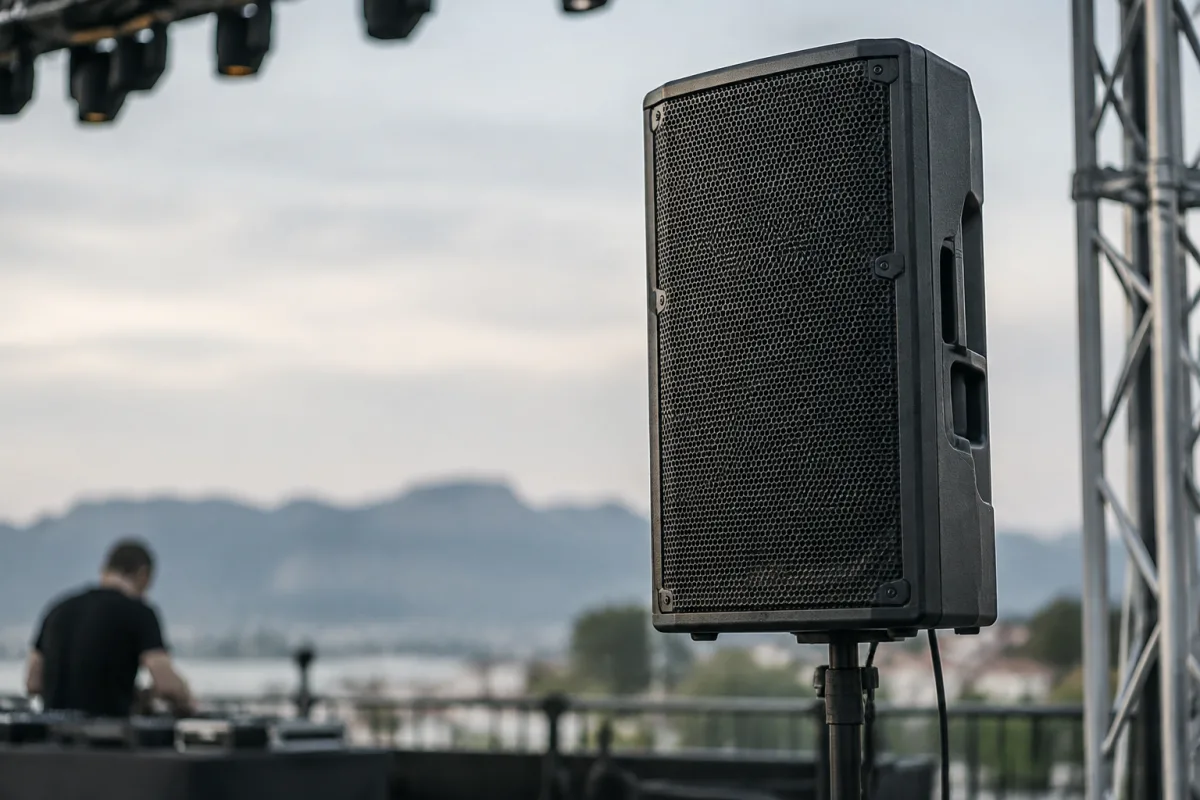
Selecting the right RCF powered speaker for your live sound, event production, or portable PA system requires understanding specifications that directly impact sound quality, practical deployment, and long-term value. RCF manufactures powered speakers across various size categories, frequency ranges, and power outputs—each suited to different applications, venue sizes, and budgets. Purchasing the wrong model either leaves you underpowered during events, struggling to achieve adequate volume and clarity, or overspecified with excessive capabilities and cost you'll never utilise. This buying guide concentrates on practical decision-making: which specifications matter, how to evaluate RCF models for your specific application, common mistakes, realistic pricing, and how to ensure your investment delivers genuine value. For detailed technical information about RCF speaker technology and specifications, our complete guide to RCF powered speakers provides comprehensive context. Here, we focus on selecting speakers that properly serve your actual requirements.
Understanding Application Requirements and Venue Size
The most critical selection factor involves honestly evaluating your typical applications and venue sizes. RCF powered speakers range from compact 8-inch models suitable for intimate venues and personal monitoring through mid-sized 12-inch units serving small clubs and larger gatherings, to 15-inch professional-grade systems managing significant venues and outdoor events. Undersizing creates frustration—you'll discover during your first major event that your speakers lack sufficient headroom, forcing you to push amplification to uncomfortable levels, creating distortion and potential equipment damage. Oversizing wastes money and complicates logistics; you'll transport and power equipment delivering capabilities you'll rarely need.
Consider your realistic venue scenarios honestly. If you primarily perform acoustic music in coffee shops, small churches, and intimate restaurant venues seating 50–150 people, compact RCF systems with 8–10 inch woofers suffice admirably. For bands playing clubs and mid-sized venues accommodating 200–500 people, 12-inch RCF speakers become standard choices. Outdoor events, large venue reinforcement, and festival applications demand 15-inch systems or dual-speaker configurations. Don't purchase based on aspirational scenarios—if you gig weekly in small venues, size accordingly rather than hoping occasional larger shows justify oversized purchases.
Power Output and Headroom Specifications
RCF powered speakers vary significantly in amplifier wattage, typically ranging from 400 watts for compact models through 1000+ watts for professional-grade units. Higher wattage doesn't automatically mean louder sound; sensitivity ratings and speaker design efficiency matter equally. However, adequate wattage ensures headroom—the ability to maintain clean, undistorted sound at comfortable performance levels without constantly pushing amplification into danger zones.
Evaluate your requirements conservatively. If you'll operate primarily at 70–75 decibels (loud conversation volume), 400–600 watts suffices. Performance scenarios requiring 85+ decibels (club volume) demand 800+ watts. Event production with outdoor components or large venue reinforcement requires 1000+ watts minimum. Budget adequate wattage—undersized amplification forces acoustic compromises that create obvious problems during performances. Excessive wattage wastes money but causes minimal operational problems; underpowered systems create career-limiting frustration.
Speaker Driver Configuration and Frequency Response
RCF powered speakers employ different driver configurations (tweeter and woofer combinations) optimised for specific purposes. Single-driver designs simplify operation and reduce cost but typically sacrifice high-frequency clarity and low-frequency extension. Two-way designs (tweeter and woofer) deliver superior frequency balance suitable for full-range music and speech reproduction. Some professional models include three-way designs (tweeter, midrange driver, woofer) enabling exceptional clarity and frequency separation, though at increased cost and complexity.
Examine frequency response specifications—the lowest and highest frequencies the speaker effectively reproduces. Adequate bass response (down to 50 Hz minimum) suits most applications; 35 Hz or lower serves music-heavy productions where bass impact matters significantly. High-frequency extension (5 kHz and above) affects clarity and detail. Professional applications demand broad frequency response (30–20 kHz); smaller venues tolerate slightly narrower ranges. Match frequency response to your actual content—speech-focused applications require less bass emphasis than music-heavy scenarios.
Coverage Pattern and Directivity
RCF powered speakers employ different coverage patterns determining how widely sound disperses throughout your venue. Narrow coverage patterns concentrate sound in specific directions, ideal for small intimate spaces where you want sound reaching your audience without excessive spillover to neighbouring areas. Wide coverage patterns suit larger venues requiring consistent sound throughout broader spaces. Some RCF models feature selectable coverage patterns (switches enabling coverage angle adjustment), adding flexibility for different deployment scenarios.
Evaluate your typical venue acoustics and size requirements. Intimate venues benefit from narrow, controlled coverage. Large rooms and outdoor spaces require wider, more diffuse coverage. Professional-grade RCF models often allow mounting flexibility (horizontal or vertical orientation) and coverage selection, enabling single speaker models to serve multiple scenarios. This flexibility justifies price premiums if you operate in varied venues.
Common Purchasing Mistakes
Many buyers select RCF powered speakers based primarily on specifications, then discover their choice performs poorly in real applications. Specifications alone don't capture how a speaker performs in specific venue acoustics or with different content types. Before committing to purchase, audition your candidate speaker through your actual mixing console, amplifier (if applicable), and acoustic space. Listen to diverse content—music with heavy bass, speech, mixed sources—evaluating how comfortably the speaker handles different materials at your intended volume levels.
Another frequent error involves underestimating power requirements at purchase, then adding additional speakers later to achieve adequate coverage or volume. This creates hodgepodge systems combining different RCF models with inconsistent tonal characteristics, resulting in obvious sonic compromises. It's better to purchase slightly larger speakers initially than to discover undersizing and regret your choice repeatedly.
Some buyers prioritise input features (multiple connection types, built-in mixers) over sound quality and reliability. While convenience features appeal initially, they become irrelevant if the speaker's core sound quality disappoints you in actual use. Prioritise fundamental speaker quality—driver design, amplifier quality, frequency response characteristics—over peripheral features.
Beginners frequently ignore build quality and weather resistance, then discover their speakers deteriorate rapidly in outdoor environments or demanding touring scenarios. RCF offers different construction levels—some models designed for permanent installation, others engineered for touring abuse. Match durability expectations to your actual use scenarios; don't purchase lightweight models for applications requiring rugged construction.
RCF Powered Speaker Price Tiers
RCF powered speakers span considerable price variation across their product range:
| Price Range | Typical Models | Best Suited For |
|---|---|---|
| £400–800 | Compact 8-10 inch models | Bedroom practice, small gatherings, personal monitoring |
| £800–1,500 | Mid-range 12 inch models | Small clubs, bands, gigging musicians, event reinforcement |
| £1,500–2,500 | Professional 12-15 inch models | Mid-sized venues, festival work, commercial production |
| £2,500+ | Premium 15+ inch, specialty designs | Large venues, touring, complex production requirements |
The £800–1,500 range represents excellent value for most gigging musicians and event producers. Speakers in this tier combine solid build quality, sufficient power for typical applications, and professional-grade sound quality. Compact models (£400–800) suit amateurs and bedroom users. Premium products (£1,500+) justify investment through enhanced durability and sonic refinement primarily for professional touring and large-scale applications.
Connectivity and Operational Features
Evaluate connection options matching your actual equipment setup. RCF speakers offer various connector types—quarter-inch, XLR, USB, Bluetooth. Verify your candidate model includes connections compatible with your mixing console or audio source. Built-in mixing features appeal initially but usually add marginal value; you'll develop better results from proper mixing discipline than from convenience features. DSP controls (digital signal processing) enabling tone shaping and equalization prove useful for venue-specific adjustments, but they shouldn't be primary selection factors.
Weather resistance matters substantially if you perform outdoors. RCF constructs some models with weather-protective cabinets; others remain unprotected. Outdoor applications absolutely require weather-resistant construction. Indoor-only applications can ignore this specification. Warranty coverage and service availability differ across RCF's range; professional models typically include better support. Consider long-term serviceability—can you easily find replacement parts or qualified technicians should problems arise?
Making Your Selection
Before purchasing, list your actual applications and venue requirements honestly. Specify typical audience sizes, venue acoustics (small/intimate vs. large/reverberant), content types (music-heavy vs. speech-focused), and frequency of use. Score candidate RCF models against these requirements, disqualifying any that don't meet core needs. Among qualifying options, prioritise sound quality and reliability over convenient features. Within your budget, select the highest-quality speaker adequately serving your realistic application requirements rather than purchasing based on impressively high specifications you'll rarely employ.
Finally, budget adequate support infrastructure. Quality speaker cables, properly matched amplification (if needed), and protective carrying cases extend your investment's lifespan significantly. A modest premium on complete systems—speakers plus proper cabling and protection—justifies itself through improved reliability and longevity compared to budget accompaniments.


Comments