


SSL Mixing Desk Buying guide
Ssl Mixing Desk: A Complete Buyer's Guide
Purchasing an SSL mixing desk requires understanding specifications, feature sets, and performance characteristics. This guide helps you make an informed decision based on your facility's actual workflow and budget.
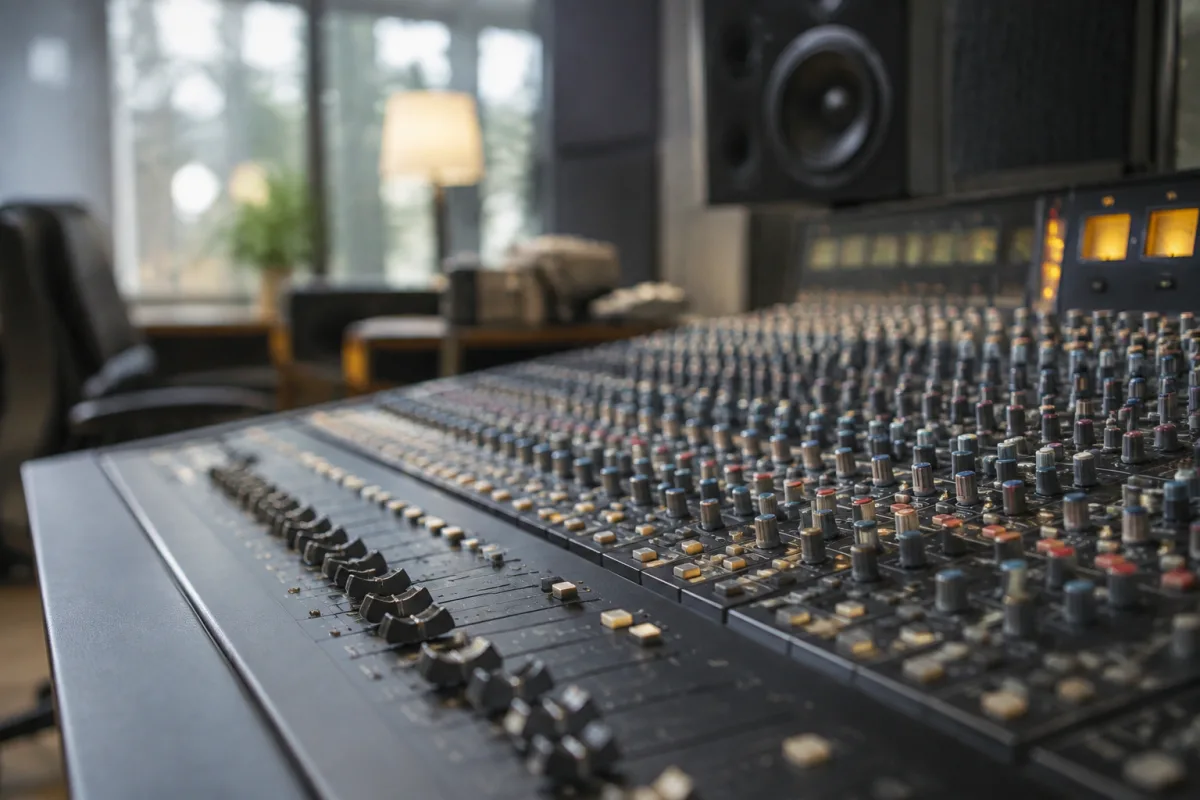
Purchasing an SSL mixing desk represents a significant investment for studios, live venues, and broadcast facilities. Whether you're upgrading from smaller equipment or building a professional installation from scratch, understanding the specifications, feature sets, and performance characteristics of SSL mixing desks ensures you invest in equipment suited to your exact workflow. This guide cuts through marketing claims and helps you make an informed purchase decision based on genuine technical requirements rather than perceived prestige.
Understanding SSL Mixing Desk Categories and Their Applications
SSL manufactures several distinct mixing desk lines, each optimised for specific professional applications. Analogue SSL mixing desks, including the legendary 4000 series, deliver warm tone character prized by recording studios for decades. Digital SSL consoles like the System T series offer extensive routing flexibility, recall capabilities, and integration with modern digital workflows. Hybrid systems combine analogue sonic warmth with digital convenience, appealing to facilities requiring both traditional and contemporary workflows. Compact SSL mixing desks serve smaller studios and venues seeking professional SSL sonic character in space-efficient formats. Understanding which category matches your installation type prevents purchasing equipment misaligned with your operational needs—a broadcast facility requires different specifications than a recording studio, despite both using SSL technology.
Critical Specifications When Evaluating SSL Mixing Desks
Several technical specifications directly impact whether an SSL mixing desk suits your facility. Channel count determines how many simultaneous inputs you can manage; broadcast and live sound applications typically demand 16-40 channels, whilst recording studios often utilise 8-24 channels depending on tracking needs. Frequency response characteristics reveal sonic colouration; professional SSL mixing desks maintain flat response across audible frequencies, though some users deliberately seek analogue character. Signal-to-noise ratios indicate cleanliness; professional SSL mixing desks maintain ratios exceeding 80dB, essential for broadcast and mastering applications where subtle artefacts become obvious. Bus configuration flexibility affects mixing methodology; desks supporting stereo, 5.1 surround, and Dolby Atmos deliver versatility justifying premium pricing. Converter quality determines digital audio fidelity; premium converters in higher-end SSL mixing desks audibly reduce distortion compared to budget alternatives. Connectivity options including USB, MADI, AES-EBU, and Dante determine how the SSL mixing desk integrates with your existing infrastructure.
Price Tiers for SSL Mixing Desks Explained
Entry-level SSL mixing desks (£20,000-£50,000) provide professional SSL sound in compact, software-assisted formats, suitable for smaller studios and emerging venues. Mid-range systems (£50,000-£150,000) deliver robust channel counts, tactile faders, and professional integration options appealing to established facilities handling varied programming. Premium professional SSL mixing desks (£150,000-£400,000) feature extensive I/O options, exotic routing flexibility, and standalone operation reliability required by broadcast networks and top-tier studios. Bespoke custom configurations (£400,000+) address specialised applications including large-format broadcast mixing, cinema sound mastering, and multi-venue touring installations. Your investment tier should align with facility revenue and workload intensity; premium desks justify themselves through enhanced efficiency for high-throughput operations, whilst smaller facilities gain diminishing returns from expensive options. Used SSL mixing desks offer significant savings—secondary market prices typically run 40-60% below new retail, though maintenance history and remaining lifespan require careful evaluation.
Common Pitfalls When Purchasing SSL Mixing Desks
Several mistakes plague uninformed SSL mixing desk purchases. Assuming newer always equals better ignores that decades-old analogue SSL mixing desks deliver unmatched sonic character despite limited digital convenience; evaluate purchasing older models for specific sonic character rather than assuming equipment obsolescence. Underestimating space requirements creates installation nightmares; SSL mixing desks demand substantial desk area and cable routing behind the console—measure thoroughly before commitment. Overlooking integration complexity causes buyer's remorse; advanced routing capabilities prove useless if your facility lacks qualified personnel to programme and operate them. Purchasing excessive channel counts wastes capital; most facilities use 60-80% of installed channels regularly, making oversized desks economically inefficient. Neglecting cooling and power supply requirements risks equipment damage; professional SSL mixing desks demand dedicated circuits, environmental control, and redundant power infrastructure. Finally, insufficient reserve budget for installation and integration expenses leaves projects incomplete; budgeting 20-30% additional funds for cabling, integration, and training prevents false economy.
Analogue versus Digital SSL Mixing Desks: Making the Right Choice
Your mixing desk choice between analogue and digital SSL systems fundamentally impacts workflow. Analogue SSL mixing desks demand no computer assistance, offer instant tactile control, and deliver inherent warmth some engineers consider irreplaceable for music production. Digital SSL mixing desks provide recall capabilities, automation, surround mixing support, and integration with digital audio workstations essential for broadcast and post-production applications. Hybrid systems combine both approaches but introduce complexity and higher maintenance costs. Evaluate your primary application; recording studios prioritise sonic character, broadcast facilities prioritise recall and automation, whilst post-production studios require surround capabilities. Hybrid systems suit facilities serving multiple markets but demand significant operational expertise.
Installation and Integration Considerations Before Purchase
Professional SSL mixing desk installation requires meticulous planning. Ensure your facility's power infrastructure supplies dedicated 20-30 amp circuits—most commercial power systems prove inadequate for professional consoles. Plan cable management carefully; SSL mixing desks require substantial snake bundles carrying 40+ lines behind the console. Environmental control matters significantly; professional SSL mixing desks operate within 18-24 degrees Celsius temperature ranges, requiring air conditioning in larger facilities. Consider equipment rack placement for converters, interfaces, and control systems; most professional setups demand dedicated equipment racks consuming additional facility space. Plan workflow around the desk layout; experienced installation engineers prove invaluable for optimising channel assignments, bus configurations, and monitoring pathways. Budgeting for installation expertise—typically £5,000-£20,000 depending on complexity—prevents costly mistakes during integration.
Features That Justify Investment in Premium SSL Mixing Desks
Certain features distinguish premium SSL mixing desks from budget alternatives, justifying additional investment for facilities utilising them daily. Advanced automation systems enable complex mixes impossible with manual mixing, particularly valuable for cinematic and broadcast applications. Multitrack integration through networked control surfaces lets operators manage extensive sessions without consuming desk space. Custom motor faders provide intuitive mixing recall essential for live broadcast and large-scale concert sound. Redundant monitoring systems ensure operations continue despite equipment failure, critical for broadcast where downtime generates revenue loss. Wild distribution routing enables complex matrix mixing supporting surround and object-based audio formats. Touchscreen interfaces accelerate parameter adjustment compared to menu diving on smaller consoles. Built-in dynamics processing eliminates external equipment rack dependencies. Evaluate premium features against your facility's actual workflow; unnecessary capabilities represent wasted investment.
Evaluating Used SSL Mixing Desks and Secondary Market Opportunities
Purchasing used SSL mixing desks offers substantial savings but requires careful evaluation. Verify maintenance history meticulously; desks with documented regular servicing risk far fewer failures than neglected units. Test all faders, buttons, and switches thoroughly; replacement parts for older SSL mixing desks sometimes prove difficult to source, potentially necessitating expensive repairs. Confirm the desk's remaining useful lifespan through SSL service documentation; ageing capacitors in 30+ year-old units accumulate failure risk regardless of past maintenance. Evaluate whether the used desk's feature set meets current facility needs rather than assuming older equipment's obsolescence. Check for component availability; certain older SSL mixing desk models utilise discontinued circuit boards, potentially transforming minor failures into total loss scenarios. Always inspect for cosmetic damage indicating poor maintenance history; rust, corrosion, and component damage suggest insufficient care. Negotiate pricing reflecting required maintenance and potential repairs—typical used SSL mixing desk pricing assumes basic operational condition without hidden issues.
Making Your SSL Mixing Desk Purchase Decision
After evaluating specifications, applications, and budget constraints, make a decisive purchasing choice aligned with your facility's actual workflow. Visit demonstration facilities operating the specific SSL mixing desk model under consideration; hands-on evaluation reveals operational comfort and integration compatibility far better than specification sheets. Consult with installation professionals regarding your specific infrastructure; they identify potential integration challenges and installation complexity. Consider future growth; purchasing modestly undersized equipment avoids excess expense whilst maintaining expansion capability through additional equipment rather than desk replacement. Negotiate comprehensive warranties covering labour and components, particularly for budget-conscious secondary market purchases. Once purchased, invest in staff training ensuring your team maximises the SSL mixing desk's capabilities rather than utilising basic functionality despite advanced features.
For comprehensive information about SSL mixing desks and their capabilities, explore our complete guide to SSL mixing desk.


Comments