


Speaker Monitor JBL Buying guide
Speaker Monitor Jbl: A Complete Buyer's Guide
Selecting the right JBL speaker monitor requires understanding your venue, application, and budget. This buying guide helps you identify which JBL model solves your specific sound reinforcement needs.
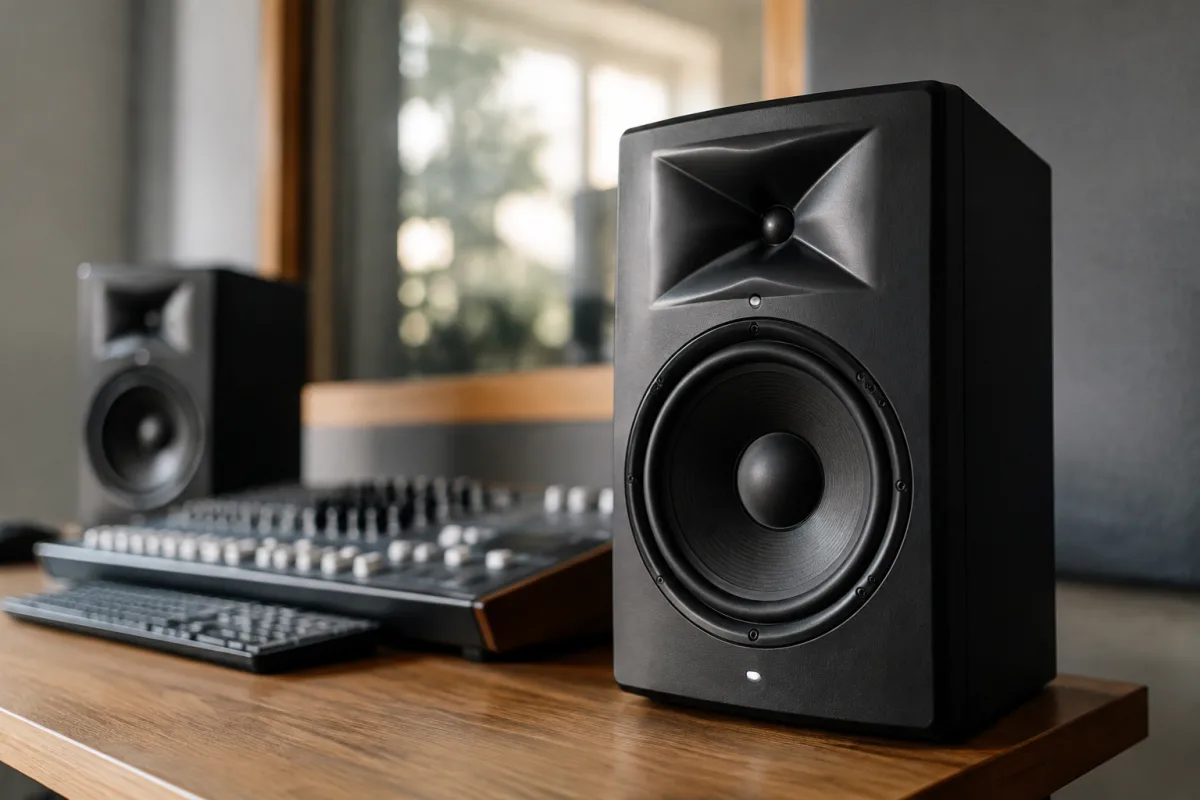
Selecting the right JBL speaker monitor requires understanding your specific venue, application, and budget rather than simply choosing the largest or most expensive model available. Whether you're equipping a small rehearsal space, outfitting a mobile sound system, or building a permanent installation for a performance venue, JBL's diverse monitor lineup offers options across every price point and performance tier. This buying guide cuts through specification sheets to help you identify which JBL speaker monitor actually solves your sound reinforcement needs.
Understanding JBL Monitor Categories and Their Applications
JBL manufactures speaker monitors across three distinct categories, each designed for different professional applications. Powered monitors (sometimes called active monitors) contain built-in amplification and processing, making them ideal for mobile systems and smaller venues where minimising equipment complexity matters. Passive monitors require external amplifiers but offer flexibility in amp selection and are often preferred in larger permanent installations where upgrading components independently is important.
Studio reference monitors (like the LSR series) prioritise flat frequency response and mixing accuracy for recording and post-production work. These prioritise transparency and detailed reproduction over dynamic punch. Live sound monitors, by contrast, are built for high output, robust construction, and reliability in demanding touring and venue environments. The distinctions matter significantly—a studio monitor won't deliver the output needed for a live stage, whilst live monitors won't provide the mixing accuracy a recording engineer requires.
JBL also produces portable speaker systems designed for different applications: compact PA systems for small performances and conferences, larger column arrays for coverage in challenging rooms, and high-powered subwoofer options for venues requiring extended bass response. Understanding which category matches your primary use case immediately eliminates inappropriate options from consideration.
Key Specifications Explained: What Actually Matters
When comparing JBL speaker monitors, several specifications directly impact whether a model will work in your application. Output power, measured in watts, determines how loud the system can play. A 50-watt monitor won't provide adequate volume for a 500-seat venue, whilst a 1000-watt system would be overkill for a small rehearsal space. Calculate your minimum requirements based on venue size, typical audience distance, and acoustics rather than simply purchasing the highest wattage available.
Frequency response range tells you which sound frequencies the monitor reproduces effectively. Most JBL monitors cover 40Hz to 20kHz, which covers the audible spectrum adequately for live applications. However, if you're predominantly mixing rock bands with heavy bass content, you may need to add a subwoofer to extend low-frequency response below 40Hz. For speech and lighter acoustic applications, the standard range often suffices.
Nominal impedance (measured in ohms) and sensitivity (measured in dB) become critical when selecting amplification for passive systems or when running multiple powered monitors. JBL's documentation specifies these values clearly—matching them correctly prevents insufficient amplification and damage to drivers.
Connectors available on each model affect your ability to integrate them into existing systems. Professional-grade XLR inputs are standard on better models, whilst budget options sometimes offer only RCA connections. If you already own professional audio cables and infrastructure, ensure your chosen monitor accepts compatible connectors.
Comparing JBL's Core Monitor Lines
JBL's LSR series targets recording studios and critical listening environments with exceptional accuracy and controlled bass response. These monitors excel for mixing, mastering, and production work where hearing exactly what's recorded matters more than generating maximum volume.
The Control series delivers professional sound reinforcement for installations where reliability matters as much as sound quality. These powered monitors work equally well in churches, conference rooms, small venues, and corporate installations. They offer reasonable cost-effectiveness with solid build quality.
The JRX series targets high-output live sound applications where weatherproofing and extreme reliability are essential. These compact, efficient designs work well in outdoor venues, festivals, and touring situations where equipment must withstand rigorous transportation and environmental challenges.
Compact portable models suit mobile DJs, small event companies, and musicians requiring self-contained systems. These sacrifice some low-frequency extension and maximum output but offer genuine convenience and flexibility for small-scale applications.
Essential Considerations When Comparing Models
| Factor | Priority for Studios | Priority for Live Venues | Priority for Mobile/Small |
|---|---|---|---|
| Frequency response | Extended low end (35Hz+), flat response | 40Hz adequate, moderate presence peak | 50Hz adequate, warm character acceptable |
| Output power | Moderate (50-200W) | High (300W+) | Low-moderate (50-150W) |
| Connectivity | Digital (AES/EBU) preferred, analogue backup | Multiple XLR inputs, RCA option | Flexible (XLR, RCA, sometimes wireless) |
| Build priority | Acoustic design, vibration isolation | Rugged construction, weatherproofing | Portability, quick setup |
| Budget | Higher (accuracy costs) | Moderate-high (output costs) | Lower (features minimised) |
Power and Coverage: Calculating Your Actual Requirements
Many buyers overshoot on power requirements, purchasing 500-watt monitors for applications needing 150 watts. This wastes money and electricity whilst potentially creating operational difficulties. Conversely, undersizing power results in clipping distortion and inadequate sound coverage.
For small rehearsal spaces (under 100m²), 100-150 watts typically suffices. Medium venues (100-300m²) usually need 300-600 watts total. Large spaces (300m²+) generally require systems with 1000+ watts, often distributed across multiple speakers rather than single monitors. Don't just load everything onto powered monitors—distributed smaller speakers often provide better coverage and flexibility.
Consider whether you'll ever need to expand. Purchasing a system you can grow into by adding speakers makes more financial sense than buying maximum capacity initially and leaving speakers idle most of the time.
Budget Tier Guidance
Budget options (£150-300 per unit) deliver adequate sound reinforcement for speech, small acoustic performances, and rehearsals. Don't expect precision audio or extreme durability, but they'll work for occasional use in modest spaces.
Mid-range models (£300-800 per unit) represent the sweet spot for most professional applications—reliable, reasonable sound quality, adequate output, and durability supporting regular use. Most working venues and touring musicians land here.
Premium options (£800+) typically feature advanced processing, exceptional build quality, extended frequency response, and refined sound character. These justify their cost through extended operational life and professional capabilities demanded by high-end installations.
Integration Considerations Before Purchase
Before selecting a specific model, verify it integrates with your existing system. Do your cables match available connectors? Will the physical size fit your mounting locations? Can you adequately supply power (especially important for high-power systems requiring dedicated circuits)? Do you need additional amplification for passive systems, and does your budget account for it?
For comprehensive information about JBL speaker monitors and their professional applications, review our complete guide to speaker monitor JBL, which covers technical details, classic deployments, and deep application knowledge.
Making Your Selection
Start by identifying your primary application and venue size. This immediately filters which JBL series makes sense. Then calculate your actual power requirements rather than guessing. Review the connectors and features available on models within your budget range. Finally, whenever possible, listen to models in person or consult with other professionals using similar systems in comparable applications.
JBL speaker monitors represent substantial investments in your sound infrastructure, making careful selection significantly more important than finding the best deal. Choose based on your actual needs rather than theoretical capabilities you'll never use.


Comments