


Dmx Lighting article
The Complete Guide to Dmx Lighting
DMX lighting lets you control hundreds of stage lights from a single controller. Discover how the protocol works, what fixtures to use, and how to set up a robust DMX system for live performance.
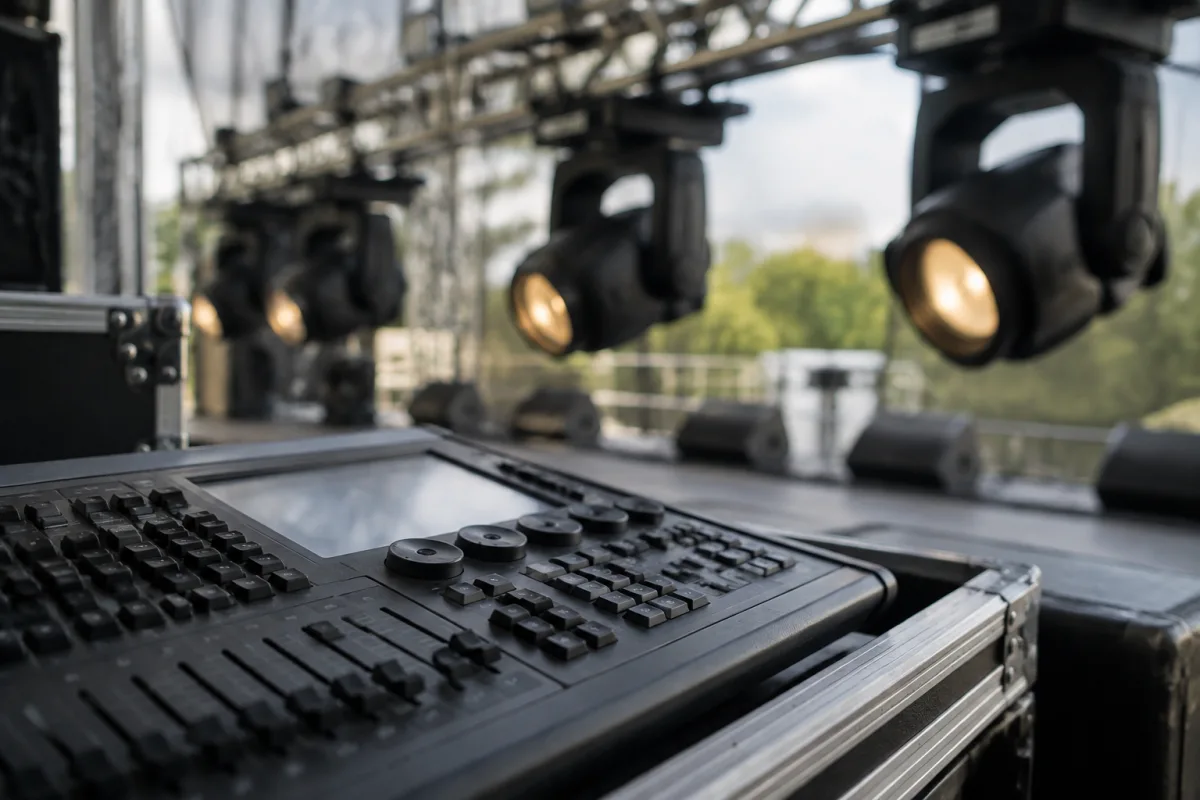
DMX lighting has become the professional standard for stage lighting control, enabling venues, festivals, and touring productions to synchronize complex lighting effects with music and performance. DMX — the protocol itself — is a digital language that lets a single controller communicate with hundreds of individual lights, dimmers, and special effects in real time. Understanding DMX lighting fundamentals empowers you to design coherent, responsive lighting that transforms a space and amplifies your event's impact.
What Is DMX Lighting?
DMX is short for Digital Multiplex, a universal protocol standardized by the American lighting industry (ANSI E1.11). In practical terms, DMX lighting systems use a single twisted-pair cable (or wireless connection) to send digital signals from a controller to an unlimited chain of addressable lights. Each light receives a unique address — a number from 1 to 512 — telling it which channel of the control signal to listen to.
The key power of DMX is that all communication happens down a single wire. A traditional analogue system requires separate cables for each dimmable light or colour-changing fixture; a DMX system lets you control all of them simultaneously using one connection. This simplicity, flexibility, and standardization have made DMX the backbone of professional lighting worldwide.
How DMX Lighting Works
A basic DMX system consists of three components:
- DMX controller — a console or software interface where you program lighting cues, scenes, and effects. The controller sends 512 digital channel values (0–255 each) to the lights.
- DMX cable — a standardized 5-pin XLR (or 3-pin on older equipment) twisted-pair cable carrying the digital signal. Run cables in a daisy-chain: from controller to first light, light to light, in sequence.
- DMX lights — individual fixtures (moving heads, LED washes, strobe units, etc.) with a DMX receiver chip inside. Each addresses itself to one or more channels and responds to the controller's commands.
When you change a fader on your DMX controller, you alter a value in one of the 512 channels. That signal travels down the cable at the speed of electricity, and every light listening to that channel updates its brightness, colour, or position instantaneously. This real-time responsiveness is what makes DMX so powerful for live performance.
Types of DMX-Controllable Fixtures
Modern stages use a variety of DMX-capable lights, each designed for different effects:
| Fixture Type | Common Use | DMX Channels |
|---|---|---|
| Moving head | Dynamic positioning and beam effects | 16–30 channels (pan, tilt, zoom, colour, intensity) |
| LED wash light | Colour-changing ambient lighting | 4–6 channels (RGBW + intensity, strobe) |
| Strobe light | Impactful burst effects on rhythm | 1–2 channels (intensity, strobe rate) |
| Par (LED or discharge) | Focused beam or wash | 1–4 channels (intensity, colour if RGB) |
| Profile/Spot | Precise, focused lighting with shutters | 5–12 channels (pan, tilt, zoom, focus, iris) |
| Intelligent dimmer | Legacy control of conventional lights | 1 channel per dimmer (0–255 = 0–100%) |
DMX Addressing and Configuration
Proper DMX addressing is essential to avoid chaos. Every light must have a unique starting address, and each fixture consumes a certain number of channels based on its complexity.
For example, if your first LED wash uses channels 1–4, you'd address it to start at channel 1. Your second wash would start at channel 5. A moving head using 16 channels would start at channel 21, and so on. Most modern DMX fixtures allow you to set their starting address via a menu or DIP switches on the unit itself.
Before connecting everything, plan your DMX address layout on paper. A spreadsheet documenting fixture name, fixture type, starting address, and channel count prevents confusion during setup and troubleshooting.
DMX Controllers and Software
DMX controllers range from simple USB adapters for computer-based control to complex professional consoles used in touring productions:
- USB DMX interfaces — compact adapters (£50–£300) that connect a computer or tablet to DMX lights. Great for smaller venues, clubs, or learning. Software includes free options like QLC+ and commercial tools like Eos or Nomad.
- Dedicated hardware consoles — professional-grade controllers (£2,000–£20,000+) with physical faders, buttons, and screens for tactile, fast control. Essential for touring and high-stakes events.
- Software-only control — running DMX software on a laptop via USB interface. Flexible and affordable, but requires a backup if the computer fails mid-show.
- Mobile/app control — tablets running dedicated DMX apps, often wireless via WiFi DMX adapters. Convenient but only for smaller systems.
Practical DMX Lighting Setup Tips
Setting up a robust DMX system takes planning and attention to detail:
- Use quality XLR cable — damaged or poorly shielded DMX cable causes dropped signals and flickering. Always use proper 5-pin XLR rated for DMX512, never reuse old microphone cable.
- Terminate the last fixture — add a 120-ohm resistor in a terminator plug at the end of your DMX chain to prevent signal reflections. Many professional systems require this.
- Chain fixtures carefully — run cables in a logical order (front to back, or stage-left to stage-right). Document the order so you can troubleshoot quickly if something fails.
- Test addresses before a show — set each fixture's address and verify it responds to the correct channel values. A quick test prevents surprises during performance.
- Keep a backup controller — at professional venues, have a backup DMX console or USB adapter in case the primary fails. A lighting blackout mid-show is unacceptable.
Common DMX Troubleshooting
If lights aren't responding to your DMX controller, work through these diagnostics: first, confirm the controller is sending DMX (many consoles have an LED indicator). Second, verify the XLR cable is properly connected and not damaged. Third, check each fixture's DMX address against your documentation — a misaddressed light won't respond to the intended channels. Fourth, ensure the fixture is powered on and set to DMX mode (some lights have an internal switch). Finally, if a single fixture fails but others work, the problem is likely that fixture's DMX receiver.
The Bottom Line
DMX lighting is the professional's choice because it delivers precise, real-time control over complex lighting arrangements from a single control point. Whether you're lighting a small venue's weekly gigs or managing a festival's stage rig, understanding DMX fundamentals — addressing, fixture types, and cabling best practices — lets you create responsive, impactful lighting that enhances every performance.


Comments