


Dmx Lighting Control article
Dmx Lighting Control for Beginners: A Complete Guide
Learning DMX lighting control opens doors in live sound and event production. This beginner's guide demystifies the technology, provides hands-on starting steps, and shows you the path to confident operation.
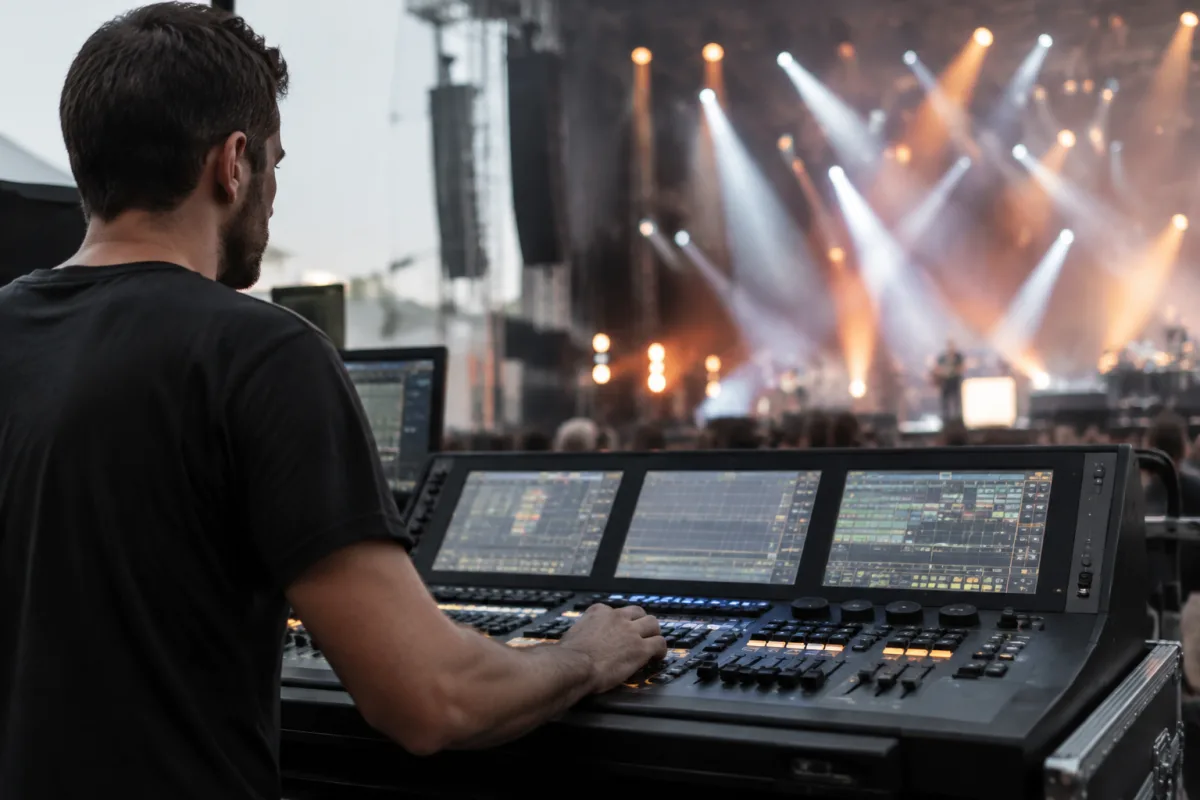
DMX lighting control intimidates many beginners in live sound and event production, but it shouldn't. Learning DMX lighting control is fundamentally about understanding one concept: sending signals through cables to tell lights what to do. The protocol is standardised, the equipment is affordable, and once you grasp the basics, you'll operate lighting rigs at gigs and events confidently. This guide walks you through what you need to know as a beginner tackling DMX lighting control: the essential concepts, the simplest way to start, common beginner mistakes, and how to build from nervous first-timer to competent lighting operator.
Why Beginners Should Learn DMX Lighting Control
If you're involved in live sound, DJing, or small venue operation, DMX lighting control is invaluable. Learning DMX lighting control opens opportunities: bands will hire you for lighting, venues will request your skills, and your event production capabilities triple. More importantly, understanding DMX lighting control teaches you systems thinking—how components interconnect and communicate. That knowledge applies across all technical production roles.
Socially, lighting operators are essential and underrated. Learn DMX lighting control and you'll be valued in every creative community you join. That sense of belonging and contribution matters.
Understanding DMX Lighting Control: The Beginner-Friendly Breakdown
DMX stands for Digital Multiplex. Forget the jargon temporarily. Here's what actually happens:
You connect a lighting console (a control device with buttons and faders) via a cable to stage lights. When you move a fader on the console, it sends a digital signal through the cable telling lights how bright to be or what colour to display. The signal travels through the DMX cable at high speed. Lights receive the signal and respond. That's DMX lighting control.
Multiple lights can be controlled from one console. The console sends signals to all connected lights simultaneously. Each light has an "address"—a unique number—so the console can tell individual lights apart. This is the core concept of DMX lighting control. Once you understand address assignment, you're 60% of the way to competency.
What You Need Before Learning DMX Lighting Control
A beginner doesn't need expensive equipment to start learning DMX lighting control:
- A DMX console: Entry-level consoles start at £100–£200. They're simple, with basic faders and buttons. More expensive consoles add features but the fundamental operation is identical. Don't buy expensive gear yet; start simple when learning DMX lighting control.
- DMX cable: Standard 5-pin XLR cables connect consoles to lights. They're cheap (£10–£20) and essential. When learning DMX lighting control, have at least 10 metres of cable for flexibility.
- LED lights with DMX capability: Budget LED lights with DMX control cost £50–£150 per unit. Start with one or two; you'll expand later. Any light marked "DMX compatible" will work when learning DMX lighting control.
- A safe practice space: Your living room, rehearsal space, or band's studio works perfectly for learning DMX lighting control. You don't need a stage.
Total beginner investment: roughly £200–£400 for a functional learning setup. That's not insignificant, but consider it professional development, not a hobby expense.
Your First Week Learning DMX Lighting Control
Structure your learning simply:
Day 1-2: Cable connection: Connect your console to one light using DMX cable. Ensure the connection is secure. Move a fader on the console and watch the light respond. This moment—seeing your input create an output—is the magic moment when learning DMX lighting control clicks. You've done it. You're a lighting operator.
Day 3-4: Address assignment: Learn to assign addresses to lights. This typically involves accessing the light's menu (usually via buttons on the light itself) and setting a start address number. When you've assigned addresses to multiple lights, you're managing multiple fixtures. This is major progress when learning DMX lighting control.
Day 5-7: Basic scenes: Most consoles let you program and save "scenes"—preset combinations of light settings. Create a scene where Light 1 is red at 50% brightness and Light 2 is blue at 75%. Save it. Recall it. You've created a lighting cue. Professional lighting operators do exactly this, just more complexly. You've learned the fundamental workflow of DMX lighting control.
Common Beginner Mistakes When Learning DMX Lighting Control
Ignoring address assignment: Beginners often connect lights and expect them to work without assigning addresses. Every DMX light defaults to a starting address; multiple lights on the same address create chaos. When learning DMX lighting control, address assignment is non-negotiable. It's also surprisingly easy once you do it once.
Terminating incorrectly: DMX cables need a terminator plug (a cheap 5-pin XLR cap with a resistor) at the end of the last light in the chain. Without it, signals bounce around the cable creating unpredictable behaviour. This frustrates beginners learning DMX lighting control. Buy terminator plugs (£5 each) and use them always.
Mixing up XLR directions: DMX cables have a male end and female end. The console has male output; lights typically have female input. Getting this backwards when learning DMX lighting control prevents signals from flowing. Understand this pattern and you'll never struggle again.
Overcomplicating early: Beginners often dive into advanced features—colour mixing, strobing, automated scenes—before mastering basics. When learning DMX lighting control, master on/off and brightness first. Add colour and effects later.
Not labeling cables and settings: Write down which cable is which. Label your light addresses. Document your scenes. When learning DMX lighting control in messy real-world conditions, clear notes transform frustration into confidence.
Building Your DMX Lighting Control Skills
Once you're comfortable with basics (typically after one or two weeks of hands-on practise), expand gradually:
Week 2-3: Experiment with colour. Most DMX lights include colour mixing. Learn to create colour washes—entire stage lit in one colour. This is the flashy stuff that impresses people.
Week 4-6: Build scene libraries. Create lighting cues for songs or segments. Practise triggering cues smoothly. Transitions between lighting states should feel intentional, not abrupt. This is where you start sounding like an operator, not someone playing with lights.
Month 2-3: Assist experienced operators. Watch them work, ask questions, do basic tasks under their supervision. Real-world experience accelerates your DMX lighting control competency faster than solo practise.
Month 3+: Operate real shows. You're ready. Yes, you'll make mistakes. Mistakes during small local shows teach you infinitely more than perfect practise sessions. Every operator has been nervous at their first gig. You will too. Then you'll relax and focus on the lights, and suddenly you're running a lighting rig confidently.
Avoiding Technical Overwhelm When Learning DMX Lighting Control
DMX lighting control can feel overly technical. Terms like "channel", "universe", "fixture", and "address" might intimidate. Here's the reality: beginners need to understand channels (individual light parameters like colour and brightness) and addresses (which light a channel controls). Everything else is refinement. You don't need to understand DMX's history or electrical specifications. Learn what moves lights, and you're 90% there.
Your Path Forward with DMX Lighting Control
For detailed technical information, troubleshooting guides, and advanced techniques, explore our complete guide to DMX lighting control.
Starting Your DMX Lighting Control Journey
Learning DMX lighting control is genuinely accessible. In one week, you'll operate a basic rig. In one month, you'll feel confident. In three months, you'll accept gig offers. The journey from nervous beginner to functioning lighting operator is shorter than you expect. Start simple, practice hands-on, and trust that confusion today becomes competency tomorrow. That's how every lighting operator learned. You will too.


Comments