


Dmx Lighting Control Buying guide
Dmx Lighting Control: A Complete Buyer's Guide
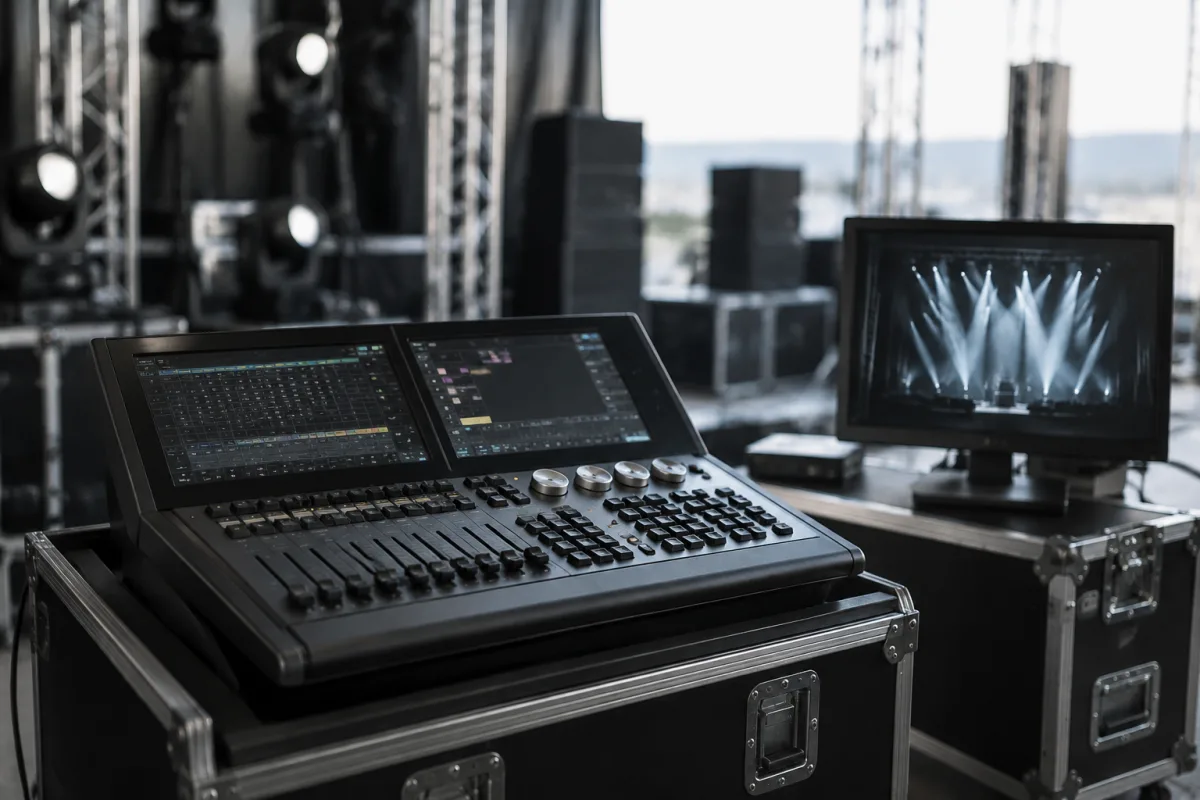
Building or upgrading a DMX lighting control system represents a substantial investment, and selecting the wrong components wastes money whilst limiting your production's creative potential. Whether you're outfitting a permanent venue, assembling a touring rig, or exploring entry-level lighting control, understanding which components integrate seamlessly and which create compatibility headaches prevents costly mistakes. This guide examines what matters when choosing a complete DMX lighting control system, not just individual pieces.
Understanding Complete DMX Systems vs. Piecemeal Assembly
Many beginners approach DMX system building by purchasing a controller, cables, and fixtures separately, discovering too late that incompatibilities create expensive problems. A cohesive system considers how each component integrates with others—controller communication protocols, cable specifications, fixture addressing, and software compatibility all matter.
Complete system packages from established manufacturers (like Chauvet, ETC, or Elation) include matched components, system documentation, and support ensuring everything works together. While more expensive initially, complete systems prevent integration nightmares and offer faster setup times, especially valuable for touring operations or time-sensitive events.
Core Components of a Complete DMX System
Every DMX lighting control system includes four essential elements. Understanding each helps you evaluate complete packages and piecemeal assemblies:
- Control console: The command centre sending DMX signals to fixtures. Ranges from portable units (£200–£800) to professional touring consoles (£5000+).
- DMX cables and connectors: Specialised 5-pin XLR cables transmitting control signals. Quality matters—cheap cables introduce signal degradation and unreliable fixture response.
- Fixtures (lights): Individual units receiving DMX commands. Options range from simple colour changers (£50–£200) to complex moving heads (£500–£5000+).
- Distribution and monitoring: Splitters, repeaters, and test equipment ensuring signal integrity across large systems. Often overlooked by beginners, these components prevent frustrating diagnostic headaches.
Neglecting any component compromises system reliability. Budget for all four; don't economise by omitting distribution or monitoring tools.
Assessing Your Venue or Application Requirements
Before shopping, clearly define what your DMX system must accomplish:
- Venue size and fixture count: A small club needs 12–24 channels controlling 4–8 fixtures. A large theatre requires 96+ channels supporting 20+ fixtures. Channel capacity must accommodate all fixtures with headroom for growth.
- Fixed installation vs. touring: Fixed systems prioritise reliability and cable routing; touring rigs prioritise portability and quick setup. These demands suggest different component choices.
- Budget constraints: Define realistic spending across all system components. Allocating too much to the controller leaves insufficient budget for quality fixtures or cabling.
- Operator experience level: Beginners benefit from simpler control systems with pre-programmed effects; experienced operators need sophisticated programming capabilities.
- Integration with other systems: Do you need to sync lighting with audio (MIDI), integrate with video, or control effects remotely? These capabilities add cost but expand creative possibilities.
Thorough assessment prevents buying oversized or undersized systems that frustrate users or waste budget.
Choosing Quality DMX Cables and Distribution
DMX cabling is unglamorous but critical. Poor cables introduce signal errors, causing fixtures to malfunction or drop offline:
- Cable quality: Genuine DMX 5-pin XLR cables cost £15–£30 each. Don't substitute audio XLR cables (they're wired differently). Budget the full amount for proper cabling; this investment prevents frustration.
- Cable length and runs: DMX signal degrades over distance (maximum ~500 meters with proper equipment). Calculate total cable runs and plan for signal distribution if runs exceed 200 meters.
- DMX splitters and repeaters: If controlling more than 32 fixtures (the practical limit for a single DMX cable), use splitters to create multiple universes or repeaters to boost signal. Quality units cost £200–£600 but prevent system failures.
- Connector quality: Locking Neutrik connectors resist accidental disconnection; standard connectors don't. For touring systems, specify locked connectors throughout.
- Cable testing equipment: A simple DMX cable tester (£50–£150) diagnoses signal problems quickly. Essential for touring operations; invaluable for permanent installations.
Cheap cabling kills even professional systems. Budget adequately and never compromise on connector quality.
Fixture Selection and Compatibility
Fixtures represent your largest potential expense and define what your lighting system can accomplish:
- Fixture types matter: Static colour-changing PARs, moving head lights, strobes, and fog machines each occupy different roles. Balanced systems mix fixture types.
- Channel requirements vary: Count carefully. Some moving heads require 8 channels; others demand 16. This directly impacts controller channel count and overall system cost.
- Addressing and configuration: Every fixture must have a unique DMX address. Quality fixtures offer easy-to-understand addressing menus; budget models hide this in obscure submenus.
- Lamp and LED technology: Traditional lamps offer warm tone; LEDs offer energy efficiency and long lifespan. LED fixtures cost more but amortise quickly through electricity savings.
- Brightness and output: Dimmer venues require brighter fixtures; larger spaces need more output. Evaluate lumens ratings (brightness measurement) against your venue.
Fixtures are workhorses; invest in reputable brands offering decent warranties and supportive communities. Budget brands often disappoint through poor build quality or unhelpful customer service.
System Scalability and Future Growth
The best DMX systems accommodate growth without complete replacement:
- Console channel expansion: Does your controller support adding more channels as you acquire fixtures? Some consoles max out; better ones expand.
- Networking and universe expansion: Can you add additional DMX universes (each supporting up to 512 channels) as your system grows? Multi-universe capability future-proofs your investment.
- Wireless DMX capability: Starting without wireless? Can you add it later? Some systems retrofit easily; others don't. Clarify upgrade paths.
- Software compatibility: Can you update your controller's software to incorporate new features? Manufacturers offering regular updates extend your system's relevance.
Purchase with future growth in mind. A slightly larger initial investment accommodates expansion without replacement.
Complete System Packages: Value Proposition
Established manufacturers often sell bundled systems at attractive pricing. Evaluate package value:
- All-in-one packages (£2000–£8000): Console, fixtures, cables, and software included. Verified compatibility and simpler setup. Great for venues committing to specific manufacturers.
- Partial packages (£1000–£4000): Console with matched fixtures, cables purchased separately. Flexibility to customise cabling.
- Piecemeal assembly (£1500–£20000+): Choose each component independently. Maximum flexibility but requires compatibility verification and integration knowledge.
All-in-one packages appeal to decision-averse buyers; experienced operators prefer piecemeal customisation. Your comfort level with technical integration influences the best approach.
Price Tiers and Total System Cost
Complete DMX systems span multiple price ranges depending on scope:
- Entry-level systems (£1500–£3000): Small console, 4–8 basic fixtures, standard cabling. Suitable for small venues or learning environments.
- Mid-range systems (£3000–£10000): Quality console, 12–20 versatile fixtures, proper cabling and distribution. Expected for clubs, theatres, and touring operations.
- Professional systems (£10000–£50000+): High-end console, 20+ advanced fixtures, wireless DMX, extensive distribution, professional-grade cabling. Standard for major venues and tours.
Most operators find excellent value in mid-range systems. Entry-level systems frustrate quickly; professional systems exceed many operations' actual needs.
Common Pitfalls When Building DMX Systems
Avoid these frequent mistakes:
- Undersizing the controller: A controller that maxes out channels forces frustrating compromises. Plan for growth.
- Neglecting cabling quality: Cheap cables introduce signal errors. Budget properly for quality 5-pin XLR cabling.
- Overlooking signal distribution: Systems with 20+ fixtures need splitters or repeaters. This is non-optional, not optional enhancement.
- Mismatching console and fixtures: Ensure your console and fixtures communicate via compatible protocols. Verify before purchasing.
- Purchasing fixtures before calculating total channel requirements: You might discover your controller lacks sufficient channels, requiring expensive replacement.
- Skipping the test equipment: A simple DMX cable tester (£50–£150) saves hours diagnosing problems. Worth every pound.
- Assuming all 5-pin XLR cables are DMX-compatible: Audio XLR cables look identical but have different wiring. This is a classic and costly mistake.
Making Your System Purchase Decision
Before committing to a complete DMX system, work through this checklist:
- Have you calculated total fixtures and channel requirements with 25–50% growth headroom?
- Does the console offer the interaction style and programming capabilities matching your workflow?
- Are all fixtures DMX-compatible and addressed uniquely?
- Does the system include quality 5-pin XLR cables and proper connectors?
- Are DMX splitters and repeaters included if controlling 20+ fixtures?
- Does the manufacturer offer clear documentation and accessible customer support?
- Does the system support future expansion (channel growth, wireless addition)?
- Have you budgeted for test equipment and accessory cables?
- Does the total system cost align with your actual budget and venue needs?
A well-designed DMX lighting control system becomes the reliable backbone of your stage effects—flexible, intuitive, and capable of executing creative visions for years. Choose thoughtfully across all components, and your investment serves countless events and performances. For comprehensive exploration of DMX technologies, advanced system integration, and how to optimise complex lighting rigs, see the complete guide to DMX lighting control, which covers professional standards and creative orchestration techniques.


Comments