


Conference PA System Buying guide
Conference Pa System: A Complete Buyer's Guide
Selecting a conference PA system requires matching capabilities to venue size and budget. Discover what specifications matter, placement strategies, connectivity needs, price tiers, and common mistakes to avoid.
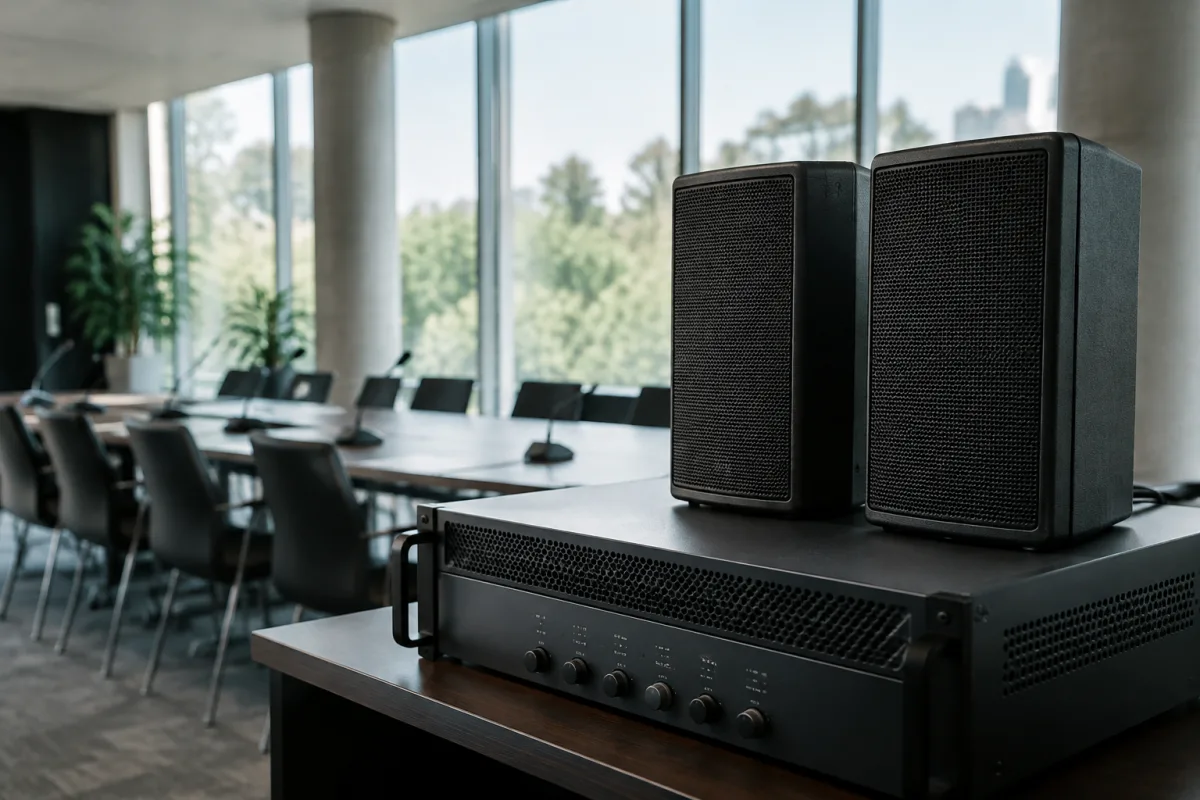
Selecting a conference PA system is about matching capabilities to your venue's size, acoustic environment, and budget. Whether you're outfitting a boardroom, hotel ballroom, or corporate event space, the wrong choice wastes money and leaves audiences straining to hear. This guide cuts through specifications and marketing claims to show you what actually matters when buying a conference PA system.
Essential Specifications That Matter
Power output seems straightforward—measured in watts—but it's only part of the story. A 100W system won't simply feel twice as loud as a 50W system; perceived loudness increases logarithmically. What matters more is whether the power matches your venue size. For rooms under 150 people, 60–100W suffices. Rooms between 150–300 people need 150–250W. Larger venues demand 400W and above, but even here, quality and placement trump raw wattage.
Frequency response reveals whether a system handles speech clarity and music equally. Conference audio skews toward frequencies where human speech clusters: 250Hz to 4kHz. A system optimized for boardroom presentations might sound thin if you later play background music or video content. Look for systems rated 50Hz–20kHz or better; anything narrower risks sounding artificial.
Impedance (measured in ohms) determines how the amplifier connects to speakers. Home audio and professional gear differ here. Professional conference systems typically use 4-ohm or 8-ohm impedances. Mismatching impedance wastes power and risks amplifier damage. Always verify that your chosen amplifier and speakers pair correctly.
Room Acoustics and Placement Decisions
The best specification on paper fails in a reverberant hotel ballroom with hard marble floors. Before buying, assess your primary venue's acoustics. Is it carpeted or hard-floored? Does it have heavy drapes or bare walls? High ceilings or low? Rooms with hard surfaces need directional speakers and possibly room correction. Soft, carpeted spaces forgive poor placement more readily.
Permanent installation systems differ from portable rigs. Permanently mounted speakers in a conference room allow custom tuning and optimized angles. Portable systems trade flexibility for convenience and work best in relatively neutral, predictable spaces. If you're buying for a single fixed venue, investment in permanent mounting pays off through years of better audio.
Speaker placement mistakes cost more than cheap equipment. Even high-quality speakers sound terrible mounted too high, facing away from the audience, or clustered together. Budget 15–20% of your system cost for proper installation consultancy if you're uncertain.
Input Options and Connectivity
Conference rooms demand flexibility. Your system must handle microphone inputs, laptops via HDMI, wireless presentation systems, and sometimes video playback audio simultaneously. Look for systems offering:
- Multiple XLR microphone inputs (at least 2–4 for panels or meetings)
- Bluetooth connectivity for smartphone audio and wireless lavalier mics
- USB input for laptops and webcam integration
- 3.5mm line-in for auxiliary devices
- Optical or S/PDIF if you're integrating with existing video systems
Switching between inputs should be intuitive—ideally requiring one button press, not navigating menus. Poor input management ruins presentations and signals unprofessionalism.
Price Tiers and What You're Paying For
Basic systems under £500 suit very small offices. These typically consist of a simple amplified speaker or compact two-piece kit. They handle basic speech playback but lack durability, sound quality, and features for serious business use. Use these only for occasional presentations in rooms under 50 people.
Mid-range systems (£500–£1,500) represent genuine conference-grade equipment. Expect all-in-one powered mixers with built-in amplification, better speaker design, multiple mic inputs, and reasonable build quality. This tier handles rooms up to about 200 people and endures years of daily use. Most boardrooms and small hotels operate here.
Professional systems (£1,500–£5,000) add refinement: better amplifiers, superior speaker design, more robust connectivity, optional wireless systems, and room tuning flexibility. These excel for high-traffic venues, challenging acoustics, or environments requiring broadcast-quality audio. Investment in this tier is justified for hotels, large corporate meeting spaces, and rental venues.
Premium and custom systems (£5,000+) are engineered for specific venues by professionals, often including permanent installation, acoustic treatment consultation, and ongoing support. Only consider this if you're building a flagship space or have very unusual acoustic challenges.
Common Pitfalls to Avoid
Buying based only on wattage lures many buyers. A high-wattage system with poor speakers and cheap amplifiers often sounds worse than a lower-wattage professional-grade system. Listen to candidate systems, ideally in a venue similar to yours.
Overlooking the microphone chain sabotages even premium amplification. A cheap microphone fed into excellent speakers produces poor results. Budget proportionally: 20–30% of your system spend should go to quality microphones and cables.
Neglecting installation costs surprises many buyers. A £1,000 system becomes a £1,500 reality once you factor in mounting hardware, cable runs, and professional installation labor. Budget accordingly before purchasing.
Ignoring future scalability creates headaches. If your venue or organisation might grow, choose a system with expansion pathways—additional mic inputs, the ability to add subwoofers, or integration capability with existing infrastructure.
Treating wireless microphones as an afterthought wastes their potential. Cheap wireless systems suffer interference, battery issues, and dropouts. If wireless mics are part of your solution, allocate real budget. Conversely, if you don't genuinely need wireless capability, spending money there is wasteful.
Practical Buying Checklist
Use this checklist when evaluating conference PA systems:
- Does it deliver adequate power for your largest venue (consult spacing guidelines from the manufacturer)?
- Can you physically test it in your primary venue or a venue with similar acoustics?
- Does it handle all input types you'll realistically use?
- Are speakers easy to position, angle, and secure without wobbling?
- Can you repair or replace components within a reasonable timeframe and cost?
- Does the manufacturer or retailer offer local support?
- Does it pair well with high-quality microphones available at similar price points?
- Are cables, batteries, and replacement parts readily available?
- Does it match your aesthetic if appearance matters (boardroom vs. corporate event)?
Understanding Warranty and Support
Professional audio warranties typically run 1–3 years from purchase. Beyond warranty, consider support availability. Can you reach a technician within your region? Are replacement parts stocked locally, or will repairs mean weeks without audio? Some budget systems offer better support than premium ones in certain regions—investigate before committing.
For a deeper dive into specific conference system design and best practices, consider reviewing our complete guide to conference PA systems, which covers one popular solution in detail.
Making Your Final Decision
Conference PA system purchasing rewards practical research over specification hunting. Visit retailers, listen to candidate systems, and test them in environments similar to your own. Consult end-users of systems you're considering. Talk to installation professionals who understand your venue's acoustics. The best system is the one that sounds clear, connects reliably, and survives daily use without fuss or frustration.



Comments