


Column PA System article
The Ultimate Guide to Column Pa System
Column PA systems provide focused sound coverage with minimal reflections, ideal for events, venues and installations. This guide covers design and practical application.
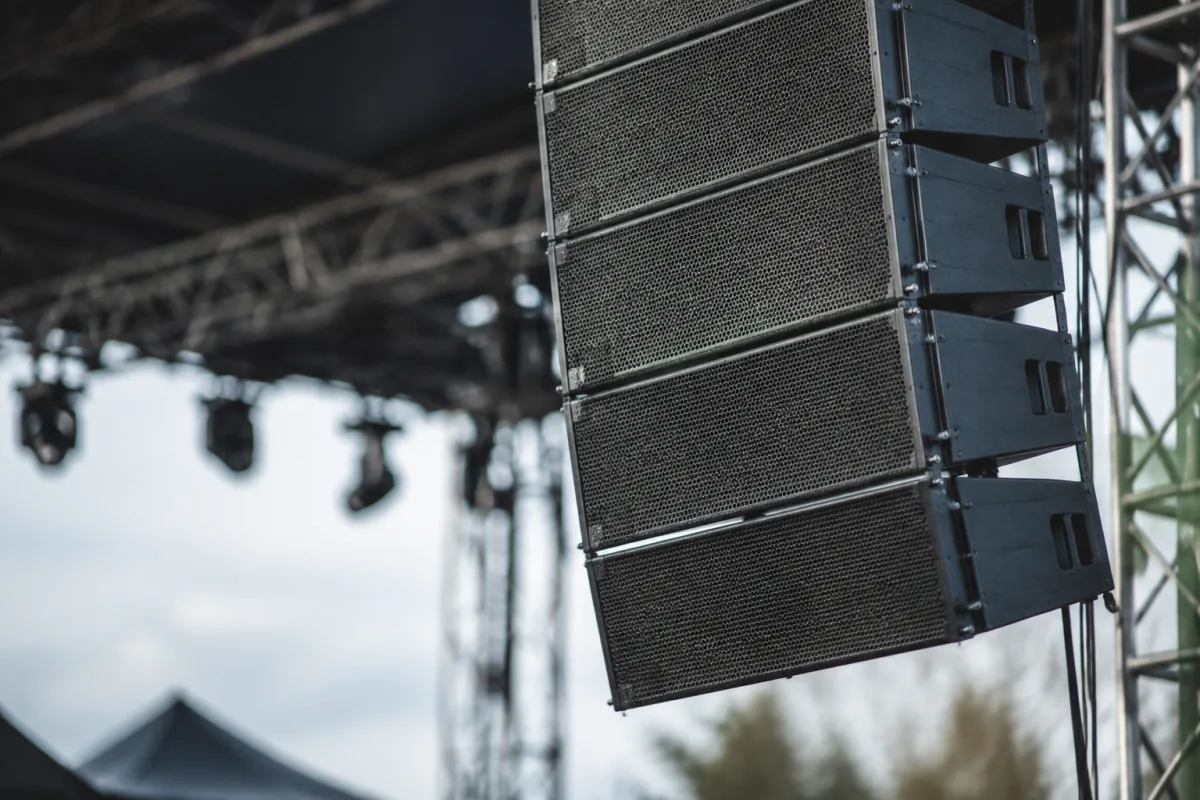
A column PA system is a compact, line-array style loudspeaker designed for speech, background music and small-to-medium event reinforcement. Column speakers stack multiple small drivers vertically, focusing sound energy in specific directions whilst minimising spillover into unwanted areas. Unlike traditional box speakers, column PA systems provide exceptional control over sound distribution, making them ideal for conferences, retail spaces, outdoor events and portable installations. This guide explores column PA system design, advantages over conventional speakers and applications across venues and event types.
What Is a Column PA System?
A column PA speaker contains multiple small drivers arranged vertically in a line array configuration. Rather than a single large speaker emitting sound omni-directionally, column designs stack drivers to create a concentrated, beam-like output pattern. This focused sound distribution offers several advantages over traditional PA speakers, particularly in spaces where sound spillover or coverage control matters.
Column systems typically employ 4–16 small drivers (1–2 inch tweeters or midrange drivers) plus a woofer for bass reproduction. The vertical stacking of drivers creates a narrow vertical dispersion pattern (often 6–12 degrees) whilst maintaining wide horizontal coverage (typically 120 degrees or broader). This vertical focusing makes columns particularly effective in spaces with high ceilings or where controlling sound reaching upper floor areas is important.
Advantages of Column PA Systems
Column speakers offer distinct advantages over conventional speaker boxes:
- Controlled vertical dispersion — focusing sound where needed rather than filling entire venues uniformly
- Reduced ceiling reflections — the narrow vertical pattern minimises sound bouncing off high ceilings, reducing echo and reverberation
- Compact size and aesthetics — sleek vertical form factor fits discreetly into venues without dominating space visually
- Even coverage across distances — vertical stacking maintains consistent level and intelligibility from front to back of a venue
- Scalability — stacking multiple column speakers provides scalable coverage without the acoustic interactions of multiple conventional boxes
- Directional control — focus sound on audience areas whilst minimising spillover into adjacent spaces
Column PA System Components
Typical column systems include:
- Line array drivers — multiple small speakers (1–2 inch) stacked vertically, handling midrange and treble frequencies
- Woofer module — separate bass driver(s) providing low-frequency reinforcement below the line array's range
- Crossover and DSP — electronic components managing frequency division and phase relationships between drivers
- Mounting hardware — brackets for wall mounting, stands for floor placement or suspension rigging
- Amplification — either built-in powered amplification or passive operation with external amplifiers
Coverage Patterns and Vertical Dispersion
Column PA systems are defined by their coverage patterns. Typical dispersion angles include:
- 6-degree vertical dispersion — extremely narrow, used in venues with high ceilings or where reflected sound must be minimised
- 10-degree vertical dispersion — balanced approach suitable for most venues and event types
- 15-degree vertical dispersion — wider vertical coverage, used in smaller venues or where broader distribution is acceptable
- Horizontal coverage — typically 120–160 degrees, allowing wide audience coverage despite narrow vertical focusing
Selecting the right dispersion angle depends on venue height, audience area dimensions and acoustic priorities. Taller venues benefit from narrower vertical angles; lower-ceilinged spaces may require wider patterns.
Applications and Use Cases
Column PA systems excel in numerous applications:
- Conference and corporate events — clean aesthetics, focused coverage and reduced feedback make columns ideal for presentations
- Retail and hospitality venues — background music and announcements without overwhelming dining areas or shopping spaces
- Worship spaces and houses of faith — even coverage and reduced ceiling reflections improve speech intelligibility significantly
- Outdoor events and temporary installations — portable columns provide coverage without permanent infrastructure
- Museums and galleries — directional audio guides visitors without disturbing other exhibits
- Sports venues and stadiums — announcement coverage with controlled distribution to specific zones
- Public transportation — trains, buses and stations benefit from column systems' focused coverage and compact form
Installation and Placement Considerations
Proper column PA installation maximises performance:
- Mount columns at ear level or slightly above, tilted to aim at the primary listening area (typically 15–30 degrees downward tilt).
- Position columns to minimise reflections off hard surfaces (ceilings, opposite walls). Soft furnishings and acoustic treatment improve sound quality.
- Maintain adequate spacing between adjacent columns if using multiple units (typically 1–3 metres depending on vertical dispersion angle).
- Route cables away from tripod legs and electrical hazards to prevent damage or safety risks.
- Use proper rigging hardware if suspending columns; never trust to friction or inadequate fastening.
- Aim vertical tilt to ensure rear audience members receive similar level and intelligibility as front rows.
Impedance and Wiring Specifications
Column speaker systems typically operate at 4 or 8 ohms depending on configuration. Understanding impedance prevents amplifier mismatch and performance issues:
- Single speaker at 8 ohms — suitable for most amplifiers and mixing consoles
- Multiple speakers in parallel — combining 8-ohm speakers in parallel reduces total impedance; check amplifier specifications
- Powered (active) systems — built-in amplifiers; wired via balanced audio cables (XLR) to mixing console
- Passive systems — require external amplification; wired with speaker cables (larger gauge for longer runs)
Powering and Amplification Options
Column PA systems offer flexible amplification choices:
- Self-powered (active) columns — built-in amplifiers powered via AC mains; connect directly to mixer via XLR audio cable
- Passive columns with external amplifier — lighter weight, greater portability; require separate powered amplifier
- Network audio (Dante, AES67) — advanced systems using digital audio networking for integration with complex installations
Tuning and Equalization
Column systems benefit from careful tuning. Many quality systems include built-in DSP with:
- High-pass filter — removing unwanted bass rumble and low-frequency noise
- Parametric EQ — shaping midrange response to match venue acoustics and prevent feedback
- Delay controls — phase-aligning multiple columns or coordinating with other PA systems
- Level limiting — protecting drivers from clipping and over-excursion
Conclusion
Column PA systems provide focused, controlled sound distribution ideal for speech reinforcement, background music and event amplification across diverse venues. Their compact form, precise coverage control and scalability make them preferred choices for corporate events, retail environments, worship spaces and outdoor installations. Proper installation, impedance matching and basic equalization ensure columns perform reliably and sound professional. Whether deploying a single portable system or integrating multiple units into complex installations, column PA speakers deliver intelligible, efficient sound reinforcement with minimal acoustic compromise.





Comments