


Network Streamer Buying guide
Network Streamer: A Complete Buyer's Guide
A practical guide to choosing a network streamer, covering protocol support, DAC quality, connectivity, display options, price tiers, and common buying mistakes.
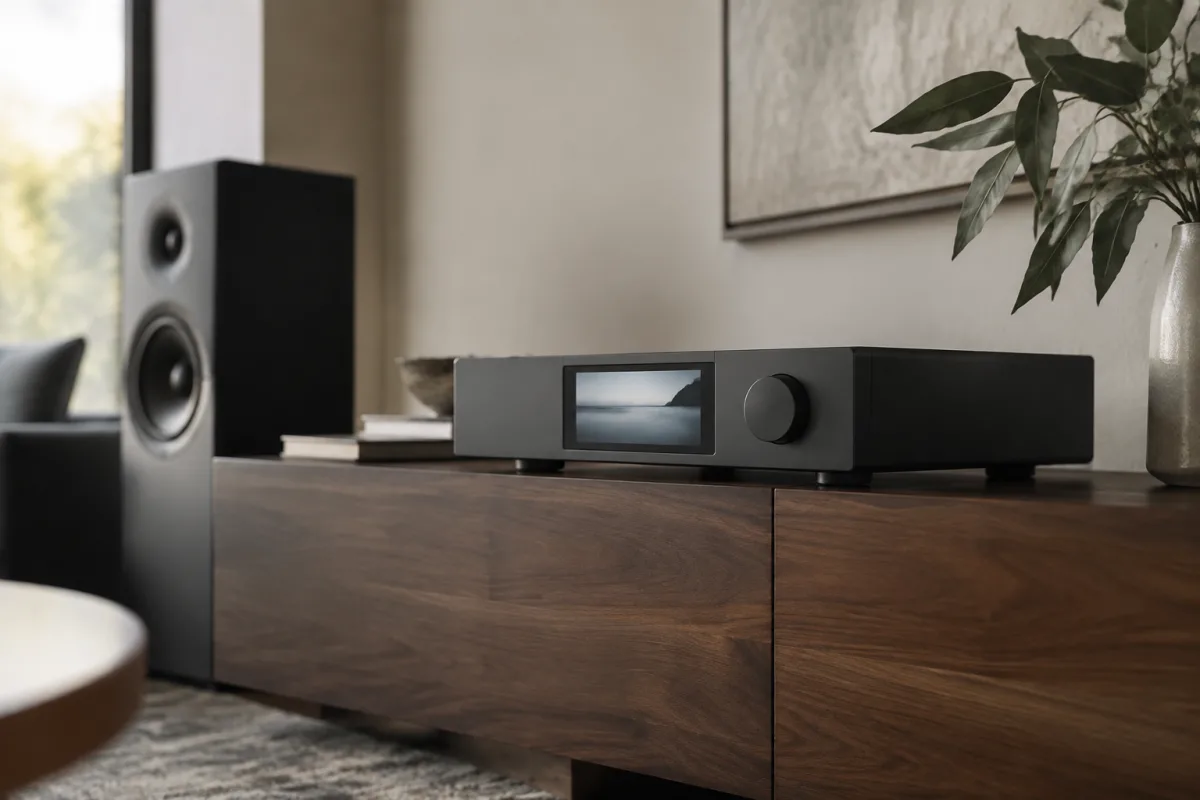
Choosing a network streamer for your home audio system can feel daunting when you're faced with dozens of options that seem to do similar things at vastly different prices. This buying guide cuts through the marketing speak and focuses on the practical specifications and features that actually matter when you're purchasing a network streamer. We'll show you how to evaluate what you really need versus what's unnecessary hype.
Understanding Streaming Protocols: The Foundation of Your Choice
A network streamer must support the services you actually use. Before you buy a network streamer, verify it supports your preferred streaming platforms and protocols. The main options are:
- Spotify Connect: Seamless control from your phone; many streamers support this.
- AirPlay: Apple's protocol; essential if you use Apple devices.
- UPnP/DLNA: Universal protocol for streaming from your own music library.
- Bluetooth: Wireless input from phones and tablets; not all hi-fi network streamers include it.
- Tidal and Qobuz: Hi-fi streaming services; check if your network streamer supports them natively (some require workarounds).
- MQA: Compressed hi-fi format; useful only if your music service delivers it.
When evaluating a network streamer, don't pay extra for protocols you'll never use. A device supporting Spotify Connect, AirPlay, and UPnP covers most use cases and will satisfy 90% of users choosing a network streamer.
Wired vs. Wireless Connectivity
How your network streamer connects to your home network affects sound quality and reliability. Wired Ethernet is preferable for hi-fi listening because it eliminates potential interference. Wi-Fi adds convenience but introduces potential jitter and noise. When buying a network streamer:
- Prioritise wired Ethernet: Necessary for the cleanest sound if you take audio seriously.
- Wi-Fi only: Acceptable for casual listening, convenient if running cables is impractical, but not ideal for critical listening.
- Dual connectivity: Gives flexibility. Can hardwire when available, Wi-Fi when needed.
If you're buying a network streamer for a dedicated listening position, always choose one with Ethernet. Wi-Fi-only models work fine for kitchen or bedroom background music.
DAC Quality: How It Affects Your Purchase Decision
A network streamer must convert digital data to analogue audio—that's the job of the DAC (digital-to-analogue converter). DAC quality varies enormously, and it's one reason price differences exist. Consider:
- Entry-level network streamers: Often use basic chipset DACs that sound acceptable but lack refinement.
- Mid-range: Quality DAC chips from AKM, Burr-Brown, or ESS; noticeably better sound than entry-level.
- High-end network streamers: Multiple DAC chips, custom implementations, or boutique designs; significant sonic advantage if your speakers and amp can reveal the difference.
When choosing a network streamer, the DAC specification matters more than processor speed or RAM. Look at chipset names and whether the manufacturer mentions upsampling or filtering capabilities.
Display Types and User Interface
Network streamers come with different interface options, and your preference matters:
- No display (blind units): Cheapest, smallest footprint, controlled entirely via app; requires a smartphone or tablet nearby.
- LED display: Shows current song, sample rate, bitrate. Adds cost and aesthetic appeal.
- Small touchscreen: Allows basic control without your phone; adds significant cost.
- Full display with controls: Premium option, unnecessary if you're happy using apps.
Buying a network streamer with a fancy display adds cost without improving sound. If you'll always control it via phone app, a blind unit saves money.
Audio Output Options
How you connect your network streamer to your amplifier affects flexibility and sound quality. When evaluating models, check available outputs:
- RCA (phono): Standard analogue output; universal, simple, adequate.
- XLR (balanced): Lower noise, better for long cable runs; premium streamers include it.
- S/PDIF (coaxial or optical): Digital output for external DAC or amplifier; useful for upgrading later.
- USB: Rarely found on audio-only network streamers, but worth having if you want versatility.
For most buyers choosing a network streamer, RCA output is sufficient. XLR is a nice-to-have if you have balanced inputs available on your amplifier.
Price Tiers and What You Actually Get
Budget (£150-300):
- Entry-level DACs, basic interface
- Supports mainstream services (Spotify, AirPlay, UPnP)
- Good value for casual listeners
- Sound is acceptable but not refined
Mid-range (£300-700):
- Quality DAC implementation, better sound than budget options
- Reliable network performance
- Better build quality and support
- Best value for discerning listeners
Premium (£700-1500+):
- High-quality DACs with multiple implementations
- Superior sound refinement and low noise
- Excellent display and build quality
- Worth it only if your speaker/amplifier system can reveal the difference
Common Buying Mistakes to Avoid
Many buyers of network streamers stumble because they don't think through these issues:
- Assuming all models support your services: Always verify protocol support before buying. "Spotify streaming" might require a workaround, not native integration.
- Choosing Wi-Fi only when Ethernet is impractical to install: Spend time running a cable if audio quality matters; Wi-Fi introduces compromise.
- Buying premium DAC when speakers are mediocre: There's no point in a £1000 network streamer driving a £500 speaker pair. Match your network streamer quality to your entire system.
- Ignoring software support: Some brands update their network streamer software regularly; others abandon devices after release. Check manufacturer track record.
- Overpaying for unnecessary features: Touchscreens, LED displays, and boutique aesthetics don't affect sound quality.
- Forgetting about power supply quality: Better network streamers feature quality power supplies with low noise. This affects sound more than you'd expect.
Matching Your Network Streamer to Your System
The wrong network streamer choice is one that doesn't match your amplifier and speakers. A £200 network streamer feeding a £5000 speaker pair will bottleneck your system. Conversely, a £800 network streamer can't reveal its full quality through budget speakers. A good rule: your network streamer should be in the same price category as your amplifier and speakers.
Making Your Purchase
Before buying a network streamer, create a checklist:
- Which services do I use? (Verify protocol support.)
- Is Ethernet possible in my listening room?
- How good is my amplifier and speaker system?
- Do I need a display, or will app control suffice?
- What audio outputs does my amp require?
- What's my realistic budget?
- Does the manufacturer provide good software support?
Answer these questions honestly, and you'll narrow your options significantly. A network streamer that matches your services, your room setup, and your system quality is far more important than brand name or aesthetic appeal.
For comprehensive information on network streaming technologies and what to expect from your new device, see our complete guide to network streamers, which covers installation, setup, and optimisation in depth.


Comments