


Floorstanding Speakers article
Floorstanding Speakers for Beginners: A Complete Guide
Upgrading to floorstanding speakers doesn't have to be intimidating. Our beginner guide shows you exactly how to set up, position, and enjoy your first high-quality listening experience.
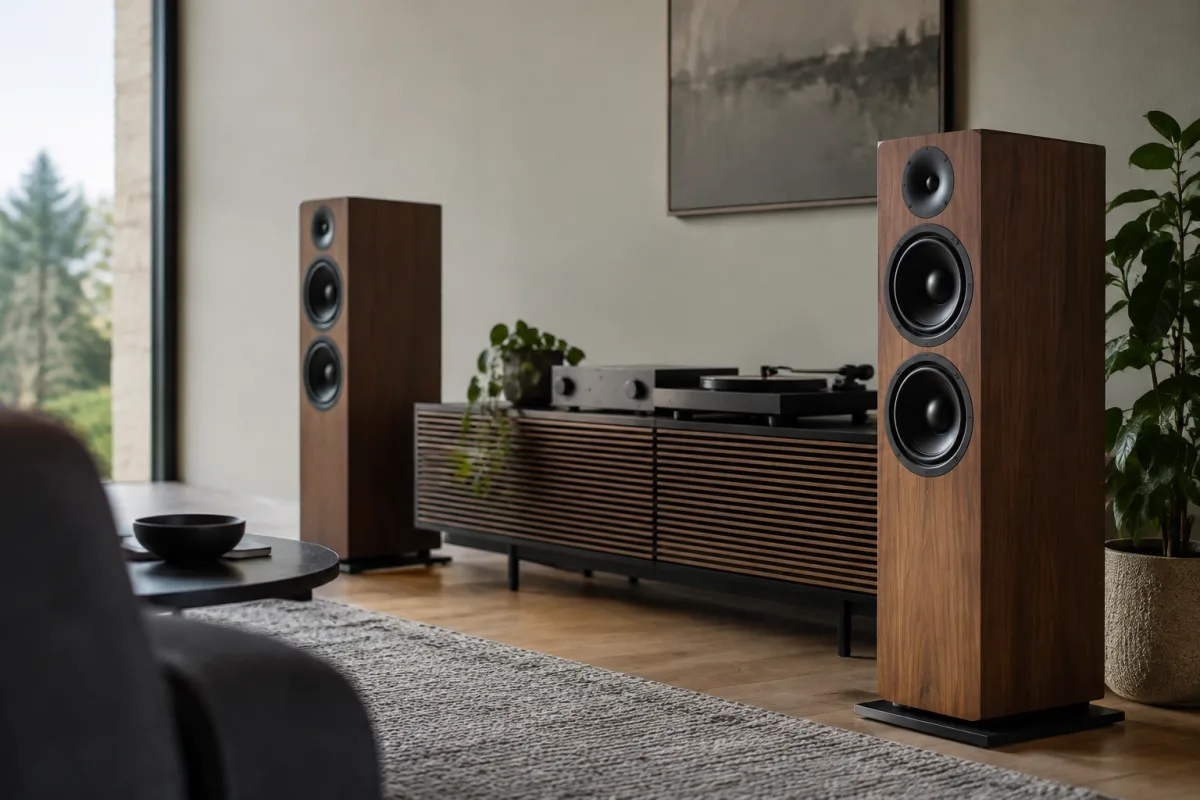
Taking the leap into quality home audio with floorstanding speakers is thrilling and, honestly, less intimidating than it sounds. If you've been hesitant about upgrading from built-in TV speakers or small bookshelf units, this guide will show you exactly what to expect, how to get started without feeling overwhelmed, and how to avoid the beginner mistakes that derail so many newcomers to the hobby.
Why Floorstanding Speakers Are a Smart First Choice
Floorstanding speakers are incredibly beginner-friendly because they do so much of the heavy lifting for you. Unlike bookshelf speakers that need stands, proper placement, and room treatment to sound their best, floorstanding speakers are self-contained units that deliver impressive performance almost anywhere you put them. They sit directly on the floor, connect simply to an amplifier or receiver, and immediately give you access to a significantly better listening experience than you've likely heard before. That moment when you play your first song through decent speakers—it's genuinely transformative.
Understanding the Basics Before You Shop
Here's what matters when you're starting out: floorstanding speakers are tall cabinet speakers that house multiple drivers (the parts that produce sound). Inside each speaker, you'll typically find a tweeter (handles high frequencies), midrange driver (handles voices and instruments), and woofer (handles bass). Don't worry about memorising these terms—what you need to know is that floorstanding speakers are designed to handle a wider range of sounds than smaller speakers, which is why they sound so compelling right out of the box.
The Setup That Won't Overwhelm You
Setting up floorstanding speakers for the first time is genuinely straightforward. Place them roughly where you want them (ideally a metre or two from the wall behind them), unbox them carefully, connect the speaker cables to your amplifier or receiver, and play something you love. That's it. You don't need special cables, exotic positioning, or mysterious "room treatments" to get satisfying sound on day one. Yes, fine-tuning placement comes later, but beginners often overestimate how much tweaking is necessary. Your floorstanding speakers will sound excellent before any of that.
Essential Things to Know About Amplification
Floorstanding speakers need power to work, which means you need an amplifier or an AV receiver. This part confuses many beginners, so let's be clear: your old home theatre receiver probably has enough amplification built in. If you're starting from scratch, an entry-level AV receiver (usually £200-500) will work beautifully with most affordable floorstanding speakers. You don't need expensive high-end amplification to enjoy excellent sound—that comes later if you want to explore it. Match roughly similar price points: £300 speakers typically pair well with a £300-400 receiver, and things work out nicely.
Common Beginner Mistakes to Sidestep
Learning from others' experience saves time and money. Here are the pitfalls that catch nearly every first-timer with floorstanding speakers:
- Stuffing them into a cabinet: Floorstanding speakers need to breathe. Don't enclose them in furniture or corner them too tightly against walls—the bass will sound muddy and the treble will sound harsh.
- Buying vastly more speaker than amplification: Underpowered amplification makes expensive speakers sound disappointing. The amplifier and speakers should be roughly matched in quality tier.
- Positioning them too close together: Floorstanding speakers need separation—ideally at least 2 metres apart. Placing them close together collapses the soundstage and wastes what makes these speakers special.
- Ignoring the manual completely: Different models have different terminal configurations. Spend five minutes reading the manual to ensure you're wiring things correctly.
- Judging them immediately: New speakers need a break-in period. They'll sound noticeably better after 20-30 hours of use. Patience here pays real dividends.
- Skipping the speaker grilles: Leave the grilles on when you're starting. They slightly warm the sound, and beginners almost always prefer the presentation with grilles in place.
Creating Your First Listening Setup
Your first listening room doesn't need to be a dedicated home theatre. Any room with some basic furniture works fine. Sofas, curtains, and carpets all help by absorbing sound reflections—things you probably already have. The goal at your stage isn't acoustic perfection; it's enjoying music through genuinely good speakers. Floorstanding speakers sound wonderful in ordinary living rooms. Play the music you love, sit back, and listen. That's the whole point.
Budget Expectations That Make Sense
A meaningful upgrade to floorstanding speakers typically starts around £300-400 per pair. Yes, cheaper options exist, but at this price point, you genuinely enter the territory where the improvement over bookshelf speakers becomes obvious. Budget another £300-500 for an amplifier or receiver, and you're looking at a total investment of £600-1000 for an excellent first system. That's a one-time purchase that will outlast multiple phones, laptops, and sound bars. Think of it as investing in an experience you'll use every day for years.
Room Placement: Start Simple, Refine Later
When you first unpack your floorstanding speakers, put them on either side of your TV or seating area, roughly a metre from the wall behind them, and start listening. You'll likely find they sound wonderful immediately. Yes, optimal placement involves more precision, but that's intermediate territory. For now, enjoy the music. After a few weeks, when you're used to how they sound, you can experiment with moving them slightly to see if you prefer different positions. The best placement is the one that makes music sound good to your ears.
When You're Ready to Explore Further
Once you've fallen in love with listening through floorstanding speakers, the hobby opens up naturally. Room treatments, upgraded cables, turntables, streaming upgrades—these are all available when you want to explore them. But here's the honest truth: the biggest sonic improvement happens on day one when you go from whatever you were using before to proper floorstanding speakers. Everything after that builds on that foundation. Enjoy this stage. It's genuinely special.
For a complete understanding of floorstanding speakers and all their capabilities, our comprehensive guide to floorstanding speakers covers every detail.
Your Next Steps
Floorstanding speakers invite you into a world of listening that most people never experience. That nervousness you might feel about making the wrong choice? It typically disappears within minutes of hearing them properly set up. Pick speakers within your budget, pair them with an adequately powered amplifier, place them sensibly, and play music you love. Everything else—the refinement, the fine-tuning, the exploration—comes naturally if you want it. But even without it, you'll be amazed at what you've been missing.


Comments