


Boss Amplifier article
Boss Amplifier for Beginners: A Complete Guide
A Boss amplifier looks intimidating at first with all its controls and features. This beginner's guide breaks down the essentials, shows you how to get a great tone quickly, and reveals common mistakes that hold new players back.
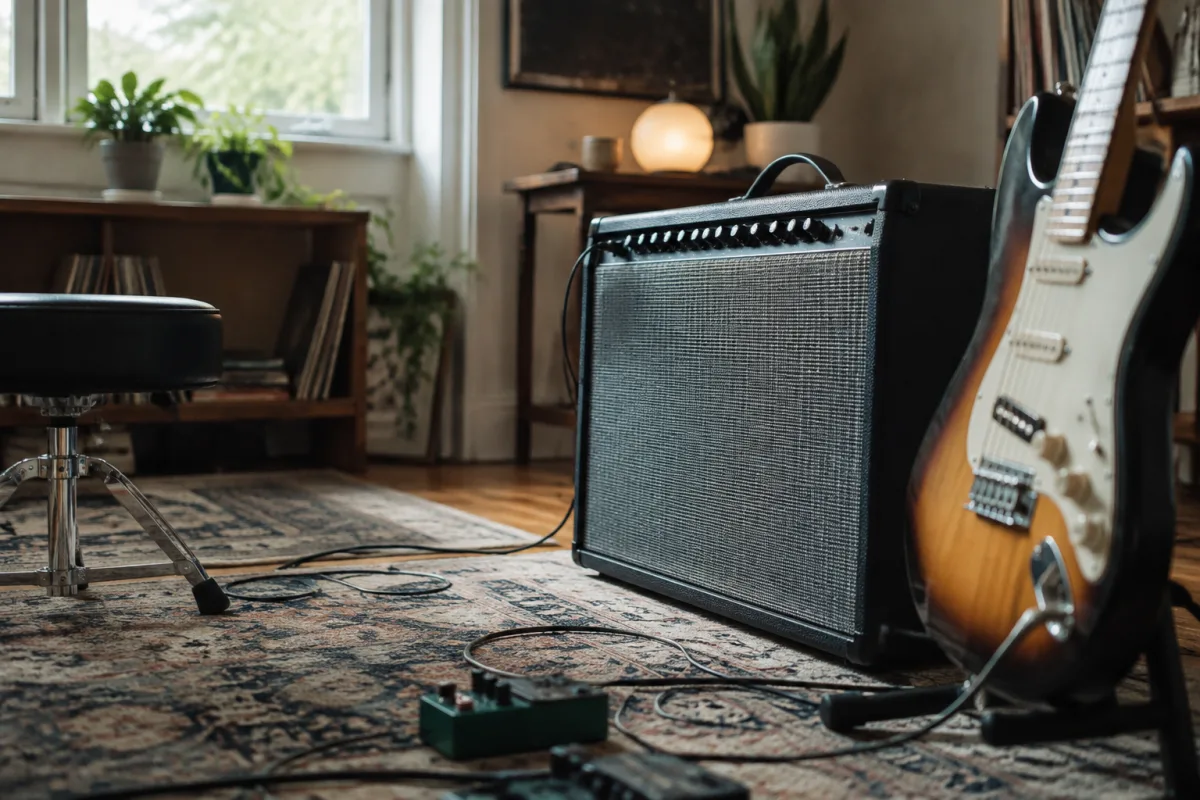
Starting with a Boss amplifier can feel overwhelming. You're looking at controls you don't recognise, buttons that do mysterious things, and manuals full of technical jargon. The good news is that a Boss amp is actually designed to be intuitive once you understand a few basics. This beginner's guide walks you through the essential controls, shows you how to dial in your first decent tone without getting lost in advanced features, and reveals the common beginner mistakes that keep new players from enjoying their gear.
Understanding Your Boss Amplifier's Layout
A typical Boss amp has more going on than a simple practice amp, but the core controls are straightforward. Let's start with what actually matters.
Power and Volume. Your Boss amplifier has a master power switch and a volume knob. Turn the power on, wait a few seconds for the amp to warm up, then start with the volume dial at zero. This prevents speaker damage and ear damage. Increase it gradually as you play.
Gain and Master Volume. Most Boss amplifiers separate gain (how hard the preamp pushes, which creates overdrive at higher settings) from master volume (overall loudness). Start with gain at 12 o'clock and master volume low. Play and adjust gain first to get the tone character you want, then raise master volume to the listening level you need. Many beginners crank both—this is backwards and leads to terrible tone.
Tone Stack (Bass, Mids, Treble). Your Boss amplifier has at least three knobs here. Start with all three at 12 o'clock (neutral). Play and listen. If the tone sounds too boomy, reduce bass; if it's too thin and piercing, reduce treble. The midrange is subtle but powerful—cutting it creates a scooped, modern tone; boosting it adds warmth. Spend 5 minutes experimenting rather than guessing.
Getting Your First Sound Right
Beginners often assume their Boss amplifier needs complicated settings. It doesn't. A simple, clean tone teaches you more about playing than a wall of effects.
Step One: Dial in Clean Tone. Set your Boss amplifier to clean mode (not overdrive or lead channel, if your model has multiple). Set gain at 12 o'clock, all three tone controls at 12 o'clock, and master volume to about 2 or 3 o'clock. Play some open chords. It should sound clear and balanced. Adjust treble and bass until it feels right for your ears—there's no one "correct" setting; it depends on your guitar and room.
Step Two: Add a Touch of Gain. Once clean sounds good, try turning gain up to 1 or 2 o'clock. You're not looking for crunch yet—just a bit of warmth and sustain. This is where most practice guitar playing happens.
Step Three: Leave Effects Alone Initially. If your Boss amplifier has built-in reverb, delay, or chorus, ignore them for now. Get comfortable with the basic tone first. Effects amplify both good and bad playing habits—add them later once your fundamentals are solid.
Common Beginner Mistakes to Avoid
Cranking the Gain All the Way. A common mistake is assuming that a Boss amplifier needs maximum gain to sound professional. It doesn't. Excessive gain makes every mistake screech, reduces note clarity, and trains your fingers to rely on distortion rather than technique. Start low and only increase gain when you've mastered clean playing.
Ignoring the Master Volume. New players often crank master volume to achieve loudness, then wonder why their tone is thin and muddy. Volume and gain are different jobs. Use gain for tone shaping; use master volume for listening level. This separation is a huge advantage your Boss amplifier offers.
Fiddling Constantly. It's tempting to tweak every control every few minutes. Resist. Pick a setting, play for 10 minutes, then make one adjustment. Your ears need time to calibrate. Constant tweaking prevents you from learning what each control actually does.
Using Headphones Without Understanding the Boss Amplifier's Speaker. Many Boss amplifiers include a headphone output. It's useful for silent practice, but it doesn't reflect how the amp sounds through its speaker. Spend most of your early practice time playing through the speaker, even quietly. You'll learn tone much faster.
Skipping the Manual. Your specific Boss amplifier model might have unique features or naming conventions. Spend 20 minutes reading the manual to familiarise yourself with your exact model. It saves frustration later.
Building Confidence With Your Boss Amplifier
The first week of playing through a Boss amplifier can feel uncertain. That's normal. Here's how to build confidence quickly.
Record yourself playing a simple progression through your Boss amplifier. Listen back without judging the playing—focus on the tone. Does it sound warm? Clear? Then you've found a good starting point. Make notes of the settings you used (write them down or take a phone photo of the knob positions). Come back to that tone every practice session.
As you improve, your playing will reveal what you need from your Boss amplifier. Some players want more crunch; others want crystal clarity. There's no universal "best" tone—there's only what works for you and your music.
Introduce one feature at a time. Spend a week with just clean tone. Then, if your model has it, try the built-in reverb for a week. Keep effects minimal until you're genuinely bored with the basic setup. Lots of controls doesn't mean you need to use them all.
Practical Tips for Daily Use
Let It Warm Up. Your Boss amplifier takes a few seconds to stabilise after powering on. Don't immediately crank the volume.
Turn It Off Properly. Always turn off power first, then unplug or switch the power outlet. Never yank cables while the amp is on.
Keep the Speaker Clean. Dust accumulation reduces tone clarity. Gently wipe the speaker cloth or grille every few weeks.
Don't Overdo Volume at Home. A Boss amplifier at low volume (3–5 on the dial) still produces surprising tone. Neighbours will appreciate your restraint.
Final Thoughts
Your Boss amplifier is a tool designed to let you hear yourself clearly and shape tone to match your playing style. You don't need to master every control right away—focus on the core three: volume, gain, and the tone stack. Once those feel natural, everything else becomes experimentation rather than confusion. For a comprehensive overview of all Boss amp features and models, check out the complete guide to Boss amplifiers.



Comments