


Telecaster Fender Bass article
The Complete Guide to Telecaster Fender Bass
Discover the Fender Telecaster Bass: a legendary instrument with distinctive single-coil tone. Learn about its character and whether it suits your playing style.
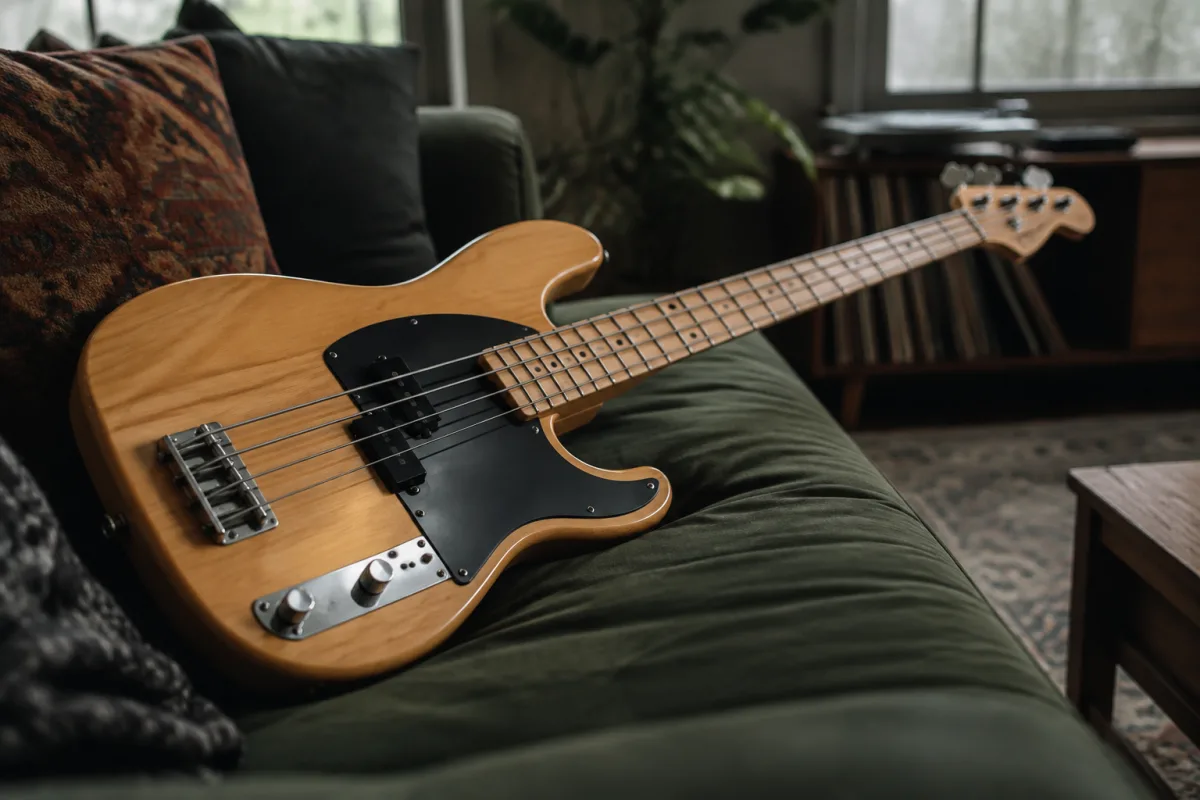
The Fender Telecaster Bass represents one of electric bass’s most distinctive voices, combining classic single-coil clarity with the fundamental low-end character essential to modern music. Introduced in 1968 as Fender’s answer to modern tonal demands, the Telecaster Bass has become a staple in rock, punk, funk and alternative ensembles worldwide. Understanding what makes the Telecaster Bass distinctive and whether it suits your playing style will help you evaluate this iconic instrument.
Historical Context and Design Philosophy
Fender’s original Precision Bass, introduced in 1951, became synonymous with electric bass itself. However, by the late 1960s, players sought alternatives with different tonal characteristics. The Telecaster Bass emerged as Fender’s exploration of single-coil bass tone—a radical departure from the Precision’s humbucking warmth. Rather than developing entirely new tooling, Fender adapted the Telecaster guitar’s body shape to bass proportions, creating an instrument that looked like a scaled-up Telecaster but operated as a proper bass.
This design choice shaped everything about the Telecaster Bass. The single-coil pickup delivers high-frequency clarity and articulation impossible with humbucker-equipped alternatives. The tonal character is bright, punchy and defined—ideal for cutting through ensembles and sitting clearly in recordings. For players seeking a bass voice entirely different from Precision warmth, the Telecaster Bass delivered a genuine alternative.
Tonal Characteristics
A Telecaster Bass played through a flat-response amplifier delivers a bright, articulate fundamental with prominent upper harmonics. The attack is immediate and cutting; the decay is relatively quick. This tonal profile makes the Telecaster Bass exceptional for slapped techniques, pick-driven playing and any application requiring clarity and definition. In full-band contexts, a Telecaster Bass cuts through easily—the brightness that might sound thin played alone sonically sits perfectly in an ensemble.
Compared to a Precision Bass, a Telecaster Bass sounds leaner and more focused. Compared to a Rickenbacker or other single-coil alternatives, the Telecaster Bass emphasises mid-range clarity over either extended highs or pronounced lows. This balanced brightness suits diverse musical contexts from punk minimalism to funk sophistication to classic rock straightforwardness.
Build and Construction
Fender Telecaster Bass models employ solid alder or ash bodies, bolt-on maple necks and various hardware depending on the specific model and price point. The body shape is unmistakable—essentially a bass-sized Telecaster with single-cutaway design. The weight is typically moderate, neither as heavy as some semi-hollow basses nor as light as the lightest solid-body designs.
Construction quality varies significantly between American-made and import models. An American Fender Telecaster Bass represents genuine quality throughout—solid wood throughout, excellent fret work and hardware that functions reliably for decades. Import models (typically Mexican-manufactured) offer solid playability at lower prices but with slightly compromised component quality and finish refinement.
Single-Coil Tone in Bass Context
The single-coil pickup configuration is the Telecaster Bass’s defining characteristic. Single coils deliver clarity and definition that humbucker-equipped basses cannot match. However, they also introduce hum susceptibility—in environments with significant electromagnetic interference, a Telecaster Bass might hum whilst a Precision Bass remains quiet. Professional players accept this trade-off as part of the Telecaster Bass’s essential character.
The pickup placement—typically middle to bridge position on a bass—further emphasises the mid-range articulation. Some Telecaster Bass models offer dual single-coil configuration providing more tonal flexibility, but these remain less common than the classic single-pickup design.
Playability and Comfort
The Telecaster Bass body is relatively compact compared to some bass designs, making it comfortable for extended playing sessions and easier to manoeuvre on stage. The single-cutaway design provides good upper-fret access, useful for players working in higher registers. The neck profile is typically comfortable, neither excessively chunky nor overly thin.
The fretboard radius and nut width are standard for Fender bass instruments—comfortable for most players though those with particularly small or large hands might find tweaks helpful. The overall ergonomics have proven sound enough that the Telecaster Bass remains in production with minimal fundamental design changes across decades.
Notable Players and Musical Applications
Bruce Dickinson of Iron Maiden famously paired Telecaster Basses with Marshall amps, creating the instrument’s most iconic sonic identity. Punk and alternative ensembles embraced the Telecaster Bass specifically for its brightness—the clarity cut through distorted guitars perfectly. Funk players appreciated the articulation for slapped techniques and percussive playing. The instrument’s versatility is demonstrated by its presence across such diverse musical contexts.
Investment and Value Considerations
American-made Fender Telecaster Basses cost £1,200–£2,000 new, positioning them as serious investments but more affordable than premium boutique alternatives. Mexican-manufactured models start around £600–£900. Used Telecaster Basses hold value well—the combination of iconic status and unique tonal character maintains demand in the secondary market.
As an investment, a Telecaster Bass offers the same logic as other classic Fender instruments: genuine heritage, reliable construction and distinctive voice justifying the expense. Players seeking this specific tonal character often conclude that accepting other limitations is worthwhile to secure the sound they need.
Comparison with Alternative Bass Designs
The Precision Bass offers warmer, more forgiving tone with extended lows. The Rickenbacker emphasises brightness even more than the Telecaster Bass but in a different character. The Jazz Bass provides passive tonal flexibility through dual-coil configuration. Each design serves distinct musical purposes; the Telecaster Bass is specifically the choice when clarity, cut and single-coil definition matter most.
Conclusion
The Fender Telecaster Bass remains a distinctive instrument that delivers a unique sonic identity impossible to fully replicate through other means. Whether you’re a punk player needing cutting clarity, a funk bassist exploring percussive possibilities or a rock musician seeking an alternative to Precision warmth, the Telecaster Bass is genuinely worth investigating. Try one if possible, and recognise that its brightness and clarity—qualities some players consider limitations—are precisely what others value as essential to their sound.



Comments