


Takamine Electric Guitar article
Takamine Electric Guitar for Beginners: A Complete Guide
Starting with a Takamine electric guitar is easier than you might think. This beginner's guide addresses common worries, explains why Takamine suits newcomers, walks through your first month of learning, and builds confidence through realistic milestones and practical advice.
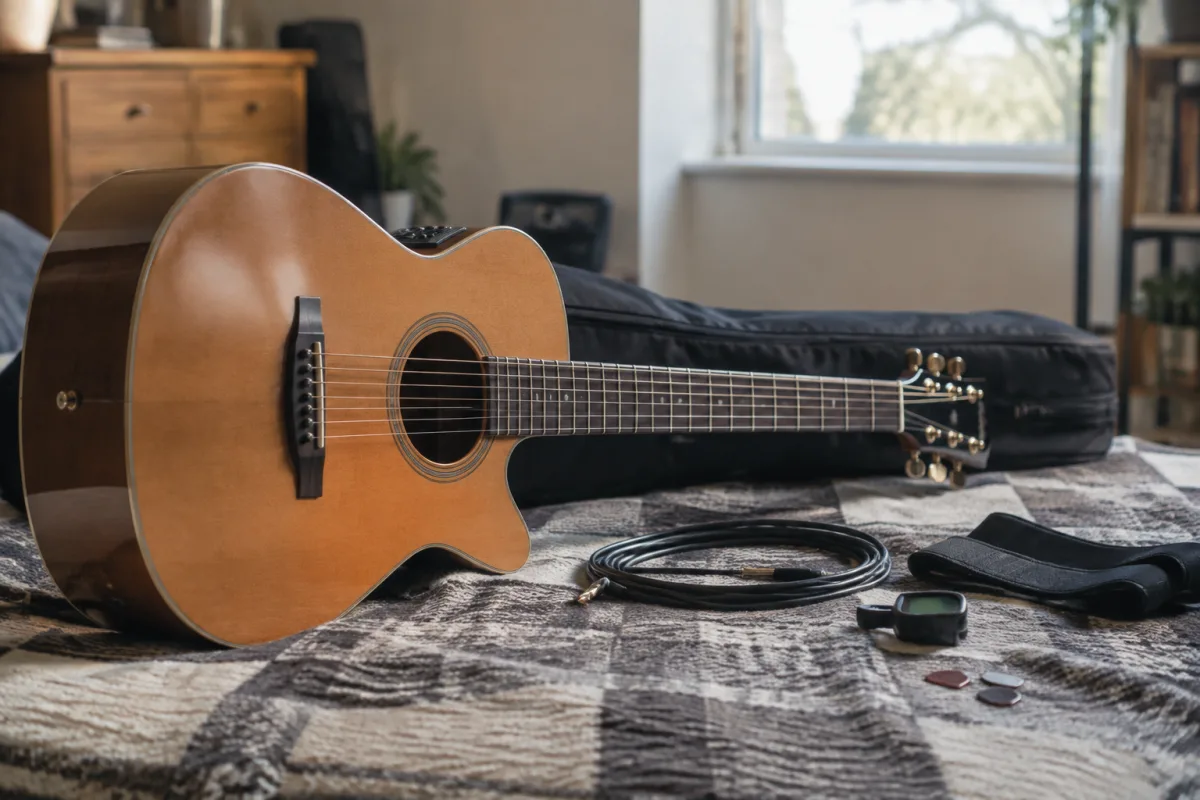
Starting with a Takamine electric guitar represents an excellent entry point into amplified playing. Unlike acoustic instruments that require building finger strength first, electric guitars are immediately forgiving—lighter strings, lower action, and powered amplification mean you can focus entirely on learning technique rather than fighting the instrument itself. This beginner's guide addresses the common worries you might have, explains why Takamine specifically suits newcomers, and walks you through the simplest path from complete novice to confident player.
Why Beginner Players Choose Takamine
Takamine has built a reputation for reliability and beginner-friendly design. Their electric guitars arrive playable straight out of the box without requiring expensive setup adjustments that many budget alternatives demand. The brand's electronics work smoothly, tuning machines stay accurate, and build quality inspires confidence. You're not fighting frustrating hardware or dealing with dead electronics that test your patience—instead, you're free to practise and develop your technique.
First Things First: Don't Overcomplicate Equipment
A common beginner mistake is accumulating gear before understanding what you actually need. Start minimally: the guitar itself, an amplifier, and a strap. That's genuinely it. You don't need fancy effects pedals, exotic cables, or multiple amplifiers. This simplicity keeps costs manageable and prevents distraction from actual learning. As your skills develop, you'll naturally discover what additional equipment genuinely enhances your playing. Resist the urge to purchase "just in case" items before you know whether they're useful.
Choosing Your First Takamine Electric
Takamine offers several beginner-appropriate models, typically priced £400-800. These instruments feature solid construction, reliable electronics, and comfortable neck profiles suited to developing players. The visual appearance shouldn't drive your decision—pick whatever design appeals to you emotionally. You'll practise more enthusiastically when your instrument inspires you, and aesthetic preference doesn't impact playability or learning speed.
Understanding Amplification Basics
Your first amplifier doesn't need to be powerful or feature-rich. A 15-20 watt combo amplifier costing £150-300 provides sufficient volume for bedroom practice and small group rehearsals. Don't confuse wattage with quality—a quality 15-watt amplifier will serve you through years of learning. Audio quality matters more than power; test amplifiers through headphones using the same budget you'd allocate, as many affordable amps include headphone outputs perfect for late-night practice without disturbing household members.
Your First Week: Reasonable Expectations
Brace yourself for the reality that your fingers will hurt. The first week involves tender fingertips as calluses develop—this is normal, temporary, and absolutely universal among beginning guitarists. Expect approximately five days before fingertip soreness becomes manageable and ten days before it largely disappears. Continue practising through this period; quitting because your fingers hurt is the primary reason beginners abandon guitar learning. Persistence through week one is honestly the hardest part of starting.
Sound expectations during early learning are equally important. You will produce squeaks, muted notes, and unclear chords initially. This isn't a sign you've chosen the wrong instrument or lack talent—it's simply the acoustic consequence of developing finger strength and dexterity. Every guitarist you admire endured identical beginner struggles. Your Takamine electric guitar will sound dramatically better within three weeks of consistent practice as your technique improves.
Creating a Manageable Practice Routine
Thirty minutes daily beats three hours once weekly. Your nervous system learns muscle memory through consistent, repeated exposure. Start with basic open chords (E major, A major, D major)—these use simple finger positions repeated across popular songs. Master these three chords, and you can play literally hundreds of songs immediately. Success breeds enthusiasm; early wins with recognisable songs motivate continued learning far more than abstract technique exercises.
| Week | Focus Area | Realistic Milestone |
|---|---|---|
| 1-2 | Basic chord shapes, finger strength | Play three chords without buzzing |
| 3-4 | Chord changes, strumming patterns | Transition between chords moderately smoothly |
| 5-8 | Full songs, rhythm consistency | Play several complete songs recognisably |
| 8-12 | Clean technique, speed development | Play songs with good tone consistency |
Common Beginner Mistakes to Avoid
Don't grip the neck too tightly. Tension in your hand transfers to your fingers, accelerating fatigue and encouraging inaccurate finger placement. Maintain relaxed shoulders and wrist—your left hand grips the neck gently, not aggressively. Poor posture compounds technical difficulties; sit upright with your guitar angled slightly downward rather than held horizontally. These early habits become automatic with consistent practice, so establishing proper form immediately prevents retraining required later.
Avoid rushing technique progression. Mastering clean barre chords (where a single finger covers multiple strings) tempts many beginners, but they're genuinely difficult. Focus on open chords first—you'll play hundreds of complete songs before barre chords become necessary. Speed development follows naturally from consistent practice rather than conscious acceleration attempts. Your hands have physical limitations—respecting them keeps you injury-free and maintains learning enthusiasm.
Budget Considerations Beyond the Guitar
Your initial Takamine electric guitar investment covers the instrument (£400-800) and amplifier (£150-300). Additional necessities: a proper strap (£15-30), basic capo (£8-15), spare strings (£8-12 per set). Optional but helpful: a guitar tuner (£10-25), music stand (£15-40), and a chord chart printed or displayed. Total beginner setup runs £600-1300. This investment, spread across months of actual playing, represents genuinely affordable access to musical learning.
Finding Learning Resources
Free YouTube tutorials from established teachers (Justin Guitar, Marty Music, ChordBuddy) provide structured beginner lessons. Their progression is specifically designed for novices, and video demonstrations show exact finger placement and strumming technique. Supplement video learning with practice—watching passively teaches nothing; applying demonstrated techniques through actual playing develops skills. Many teachers offer beginner song tutorials using the Takamine electric's accessible chord voicings.
Building Confidence Through Small Successes
Learn songs you genuinely love first, even if they're more difficult than typical beginner material. Motivation drives learning more effectively than difficulty-appropriate progression. Playing even an imperfect version of a song you love builds confidence dramatically. Early small victories—successfully playing through one complete song—create emotional investment far exceeding purely technical exercises.
Understanding Common First Obstacles
Your fingers will cramp—this is temporary callus development, not injury. Your strings will buzz—this is normal whilst you develop finger pressure control. Some chords will sound muted initially—you're still learning proper finger angle. None of these are signs of failure; they're universal beginner experiences lasting days or weeks, not permanent limitations. Persistence resolves all of them naturally.
Broader Takamine Context
For technical specifications, model comparisons, and detailed information about Takamine's broader product range, review our complete Takamine electric guitar overview, which covers the brand's heritage and engineering in comprehensive detail.
Your First Month Encouragement
Your Takamine electric guitar will feel awkward initially—this is entirely normal. Your fingers will hurt, your chords will sound imperfect, and progress will seem glacially slow. Every accomplished guitarist experienced identical frustrations during their first month. The difference between those who persisted and those who quit wasn't talent or natural ability—it was simply deciding that the nervous system's learning curve was worth the temporary discomfort. Thirty minutes daily for four weeks transforms you from a complete beginner into a guitarist capable of playing recognisable songs. That's a genuinely achievable milestone worthy of your commitment.


Comments