


Stratocaster Body article
The Complete Guide to Stratocaster Body
The Stratocaster body is an engineering masterpiece—its shape, wood, and construction directly influence tone, comfort and how your guitar resonates.
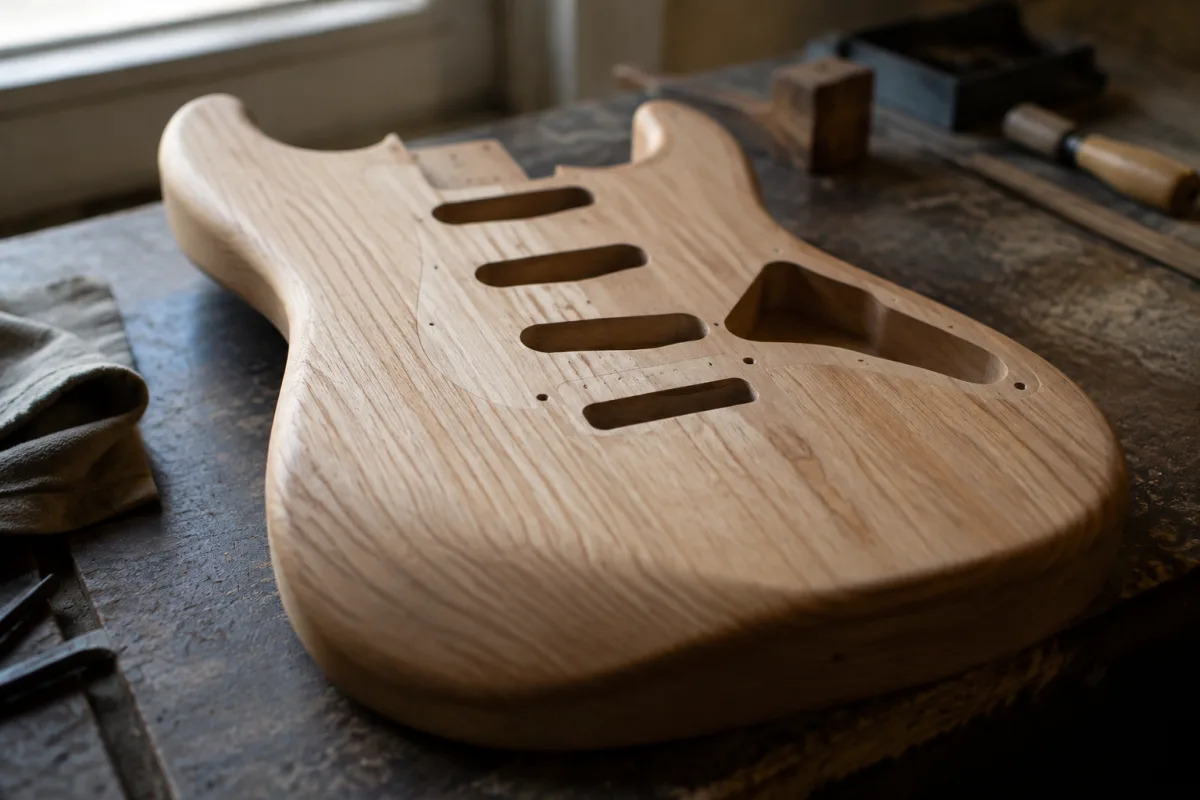
The Stratocaster body is one of music's most iconic designs, and understanding what makes a stratocaster body special reveals why the Fender Stratocaster remains the world's best-selling electric guitar after nearly seven decades. A stratocaster body isn't just a piece of wood—it's an instrument component that directly influences how your stratocaster body produces sound, how it feels to hold, and how it resonates with an audience. Whether you're evaluating a stratocaster body for purchase, customising your stratocaster body, or simply curious about guitar design, learning stratocaster body construction and materials opens up a deeper appreciation for this classic design.
The Stratocaster Body Shape and Ergonomics
The stratocaster body cutaway shape has never been matched for player comfort. The single-cutaway design means the stratocaster body provides easy access to upper frets, whilst the curved body contours let you play whilst standing or sitting with equal ease. The stratocaster body's upper bout is deeper than a Telecaster, giving the stratocaster body exceptional comfort. Vintage stratocaster body designs featured sharper edges—modern stratocaster body production often includes bevelled edges for extra comfort. The stratocaster body shape itself is so ergonomic that after decades of competing designs, most modern electric guitar bodies borrow elements from the original stratocaster body.
The stratocaster body's thickness—typically 1.75 inches—represents a careful balance between resonance and playability. A thinner stratocaster body produces brighter tone; a thicker stratocaster body tends toward warmth. The stratocaster body's contours aren't decorative—they're precision-engineered to distribute weight evenly, so a stratocaster body worn on a strap for hours doesn't cause shoulder fatigue. This is why countless session musicians choose a stratocaster body for marathon recording and touring sessions.
Stratocaster Body Wood Types
Alder is the traditional stratocaster body choice, and for good reason. A stratocaster body made from alder has a balanced tonal character—full mid-range with clear treble and articulate bass. The stratocaster body alder wood is lightweight, which keeps your stratocaster body comfortable to play. Alder's grain is fine, so a stratocaster body finished in a solid colour shows clean lines. This is why Fender's classic stratocaster body consistently uses alder.
Ash is favored for a brighter stratocaster body tone. The stratocaster body ash wood produces glassy highs and snappy articulation, making a stratocaster body ideal for funk, country and blues. The stratocaster body ash grain is pronounced, which means a stratocaster body ash timber shows beautiful figuring—ash stratocaster body designs often feature natural finishes to showcase the wood. The downside is that a stratocaster body ash is heavier than alder, so longer sessions might feel the weight.
Poplar appears in budget stratocaster body instruments. The stratocaster body poplar is affordable and lightweight, but less sonically distinctive than alder. A stratocaster body poplar sounds somewhat thinner than a stratocaster body alder, which is why premium stratocaster body models don't use poplar.
Mahogany stratocaster body woods are rare but prized. A stratocaster body mahogany produces warm, woody tone that stands out from traditional stratocaster body alder designs. The stratocaster body mahogany wood is heavier, so expect a stratocaster body mahogany to have significant weight. Some luthiers craft stratocaster body replacements from mahogany to completely reimagine their original stratocaster body.
Stratocaster Body Construction Methods
A solid stratocaster body is the standard. The stratocaster body milling process starts with rough timber, which is then milled to shape. A stratocaster body routing for electronics and hardware happens next—modern CNC machines route a stratocaster body with precision that hand-routing never achieved. The stratocaster body is then prepped for finishing.
Some custom stratocaster body makers use semi-hollow construction, where the stratocaster body features subtle chambers inside. A semi-hollow stratocaster body produces slightly warmer, more resonant tone than a solid stratocaster body, though the difference is subtle. A semi-hollow stratocaster body also weighs slightly less, which matters over a full touring schedule.
Laminated stratocaster body construction appears in high-end instruments. Multiple wood layers make a stratocaster body that's stiffer and more resonant than a single-piece stratocaster body. Some premium stratocaster body designs use a top veneer—visually stunning stratocaster body instruments with figured maple tops or ash tops.
Stratocaster Body Electronics Routing
The stratocaster body cavity houses three single-coil pickups, five-way selector switch, volume and tone controls. The stratocaster body routing determines pickup spacing and access for electronics work. A generous stratocaster body cavity makes adjustments and repairs simple; a tightly routed stratocaster body can make maintenance frustrating. Modern stratocaster body specifications often feature slightly enlarged cavities for easier access.
Some custom stratocaster body craftspeople add shielding inside the stratocaster body cavity to reduce hum. A properly shielded stratocaster body sounds quieter, though excellent grounding eliminates most hum problems even without cavity shielding.
Stratocaster Body Hardware and Bridge Integration
The stratocaster body's bridge pocket is engineered for Fender's synchronized tremolo system. The stratocaster body bridge pocket depth affects tremolo stability—too shallow and your stratocaster body's tremolo will be unstable; too deep and the tremolo becomes stiff. A well-routed stratocaster body accepts hardware smoothly, and the stratocaster body's trem system stays in tune through aggressive whammy bar use.
Tuning machine holes are precisely drilled in a stratocaster body—modern stratocaster body production uses templates or CNC for zero tolerance. Strap button placement on your stratocaster body affects balance and comfort. Many custom stratocaster body builders relocate strap buttons to optimise how the stratocaster body sits on a strap.
Stratocaster Body Resonance and Sustain
The stratocaster body's resonance depends on wood density, construction quality, and finish. A dense stratocaster body produces longer sustain; a lighter stratocaster body sometimes sustains less but might have brighter character. The stratocaster body finish also affects resonance—thicker finishes slightly dampen a stratocaster body's natural resonance, which is why some boutique stratocaster body makers use thin nitrocellulose lacquer.
Stratocaster body mass affects tone through mass coupling—a heavier stratocaster body transfers more vibration to your amplifier, producing a fuller sound. This is why players who favour thick, full tone sometimes prefer heavier stratocaster body woods like ash, whilst blues players seeking snappy, articulate tone prefer lighter alder stratocaster body models.
Stratocaster Body Customisation
Stratocaster body replacement parts are the easiest guitar customisation. You can swap your original stratocaster body for a replacement stratocaster body with different wood, finish or hardware compatibility. A custom stratocaster body gives you a completely different instrument at a fraction of what a new stratocaster body guitar would cost. Many players own multiple stratocaster body models—perhaps a lightweight alder stratocaster body for comfort and an ash stratocaster body for extra brightness.
Refinishing your stratocaster body is another popular mod. Removing an old finish and applying a new stratocaster body finish reveals raw wood character and often improves resonance. Some players strip their stratocaster body and apply hand-rubbed oil finishes for maximum resonance and that premium feel.
Stratocaster Body Comparison Across Brands
Fender's stratocaster body remains the benchmark. American-made stratocaster body instruments use premium alder or ash; Mexican-made stratocaster body models use quality alder or poplar. Squire stratocaster body models, Fender's entry-level line, use adequate stratocaster body construction but with more modest materials.
Vintage stratocaster body instruments are prized. A 1950s or 1960s stratocaster body sounds distinctly different from a modern stratocaster body—the wood was dried differently, routed differently, and often finished differently. Players seeking that vintage stratocaster body tone invest in original instruments or commission luthiers to craft stratocaster body replicas using period-accurate techniques.
Finding Your Ideal Stratocaster Body
Your choice of stratocaster body wood and construction should match your musical voice. A stratocaster body alder suits most genres beautifully. A stratocaster body ash adds brightness for funk and country. A heavier stratocaster body generally means thicker tone; a lighter stratocaster body feels more comfortable over long sessions. The best approach is to try multiple stratocaster body options—the stratocaster body that feels and sounds right to you is the stratocaster body worth owning.
A stratocaster body isn't just the guitar's container for electronics. Your stratocaster body is a tonal instrument in its own right, and understanding stratocaster body construction helps you make a stratocaster body choice that will inspire you for decades. Whether you're drawn to a classic alder stratocaster body or willing to explore alternatives, your stratocaster body is central to the music you create.



Comments