


Stratocaster Body Buying guide
Stratocaster Body: A Complete Buyer's Guide
An expert guide to selecting and purchasing the right Stratocaster body for your needs, covering price tiers, critical specifications, inspection criteria, and common mistakes.
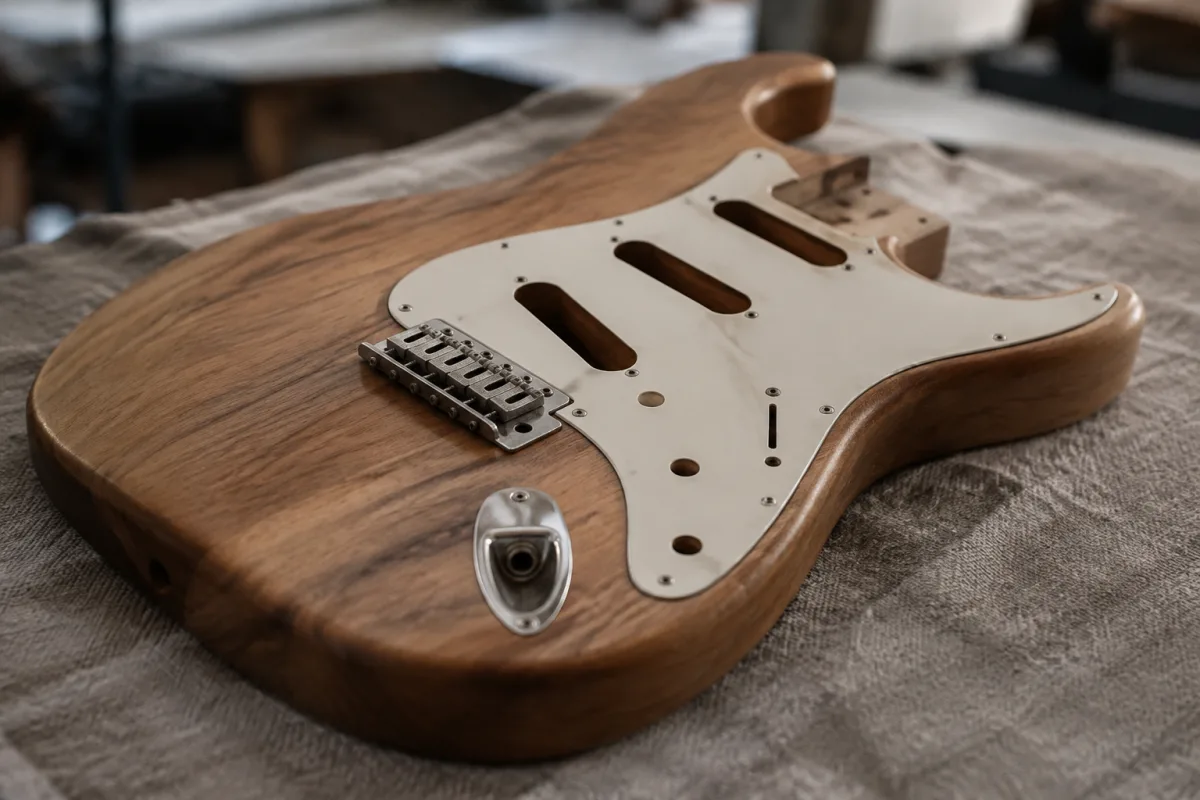
Buying a Stratocaster body requires understanding the subtle differences that separate excellent value from expensive mistakes. Whether you're building a custom guitar from scratch, replacing a damaged body, or upgrading to a premium instrument, knowing what specs matter and where the pitfalls hide will save you money and frustration. This guide cuts through the complexity and focuses on exactly what you need to evaluate when selecting a Stratocaster body.
Understanding Stratocaster Body Categories and Price Tiers
The Stratocaster body market divides into distinct segments, each with different value propositions:
- Budget Reproduction Bodies (£30-60): Chinese-manufactured replicas designed for complete novices or people building project guitars as experiments. These offer basic functionality but variable quality control. Wood choice is often unclear, finish can chip easily, and hardware routes may be imprecise. Suitable only if you're learning to assemble guitars or need something disposable.
- Mid-Range Bodies (£60-150): The practical sweet spot for most players. Manufactured with reasonable quality control, these bodies come from established builders in Asia and Eastern Europe. Wood selection is more consistent, routing is accurate, and finishes hold up to normal playing. Excellent value for gigging musicians and serious hobbyists.
- Premium Bodies (£150-400): Higher-grade tonewoods, premium finishing techniques, and more precise manufacturing. At this level, you're buying from established boutique makers or Fender's sub-brands. The investment makes sense if you're building a high-end instrument or value tonal subtleties.
- Custom/Vintage Bodies (£400+): Handcrafted bodies, rare tonewoods, and historically accurate reproductions. For collectors, players pursuing very specific aesthetics, or those building signature instruments. Typically special order with longer lead times.
Critical Specs That Actually Matter
When evaluating a specific Stratocaster body, these specifications have the most impact on usability and tone:
Wood Type and Grain: Alder remains the industry standard for good reason—it's lightweight, tonal balance is excellent, and it accepts finishes beautifully. Ash is heavier and brighter; some players prefer its aesthetic and tone, but verify weight before ordering. Avoid bodies with heavy grain runout (grain running off the body edges), as they're structurally weaker and prone to splitting. Straight, uniform grain always costs more but is worth it for durability.
Body Thickness and Weight: Standard Stratocaster bodies are 1.75 inches thick. Variations in overall body weight (typically 3.2-3.8 kg for alder, 4.0-4.8 kg for ash) affect comfort and resonance. Heavier bodies can produce slightly more sustain, but if the body feels like it's pulling your shoulder down, that tonal benefit disappears when your playing suffers from fatigue. Test before committing if possible.
Hardware Routing: Verify that routing matches your intended hardware. Standard Fender specifications are the baseline, but some builders offer modern upgrades (hipshot tuner compatibility, different bridge styles) that require different routes. Mismatched routing means either forced compromises or expensive rerouting by a professional luthier.
Neck Pocket Fit: The neck pocket must be precisely dimensioned to accept your chosen neck without gaps or forcing. Measure the pocket depth and width—1.75 inches wide and 2.25 inches deep is standard. A loose pocket causes tonal deadness; an overly tight pocket can crack the body or neck.
Finish Quality: Run your hand across every surface. The finish should feel smooth, with no rough patches, dust inclusions, or uneven areas. Hold the body under bright light to spot drips or thin spots. At budget prices, cosmetic imperfections are acceptable; at premium prices, they're not.
What to Check Before Purchase
Inspection before payment prevents regret:
- Body Straightness: Place the body on a flat table and look for any rocking or gaps. A twisted body will cause playability issues regardless of other specifications. Lay a straightedge across the body—it should touch evenly.
- Dings, Cracks, or Repairs: Small dings in a finished body are cosmetic problems; cracks are structural defects. Ask specifically about any repairs; woodfiller might hide problems that will resurface under string tension.
- Paint Quality: Modern polyurethane and polyester finishes should feel smooth and consistent. Lacquer finishes require careful handling to avoid crazing (fine cracks that degrade appearance over time). Check the finish around edges and corners where quality often shows.
- Strap Button Placement: Verify that strap buttons are installed and secure. Some budget bodies use cheap staple-style buttons that pull out during playing. Solid studs are essential.
- Shielding (if pre-installed): Some bodies come with electromagnetic shielding inside the cavities. Ask whether it's present and properly applied—poor shielding can do more harm than no shielding.
- Cavity Depth and Routes: Peer inside the control cavity and pickup cavities. Routes should be clean and precise. Rough, splintered routing suggests amateur work and may interfere with electronics fitting properly.
Common Pitfalls That Cost Money
Experienced buyers avoid these mistakes:
Assuming All Bodies Are Identical: They're not. Quality varies significantly even within the same price bracket. Always inspect or request detailed photos before committing to a purchase.
Ignoring Wood Movement: Alder and ash expand and contract with humidity. A body that fits perfectly in winter might become slightly loose in summer. Quality builders account for this; cheap ones don't. Check reviews specifically mentioning seasonal fit.
Underestimating Shipping Risk: A Stratocaster body's flat shape and stress points make it vulnerable to shipping damage, particularly at the horns and around hardware routes. Pay for quality packaging and signature delivery for expensive purchases. Taking the cheapest shipping option often results in cracked bodies and return hassles.
Choosing Based on Colour Alone: Beautiful finishes sometimes hide structural problems or cheap wood. Prioritise wood quality and construction over aesthetics; a well-built body with a plain finish outperforms a gorgeous-looking body with sloppy routing.
Forget About Return Policies: Reputable builders offer returns or exchanges if the body arrives damaged or doesn't meet specifications. Builders with no-return policies are often hiding something. Budget builders especially—always verify the return terms in writing.
Tonewoods: Which Really Affects Sound?
The tonewoods debate in guitar communities can get heated. Here's the practical truth: yes, tonewoods affect tone, but the difference is subtle and your skill level, amplifier, and technique matter far more. Alder is bright and balanced. Ash is brighter and denser. Mahogany (rare in Strats but sometimes used) is warmer. Swamp ash, premium alder, and other exotics cost more but deliver tonal nuances that matter if you're recording or playing in very quiet contexts.
As a practical buying criterion: choose alder if you're budget-conscious; choose ash if brightness appeals to you; choose premium tonewoods only if you're already an experienced player who can articulate exactly what sonic adjustment you're seeking. Don't spend £300 extra on premium ash if you play through a cheap amplifier—the amplifier's influence on tone vastly exceeds the wood's.
New Versus Vintage and Refinished Bodies
Vintage bodies (pre-1970s originals) command premium prices, but they're often refinished, structurally suspect, or authenticity-compromised. A genuine vintage body that hasn't been butchered can be an investment; a refinished vintage body you're buying as a playable instrument? Usually not worth the premium over a quality reproduction.
Refinished bodies are sometimes bargains if the underlying wood is solid, but refinishing can hide (or cause) structural problems. Always ask about why it was refinished and get documentation of any repairs.
Building Your Decision Framework
When comparing specific bodies, prioritise in this order: first, structural integrity (no cracks, precise routing, solid wood selection); second, fit (neck pocket, hardware routes, strap buttons); third, finish quality; fourth, tonewoods and aesthetic preference.
Compare what you're getting against the price. A £100 body should have clean routing and solid wood. A £200 body should offer noticeably superior materials and finishing. If a body's price seems out of step with what's included, ask why before buying.
For deeper context on Stratocaster body construction, design history, and technical details, explore our complete guide to Stratocaster bodies, which covers the full landscape beyond the buying criteria featured here.
Choosing a Stratocaster body that meets your specifications, budget, and quality standards means you're ready to build an instrument you'll love. Take time to inspect carefully, verify specifications, and understand what you're paying for. The most expensive body isn't always the best choice, but the cheapest one rarely is either. Find the quality level that matches your actual needs and intentions, and you'll end up with a body that serves your playing for years.



Comments