


Guitar Pickguard Stratocaster article
Guitar Pickguard Stratocaster for Beginners: A Complete Guide
Your Stratocaster's guitar pickguard protects the finish and defines its look. This guide explains what it does, how to choose one, and how to maintain it properly.
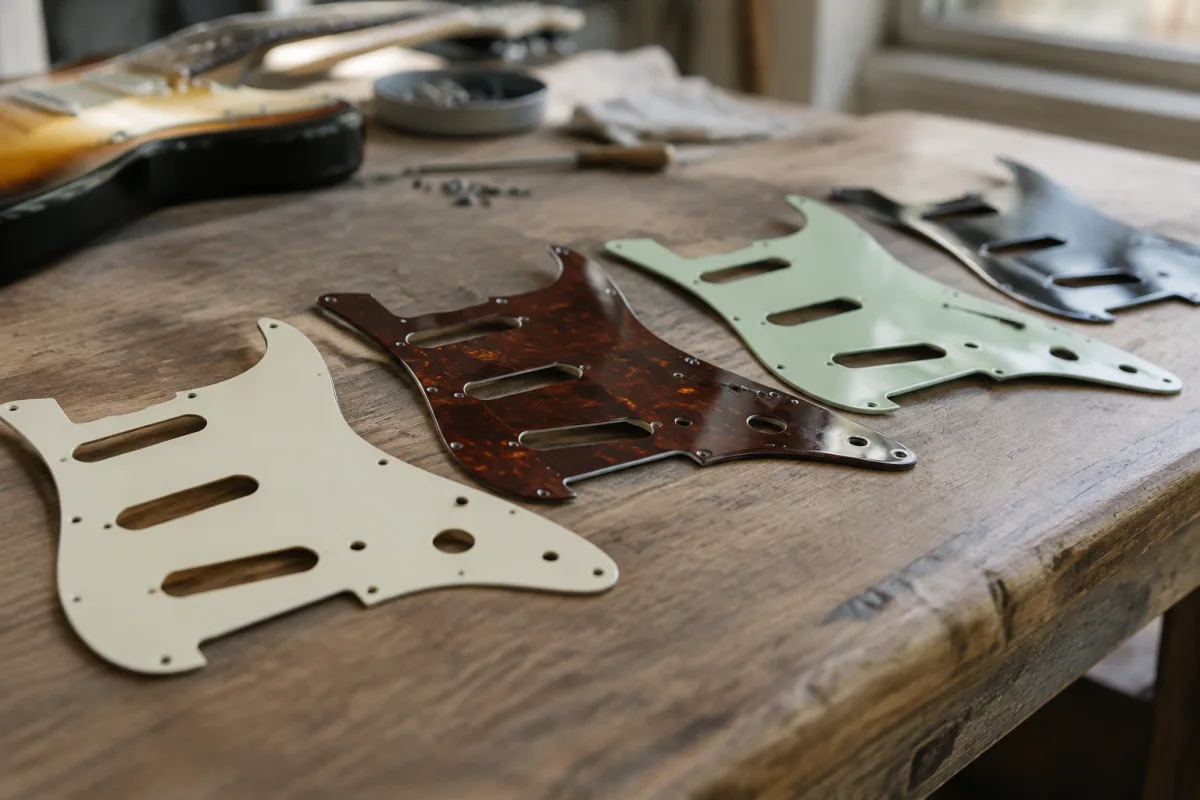
Your first Stratocaster is sitting in front of you, and you're probably wondering why there's a plastic plate covering the lower portion of the body. That's the guitar pickguard stratocaster, and it's far more important than most beginners realise. A guitar pickguard stratocaster isn't merely decorative—it protects your instrument's finish whilst defining its aesthetic character. This beginner's guide explains what a guitar pickguard stratocaster does, how to choose one that suits your needs, and how to maintain it properly.
Understanding Your Guitar Pickguard Stratocaster
The guitar pickguard stratocaster is the plate covering the body beneath the strings and pickups, typically extending from the neck down toward the lower bout. Its primary function is protective—it shields your guitar's finish from pick scratches, dust, and accidental impacts during playing. Without a guitar pickguard stratocaster, repeated pick strikes against the body would quickly mark and damage your guitar's paint or finish.
Beyond function, a guitar pickguard stratocaster dramatically influences your Stratocaster's visual appearance. The colour, material, and pattern of your guitar pickguard stratocaster can transform your instrument's character from vintage and warm to modern and striking. Many beginner guitarists underestimate this visual impact, treating the pickguard as an afterthought rather than recognising how profoundly it affects their guitar's personality.
The Role of Your Guitar Pickguard Stratocaster
A guitar pickguard stratocaster serves several practical purposes beyond aesthetics. It protects the guitar's finish from wear patterns that develop naturally over years of playing. Without it, areas beneath the strings would show visible wear, discolouration, and scratches that detract from appearance and potentially decrease resale value. Additionally, a guitar pickguard stratocaster routes through electronics—the wiring for pickups and controls runs through or beneath it, protecting delicate electronics from accidental damage.
The guitar pickguard stratocaster also helps maintain consistent appearance. As you play, your pick inevitably hits the guitar body. With protection from a guitar pickguard stratocaster, these strikes leave minimal marks. Without it, your finish gradually develops a distinctive pattern of wear that, whilst potentially appealing to some players, ruins the fresh appearance most beginner guitarists prefer.
Materials and Colours: Choosing Your Guitar Pickguard Stratocaster
Most modern guitar pickguard stratocasters are crafted from plastic (typically phenolic resin or celluloid) or, on premium instruments, laminated wood or metal. Plastic pickguards are durable, easy to manufacture, and affordable—ideal for beginner instruments. Metal pickguards (aluminium or brass) offer a distinctive vintage aesthetic but can interfere with electronics on some guitars. Wooden pickguards are increasingly rare and primarily found on high-end instruments.
Colour choices for a guitar pickguard stratocaster are virtually unlimited. The classic options include white (the iconic Stratocaster look), tortoiseshell (a multi-hued tan and brown pattern resembling natural tortoiseshell), black, cream, and natural wood tones. Beginner guitarists often choose based on personal preference or budget, though colour selection should consider your guitar's body colour and desired aesthetic impact.
A white guitar pickguard stratocaster on a sunburst body creates classic, professional appearance. A black guitar pickguard stratocaster on a red body offers modern contrast. A tortoiseshell guitar pickguard stratocaster works with virtually any body colour. Consider what emotion or style you want your guitar to convey, then select your guitar pickguard stratocaster accordingly.
The Importance of Proper Fit
A guitar pickguard stratocaster must fit your Stratocaster precisely. Ill-fitting pickguards create gaps that allow dust inside the guitar, interfere with playing comfort, or look unprofessional. If you ever replace your guitar pickguard stratocaster, purchase one specifically designed for your Stratocaster model—different years and manufacturers have slightly different body shapes requiring different pickguard patterns.
Many beginners assume all Stratocaster pickguards are interchangeable. They're not. A guitar pickguard stratocaster designed for a 1962 model has different routing and hole placements than a contemporary one. Before ordering a replacement, confirm your Stratocaster's year and model to ensure a proper fit.
Installation and Replacement: First Steps
Replacing your guitar pickguard stratocaster is one of the simplest modifications a beginning guitarist can undertake. A standard guitar pickguard stratocaster attaches with screws to the body—typically 8-11 screws. To replace it, simply unscrew the old pickguard and screw on the new one, ensuring careful alignment with existing screw holes.
Key installation steps include:
- Ensure your guitar is unplugged if electronic replacement is involved
- Carefully remove all screws holding the old guitar pickguard stratocaster
- Lift the pickguard gently, watching for any attached wiring
- If wiring connects to the pickguard, disconnect carefully before full removal
- Position your new guitar pickguard stratocaster, aligning screw holes precisely
- Screw in all attachment points, working gradually and alternating sides to ensure even pressure
- Reconnect any electronics if necessary
This simple project requires only a screwdriver and careful attention. Most beginners complete their first guitar pickguard stratocaster replacement successfully without professional assistance.
Maintenance of Your Guitar Pickguard Stratocaster
A properly maintained guitar pickguard stratocaster remains attractive and functional for decades. Regular cleaning prevents dirt buildup and keeps your guitar looking fresh. Use a soft, slightly damp cloth to wipe your guitar pickguard stratocaster monthly. For stubborn spots, apply a small amount of mild soap to the cloth, then dry thoroughly with a clean cloth.
Avoid harsh chemicals, abrasive cleaners, or excessive moisture on your guitar pickguard stratocaster. These damage the plastic finish and can cause discolouration or warping. Similarly, keep your guitar pickguard stratocaster away from direct sunlight for extended periods—prolonged exposure fades colours and can cause brittleness.
Additionally, inspect your guitar pickguard stratocaster screws occasionally to ensure they remain tight. Vibrations from playing gradually loosen hardware. A quarter-turn of each screw every few months keeps your guitar pickguard stratocaster secure and prevents rattles or movement.
When to Consider Replacing Your Guitar Pickguard Stratocaster
Your guitar pickguard stratocaster will eventually need replacement if it develops cracks, becomes discoloured, or you simply want a visual change. Cracks in a guitar pickguard stratocaster compromise its protective function and allow dust inside your guitar. Visible damage also detracts from your instrument's appearance. Happily, replacement is affordable (typically 30-100 pounds) and straightforward enough for beginners.
Beyond damage, many guitarists replace their guitar pickguard stratocaster simply to refresh their Stratocaster's appearance. Swapping from white to tortoiseshell, or adding a bold colour, dramatically transforms your guitar's character. This modification costs far less than replacing pickups or hardware yet makes an enormous visual impact.
Guitar Pickguard Stratocaster and Your Sound
Interestingly, replacing a guitar pickguard stratocaster has minimal impact on your tone. Sound primarily depends on pickups, woods, and hardware rather than pickguard material. This means you can freely choose your guitar pickguard stratocaster based purely on aesthetics without worrying about sonic consequences. This freedom is liberating—your visual preference should be the sole factor in selection.
For more comprehensive information about Stratocaster guitars and their components, explore our complete guide to guitar pickguard stratocaster, which covers advanced customisation, vintage specifications, and collector considerations.
Concluding Your Pickguard Journey
Your guitar pickguard stratocaster is far more significant than mere decoration. It protects your instrument, defines its visual character, and offers beginner guitarists an approachable entry point into guitar customisation and maintenance. Whether you keep your original guitar pickguard stratocaster or replace it with something reflecting your personal style, understanding its function and proper care ensures your Stratocaster remains beautiful and playable for years. Your first decision about your guitar pickguard stratocaster sets the tone for how you'll care for and customise your instrument throughout your musical journey.


Comments