


Gretsch Semi Hollow Guitar article
Gretsch Semi Hollow Guitar for Beginners: A Complete Guide
A Gretsch semi hollow guitar is one of the smartest choices for a beginner guitarist. The comfortable neck, natural resonance, and welcoming playability let you sound good early and build confidence as you learn.
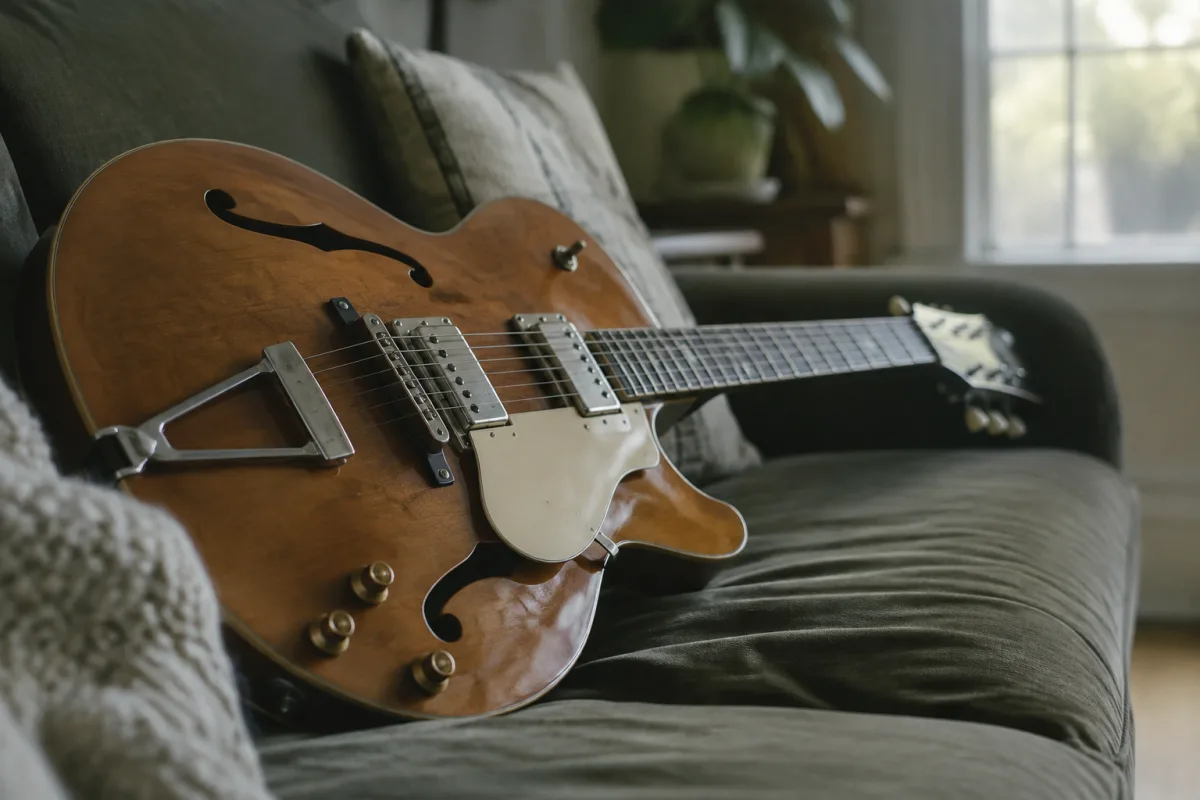
Thinking about picking up a Gretsch semi-hollow guitar? You're making a smart choice. These instruments have a reputation for warmth, character and playability that makes them genuinely welcoming for beginners. Unlike some guitars that feel stiff or unwieldy when you're first learning, a Gretsch semi hollow guitar sits naturally in your hands and encourages you to keep playing. That matters more than you might think—especially in those early weeks when your fingers are building strength and your confidence is still growing.
Why a Gretsch Semi Hollow Guitar is Beginner-Friendly
Let's start with the fundamentals. A Gretsch semi hollow guitar isn't just a brand name slapped onto a generic design. These guitars are built with genuine thought about comfort and playability. The semi-hollow body—part solid wood, part hollow chamber—gives you a natural resonance and sustain that sounds more expensive than it often is. For a beginner, that translates into faster gratification. You hit a chord on a Gretsch semi hollow guitar, and it sounds genuinely good right away, rather than brittle or thin the way some budget solids do.
The neck on most Gretsch semi hollow guitar models feels slimmer and more comfortable than you might expect. That's intentional. Gretsch understood that beginning guitarists need an instrument that doesn't punish them for imperfect technique. A slimmer neck means your fingers don't have to stretch as far, your hand doesn't cramp as quickly, and you progress faster through the early painful phase.
Understanding the Gretsch Semi Hollow Guitar Build
So what exactly makes a Gretsch semi hollow guitar semi-hollow? The body contains a solid block of wood down the centre, with hollow chambers on either side. This is fundamentally different from a full hollow-body (which rings like a bell and needs careful handling) or a solid-body electric (which relies entirely on electronics for tone). A Gretsch semi hollow guitar sits in the middle—it has natural resonance without being unwieldy or prone to feedback. This design actually makes it easier to play loud without fighting your amp, which is helpful when you're learning to trust your touch and dynamics.
The construction also means a Gretsch semi hollow guitar typically weighs less than a solid-body electric. For a beginner, that matters. You're holding this instrument for hours whilst building muscle memory and strength. A lighter, more balanced Gretsch semi hollow guitar means less fatigue and more time spent actually playing rather than recovering.
Choosing the Right Gretsch Semi Hollow Guitar Model
Gretsch makes several semi-hollow models, and as a beginner, you'll want to know what's what. The Electromatic range represents the best starting point for most learners—it's genuinely playable, reasonably priced, and builds the confidence you need to keep going. These Gretsch semi hollow guitar versions use simpler electronics and hardware than the top-tier models, which actually suits beginners perfectly. You want a straightforward instrument that responds to what you do, not one that's fussy about technique or tone-shaping.
Higher-end Gretsch semi hollow guitar models like the Streamliner and G2627 add refinement—better pickups, more solid construction, vintage appointments. As a beginner, you don't need these yet. You need a Gretsch semi hollow guitar that sounds good, feels comfortable, and lets you focus on learning. Once you've played for a year or two, you'll know your own preferences well enough to make a more nuanced choice.
Common Beginner Mistakes to Avoid
Here's where learning from others saves you money and frustration. Many beginners make these specific errors when starting with a semi-hollow guitar:
- Waiting for the "right" one. There's no such thing. A Gretsch semi hollow guitar in the Electromatic range is perfectly right. Endless research means less playing, and playing is how you learn. Get an instrument and start.
- Assuming high action is normal. Your Gretsch semi hollow guitar should arrive with reasonable action—the height of the strings above the fretboard should be comfortable, not painful. If it feels awkwardly high, take it to a technician. A quick setup is cheap and transforms playability.
- Neglecting to stretch and warm up. A Gretsch semi hollow guitar is forgiving, but your hands aren't. Stretch before you play. Your fingers will thank you, and you'll progress faster without injury.
- Overestimating pickup switching. Gretsch semi hollow guitar models often have multiple pickups and switching options. That's nice, but as a beginner, find a sound you like and leave it there. Tone-chasing is a trap.
- Not learning to mute strings. A Gretsch semi hollow guitar responds to every touch. That means loose fingers create noise. Learning to mute unused strings is genuinely important and often overlooked.
Setup and Maintenance for Beginners
When you first get a Gretsch semi hollow guitar, the most important thing isn't learning a chord—it's getting the instrument set up properly. A professional setup takes an hour and costs £30–50. It makes more difference to your learning than anything else you'll invest in. The technician will adjust the action, check the intonation, and ensure everything responds correctly when you play. A properly set-up Gretsch semi hollow guitar feels like a different instrument.
Once that's done, maintenance is simple. Wipe your Gretsch semi hollow guitar down after each session to remove sweat and dust. Check the tuning pegs are tight. If you're playing several times a week, you'll need new strings every couple of months. That's normal. A Gretsch semi hollow guitar with fresh strings and a clean body will motivate you far more than a neglected one, even if the neglect is unintentional.
The Sound You'll Get
Here's what you can expect sonically from a Gretsch semi hollow guitar. The warmth and resonance is the defining characteristic—it's richer than a solid-body, but more controlled than a full hollow-body. Clean tones sparkle and sing. Driven tones have a natural compression and character that makes you sound better than you probably are, which is exactly what a beginner needs. Some players find the Gretsch semi hollow guitar sound a bit "woody" or "brassy." That's not a flaw—it's the point. That character is why people choose a Gretsch semi hollow guitar in the first place.
Learning on Your Gretsch Semi Hollow Guitar
Beyond the instrument itself, understand that a Gretsch semi hollow guitar benefits from consistent practice. Start with open chords—A, E, D, G. These are simple, they sound good, and they form the foundation for hundreds of songs. Don't skip to complicated material. A Gretsch semi hollow guitar will reward your patience with progress that feels genuinely tangible. After a few weeks, you'll hear it—chords becoming cleaner, transitions becoming smoother.
Find teaching resources that match your learning style. YouTube has excellent free tutorials. Books work for some people. Online courses structured around the instrument are brilliant if you respond to that format. The Gretsch semi hollow guitar you choose is just one piece of learning—your commitment to practise, and your willingness to sound rough for a while, matters far more.
When to Upgrade From Your Gretsch Semi Hollow Guitar
Here's the thing about starting with an Electromatic-range Gretsch semi hollow guitar: you probably won't outgrow it quickly. After a year of serious playing, you might want to explore different sounds or higher build quality. At that point, you'll have genuine preferences shaped by real experience. You might decide a different semi-hollow suits you better. You might try a solid-body. Or you might fall in love with your Gretsch semi hollow guitar and keep it for years as a workhorse. All of those are valid outcomes.
For now, starting with a Gretsch semi hollow guitar is genuinely good advice. The instrument invites you to play, rewards effort, and doesn't punish beginner mistakes. You've chosen well. Now the real journey begins—and it starts with making a noise that doesn't sound quite right, gradually becoming a noise that sounds a bit better, and eventually becoming something worth listening to. If you want the deeper technical context on semi-hollow guitar design and variations, the complete guide to Gretsch semi hollow guitar covers that in full detail. For now, though, you've got what you need to get started with confidence.
Frequently Asked Questions
Is a Gretsch semi hollow guitar good for beginners?
Yes, absolutely. The comfortable neck, natural resonance, and generally lower price point of entry-level Gretsch semi hollow guitar models make them one of the best beginner instruments available. You'll sound good early, which motivates continued practice.
Which Gretsch semi hollow guitar model should I choose as a beginner?
The Electromatic range offers the best value for beginners. Models like the Electromatic G5120 or G5222 provide genuine playability and tone at a price that won't strain your budget. Save the premium models for later when you know your specific preferences.
How much should I spend on a Gretsch semi hollow guitar?
An entry-level Gretsch semi hollow guitar costs between £400–700. That's a serious investment, so make sure you're committed to learning. Anything cheaper risks being genuinely unpleasant to play, which kills motivation. Anything vastly more expensive gives you features a beginner won't use yet.
Does a Gretsch semi hollow guitar need an amplifier?
Technically, you can play it unplugged and hear the acoustic sound—that's the benefit of the semi-hollow design. But to truly hear what the guitar offers and to play along with others or recordings, an amplifier of 20–40 watts is ideal. It doesn't need to be expensive.
How often should I change the strings on a Gretsch semi hollow guitar?
If you're playing several times a week, change your Gretsch semi hollow guitar strings every 6–8 weeks. New strings sound brighter and feel better, and they're far cheaper than a repair when a string snaps mid-gig.
Can I play any style of music on a Gretsch semi hollow guitar?
Yes. Gretsch semi hollow guitar models are genuinely versatile. They're famous in rock and blues, but they excel at jazz, country, indie, and alternative too. The warmth and character suits almost anything you throw at it. Your playing style will define the sound far more than the guitar itself.


Comments