


Gretsch Semi Hollow Guitar Buying guide
Gretsch Semi Hollow Guitar: A Complete Buyer's Guide
Gretsch semi-hollow guitars range from affordable to professional-level. This guide explains which models suit different players and how to avoid overspending or underbuying.
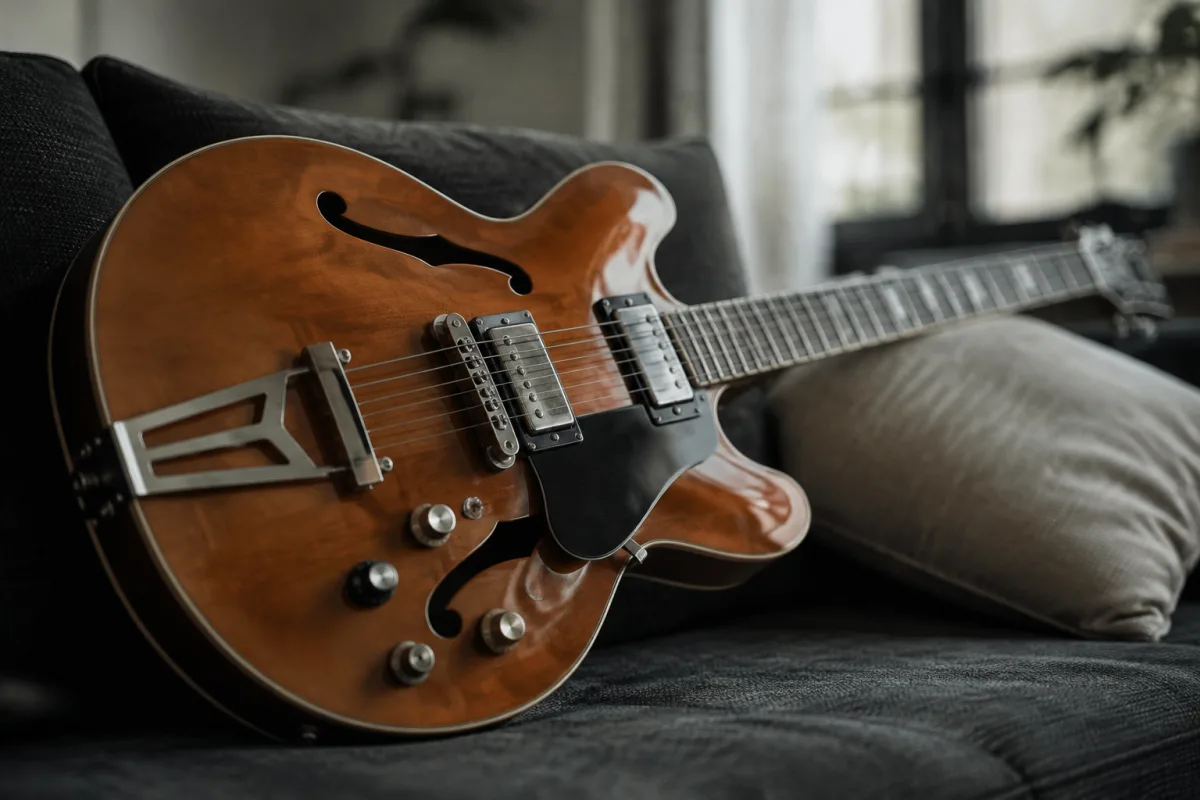
Gretsch semi-hollow guitars are some of the most distinctive instruments in music, with a bright, percussive tone and iconic look that makes them instantly recognisable. But Gretsch's lineup spans decades and many models, ranging from entry-level instruments to professional-grade guitars. This buying guide explains what separates Gretsch semi-hollow guitars at different price points, which models suit different players, and how to avoid common pitfalls when investing in a Gretsch.
Why Gretsch Semi-Hollow Guitars?
Gretsch guitars are chosen for their unmatched bright, articulate tone and distinctive look. The semi-hollow body resonates freely, producing a naturally amplified sound that's perfect for rock, rockabilly, country, and indie. Whether played plugged in or unplugged, a Gretsch semi-hollow sounds unmistakably Gretsch. Guitarists who choose Gretsch are committing to a voice: twangy, percussive, and full of character.
Gretsch Semi-Hollow Guitar Lineup
Budget Gretsch Models (£250–500)
Examples: Gretsch Streamliner, Electromatic models
What you get:
- Semi-hollow construction with simplified hardware.
- Simplified pickups that still capture Gretsch's characteristic brightness.
- Acceptable playability and build quality for the price.
- Made in Indonesia or China, quality control is hit-or-miss.
Sound: Recognisably Gretsch but thinner than higher-end models. Still bright and punchy, but lacking the nuance and sustain of professional guitars.
Best for: Beginner to intermediate players exploring the Gretsch sound without a large investment. Also great for beater guitars (professional players who want a Gretsch they can tour hard without worrying about damage).
Pitfall: Quality control in this tier is inconsistent. Some units are excellent; others have action problems or inconsistent hardware. Try before buying if possible, or ensure a strong return policy.
Intermediate Gretsch Models (£500–1,200)
Examples: Gretsch Electromatic Series (premium), G2410 Streamliner Hollow Body
What you get:
- Better wood selection and semi-hollow construction with thicker, resonant bodies.
- Upgraded pickups that capture the warm, bright Gretsch character beautifully.
- Hardware and electronics are more reliable; playability is solid out of the box.
- Usually made in Indonesia or South Korea, with better quality control than budget models.
Sound: Rich, warm, and bright. The semi-hollow body sings with natural resonance. Plugged in or unplugged, it sounds professional.
Best for: Serious amateurs, gigging musicians on a budget, and professionals who want a beater or studio Gretsch. This is the tier where you get genuine Gretsch character without professional-level pricing.
Value: This tier offers the best value. The jump in quality and sound from budget models is dramatic; the jump to professional models is more subtle.
Professional Gretsch Models (£1,200–2,500)
Examples: G5420T Electromatic, G6120 Chet Atkins, Gretsch USA-made models
What you get:
- Exceptional build quality with premium wood and hardware.
- Vintage-accurate hardware, pickups, and electronics.
- Some models include Gretsch's professional-grade pickups and bridge systems.
- Made in the USA (some) or premium overseas manufacturing.
- Resale value holds well; these guitars maintain 60–75% value over time.
Sound: Warm, articulate, and nuanced. The semi-hollow body resonates with depth and complexity. Plugged in or acoustic, it's a serious instrument.
Best for: Professional touring musicians, recording artists, and serious collectors. Also ideal for players who want a Gretsch they'll keep for life.
Vintage and Limited-Edition Gretsch (£2,500+)
Examples: Vintage 1960s–1970s Gretsch, USA-made limited editions, signature models
What you get:
- Legendary tone from aged wood and vintage components.
- Collectible status and investment value.
- Often one-of-a-kind or limited production.
- Premium resale value; may appreciate over time.
Sound: Some of the finest semi-hollow tone ever made. Vintage Gretsch guitars have a warmth and character that modern instruments can't quite replicate (though modern Gretsch comes close).
Best for: Collectors, recording professionals, and musicians who've played Gretsch for years and know exactly what they want.
Deciding Which Tier Is Right for You
If You're Exploring Gretsch for the First Time
Start with an **Intermediate model (£500–1,000)**. You'll get the genuine Gretsch sound and character without overcommitting financially. The budget tier sounds thinner; the professional tier is overkill if you're just starting. Mid-tier offers the best introduction.
If You're an Experienced Guitarist Adding Gretsch to Your Collection
Jump to a **Professional model (£1,200–2,000)** if you gig regularly or record. The sound quality and resale value justify the investment. If it's a studio/practice guitar, an Intermediate model is perfectly sufficient.
If You're a Professional Musician
Invest in a **USA-made Gretsch or professional model (£1,500–2,500)**. Touring musicians need reliability, and the tone difference is audible on recordings. Resale value holds well if you ever upgrade.
If You Want a Gretsch but Budget Is Tight
Buy a **used Intermediate model** (£300–600 on Reverb or eBay). Gretsch guitars hold value well, and used mid-tier models are legitimate bargains. You'll save 30–40% compared to new, with the same tone and playability.
Key Features to Look For
Body Wood
Gretsch semi-hollow bodies are typically maple (bright, punchy) or semi-hollow plywood (affordable, resonant). Premium models use solid maple; budget models use laminate. Solid wood always sounds better, but solid maple is pricey. Check the specs before buying.
Pickups
Gretsch uses several pickup types:
- Dynasonic (vintage, warm, articulate) — found in professional and intermediate models.
- Magnatrons (bright, punchy) — found in some intermediate models.
- Humbucker versions (thicker tone, less bright) — modern alternatives.
Dynasonic pickups are the classic Gretsch sound. If you want that bright, percussive tone, prioritise Dynasonic pickups.
Hardware and Electronics
Professional Gretsch models have Bigsby vibratos (vintage-style tremolo) or Gretsch's proprietary systems. Budget models have simpler hardware. Check that tuning machines are solid (quality varies), and bridge and tailpiece are robust.
Neck Profile
Gretsch necks vary from thin (easier for beginners and smaller hands) to thick (classic vintage profile). Play different models to find your preference. The neck profile isn't a dealbreaker—you adapt to it—but comfort matters.
Common Pitfalls When Buying Gretsch Semi-Hollow
Pitfall 1: Buying Budget If You Play Live
A budget Gretsch (£250–400) is unreliable for touring. Hardware can loosen, electronics act up, and the tone doesn't cut through a band mix as well. Save and buy Intermediate (£700+) if you gig. Professional model if you tour seriously.
Pitfall 2: Assuming All Gretsch Sounds the Same
A budget Streamliner (£300) and a professional G5420T (£1,500) sound noticeably different. Budget models are thinner and less articulate. Hear the model you're buying before committing.
Pitfall 3: Overcomplicating Pickup Choice
Choose between Dynasonic (classic, bright) and humbucker (modern, warm). Both work. Dynasonic captures the traditional Gretsch tone; humbuckers are thicker. Decide based on your music, not specs.
Pitfall 4: Ignoring the Bigsby Vibrato
Many Gretsch models include a Bigsby vibrato. It's not optional; it's part of the guitar's character. Budget models may have simpler vibratos. If you dislike whammy bars, look for fixed-bridge Gretsch models (less common).
Pitfall 5: Not Comparing Used and New
A used Gretsch intermediate model (£400–700) often sounds and plays better than a new budget model (£300). Check the used market before assuming new is the only option.
Where to Buy Gretsch Semi-Hollow Guitars
Online retailers (Thomann, Gear4Music, Sweetwater, zZounds): Good prices, wide selection, reliable shipping. Most offer 30-day returns. Recommended for new guitars.
Local music shops: Higher prices, but you can play before buying. Worth it for professional models (£1,000+) where tone and feel are personal.
Used market (Reverb.com, eBay): Great deals (30–50% off), but inspect condition carefully. Look for sellers with 99%+ rating. Gretsch holds value well, so used is often smart.
Gretsch authorised dealers: Some regions have official Gretsch dealers. They may offer better pricing and warranty support.
Gretsch Pricing Summary
Budget: £250–500. Good for learning the Gretsch sound, not for reliable gigging.
Intermediate: £500–1,200. Best value. Suitable for amateurs and gigging musicians. Genuine Gretsch character.
Professional: £1,200–2,500. Touring musicians, recording artists, serious collectors. Excellent build and tone. Resale value holds well.
Vintage/Collectible: £2,500+. Museum-quality instruments, investment pieces, and legendary tone.
Bottom Line
Most players should start with an **Intermediate Gretsch** (£700–1,000). You get authentic Gretsch character, build quality, and playability without overcommitting. If you gig regularly, invest in a **Professional model** (£1,200–1,800). Budget models are tempting but often disappoint in real-world use. Used market offers the best deals; check Reverb and eBay for 30–50% savings.
For a detailed exploration of specific Gretsch semi-hollow models, tone comparisons, and how to integrate a Gretsch into different playing styles, the complete guide to Gretsch semi-hollow guitars covers the full range.


Comments