


Lag Acoustic Guitar Buying guide
Lag Acoustic Guitar: A Complete Buyer's Guide
Considering a LAG acoustic guitar? This buyer's guide explains key specifications, model tiers, quality markers and how to choose the right LAG for your playing style.
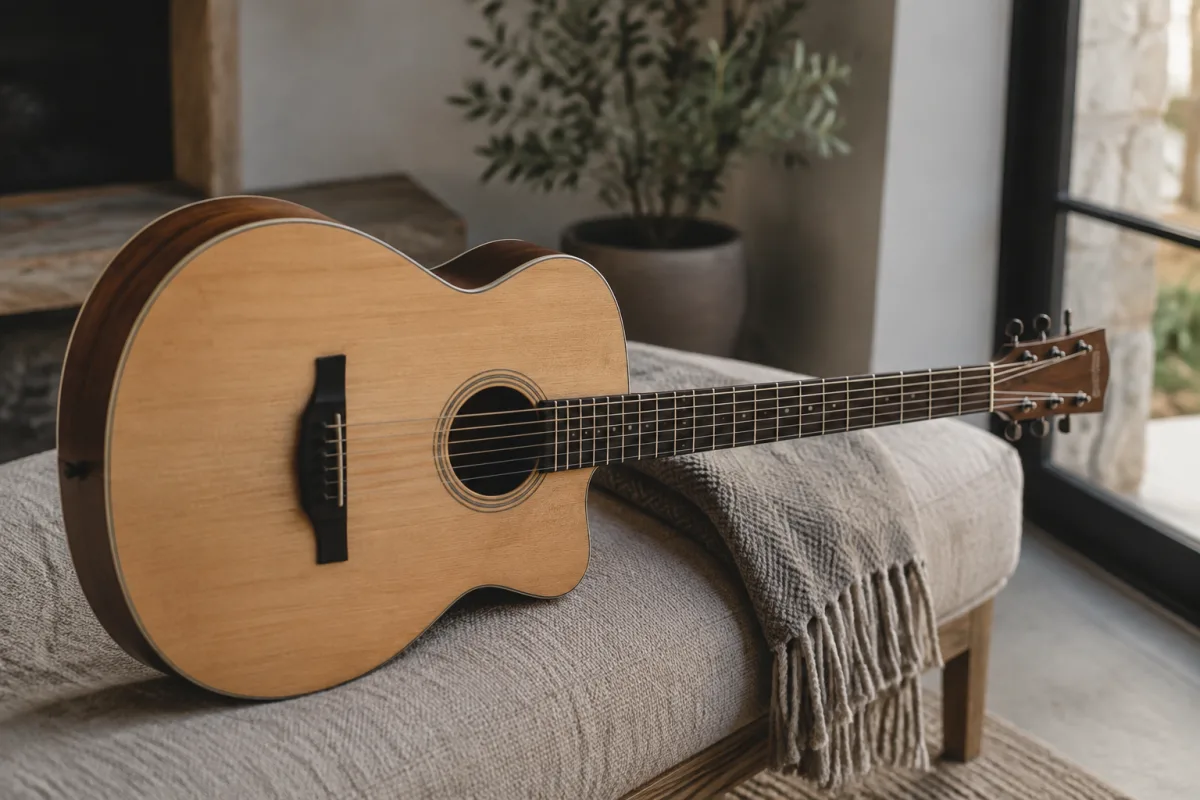
Choosing a LAG Acoustic Guitar: A Buyer's Guide
LAG acoustic guitars occupy a distinctive space in the market: French-engineered instruments with a reputation for precision, responsiveness and tonal consistency. If you're considering a LAG for performance, studio work or serious recreational play, this buyer's guide walks you through the specifications, quality markers and price points that matter when making your choice.
Understanding LAG's Position in the Market
LAG instruments are mid-to-high-range acoustics manufactured by the French company Lutherie Artisanale Guerchon. They're known among session musicians, touring professionals and discerning amateurs for their precise construction, responsive action and stable tone across varying humidity conditions. A LAG acoustic typically costs more than entry-level brands but less than premium boutique instruments, placing them at the serious-player end of the mainstream market.
Core Specifications to Compare Across LAG Models
When you're evaluating different LAG acoustic guitars, pay attention to these technical details:
Body Shape and Size
LAG produces several body shapes, each affecting tone and projection. Dreadnoughts are the workhorses: larger, louder and boomier, they cut through in band settings and suit fingerstyle and strumming equally. Auditorium sizes are slightly smaller, offering more balanced treble and bass response; they're popular with recording professionals and studio players. Parlour guitars are compact and warm, ideal for fingerstyle players who prioritise comfort over volume. Choose your body size based on where you'll play it most: on stage, in a studio or at home.
Top Wood Selection
LAG typically uses European spruce for the top, occasionally offering options like red cedar or walnut depending on the series. Spruce is the industry standard: bright, clear and responsive to pick or finger technique. Cedar tops develop richer mids and darker tone; they're favoured by fingerstyle players and those working in lower-volume settings. Walnut tops are rare in LAG's mainstream lines but add warmth and midrange focus. The top wood has more impact on tone than any other component, so listen carefully to demos if you're choosing between options.
Back and Side Woods
Rosewood (often Indian rosewood in LAG's mid-range instruments) is the classic choice: it offers clarity, projection and a slightly brighter sound. Mahogany backs are warmer and more mid-focused, lending themselves to fingerstyle play and studio recording. Higher-end LAG models may use East Indian rosewood or other premium woods. Back and sides wood affects sustain, resonance and the overall warmth/brightness balance. In a side-by-side comparison, listen for the bass response and how notes fade; these depend heavily on back wood choice.
Bracing Pattern
LAG uses various bracing patterns (the internal struts that support the top) to tune each model's resonance. Conventional X-bracing is standard for most models and produces the traditional, predictable acoustic tone. Some higher-end LAG instruments feature alternative bracing patterns designed to reduce resistance and increase responsiveness — useful for recording and detail-oriented fingerstyle playing. Bracing affects how quickly the guitar responds to technique nuances and how it projects; professional players often prefer LAG's precise bracing because it rewards subtle playing.
Neck and Action
LAG is known for consistent, well-executed neck geometry. Check the action height (string distance from the fretboard at the 12th fret) and ensure it's comfortable without being so low that fret buzz occurs. A properly set LAG acoustic should have action around 2.5–3.0 mm at the 12th fret — this balances playability with acoustic projection. LAG necks are typically narrower than some competitors, which suits fingerstyle players but may feel tight for players accustomed to wider neck widths.
LAG's Model Tiers and What to Expect
| Price Tier | Typical Range (GBP) | Characteristics | Best For |
|---|---|---|---|
| Entry-Pro | £800–1,200 | Solid spruce top, laminated back/sides, consistent action and tone, production-line quality control | Serious amateurs, touring musicians on budget, studio session backup guitar |
| Mid-Range | £1,200–2,000 | Solid spruce and rosewood or mahogany, refined bracing, tonal balance optimised for recording | Professional session players, serious recording projects, discerning hobbyists |
| Premium | £2,000–3,500 | Premium tonewood selections, artisanal-grade bracing, hand-finished details, tonal subtlety and projection optimised | High-profile touring musicians, studio signature instruments, tone collectors |
| Signature / Limited | £3,500+ | Master luthier specifications, rare wood selections, personalised details, museum-grade finishing | Collectors, established touring artists, studio investments with multi-decade lifespan |
Spotting Quality: What to Listen For in Person
If possible, try several LAG models at once. Play the same open chord progression (E major, A major, D major) on each and listen carefully to these elements:
Clarity and Separation: A well-built LAG acoustic will articulate each string distinctly, even when played hard. If notes blur or run together, either the action is too low (causing fret buzz) or the bracing isn't optimal for that particular unit. All LAG instruments are quality-controlled, but hand assembly means variation exists.
Sustain and Decay: Play a single note and listen to how long it rings. Quality LAG instruments sustain for 5–8 seconds on open strings; cheaper competitors may fall away faster. Sustain is a sign of solid construction and bracing optimisation.
Responsiveness to Dynamics: Play the same phrase at different volumes — softly, then harder. A good LAG responds noticeably: the tone opens and gets brighter under harder play, but remains clear and controlled. Cheap guitars sound the same regardless of how hard you play.
Bass and Treble Balance: Strum a chord and listen to the blend. If the bass dominates and treble is thin, the back wood or bracing favours bottom end — useful for fingerstyle but potentially muddy in a band. If treble is bright and bass is thin, it's a projection-oriented instrument — great for recording, potentially fatiguing live. Your preference matters; LAG offers both profiles.
Comparing LAG to Competing Brands
At similar price points, LAG competes with Spanish brands like Alhambra, German makers like Lakewood, and Japanese instruments like Takamine and Yamaha's higher ranges. LAG's distinguishing features are precise engineering (consistent action and intonation), French craftsmanship heritage and responsive bracing optimised for recording. If you prioritise projection and stage presence, Spanish classics may suit you better. If you value tonal subtlety and studio performance, LAG's precision is the draw. Play examples side by side before deciding.
Common Pitfalls When Buying LAG
Don't assume all LAG acoustic guitars sound identical. Within a model line, individual variations occur — the spruce top's grain, humidity during assembly and wood density all shift the final tone slightly. Always play the specific guitar you're buying, not just any model from the range.
Avoid purchasing a LAG acoustic unseen or online from sellers who won't provide audio samples or detailed photos of the specific unit. Unlike solid-body electrics where manufacturing variation is minimal, acoustics are considerably more sensitive to wood grain and construction subtleties.
Don't overlook setup and maintenance costs. A LAG acoustic benefits from professional setup (£30–60), and the precision engineering means it's worth investing in proper maintenance — cleaning, occasional refinishing and professional string replacement.
Resist buying based solely on price. The £300 difference between an entry-pro LAG and a mid-range model is audible and worthwhile if you'll play regularly. Conversely, don't overpay for a signature model if you're not drawn to its specific tonal profile.
Choosing the Right LAG for Your Situation
If you're a bedroom fingerstyle player prioritising tonal detail and responsiveness, look at LAG's mid-range auditorium or parlour models with cedar tops. The darker tone, balanced midrange and smaller body size will suit your space and playing style, and you'll appreciate the bracing refinement.
If you're a session or touring musician, consider LAG's entry-pro dreadnoughts with solid spruce tops and rosewood backs. They project powerfully, handle on-stage humidity changes well and represent genuine value for a working instrument.
If you're a serious hobbyist or semi-pro recording artist, the mid-range premium models justify the investment. The refined bracing and tonewood quality translate directly into studio recordings, and the precision engineering ensures your technique investments pay off.
Final Considerations
Buy a LAG acoustic from a dealer who offers a trial period (typically 14–30 days). This isn't laziness; it's prudent. An acoustic that sounds wonderful in a showroom can feel different in your living room with your amp, your playing style and your preferences. A trial period lets you confirm the marriage is right before the money is final.
Invest in a quality hardcase or gig bag, even if the dealer offers a cheap alternative. A LAG acoustic is an instrument worth protecting; the resale value and your peace of mind justify proper storage.
Finally, remember that the "best" LAG acoustic guitar is the one whose tone and playability inspire you to pick it up regularly. Specifications matter, but so does the indefinable chemistry between player and instrument. Listen carefully, play multiple examples, and trust your ear.


Comments