


Hollow Body Guitar roundup
Hollow Body Guitar: A Complete Buyer's Guide
A hollow-body guitar is a beautiful choice—if you know what you're buying. Here's a practical guide to choosing between types, brands and price points.
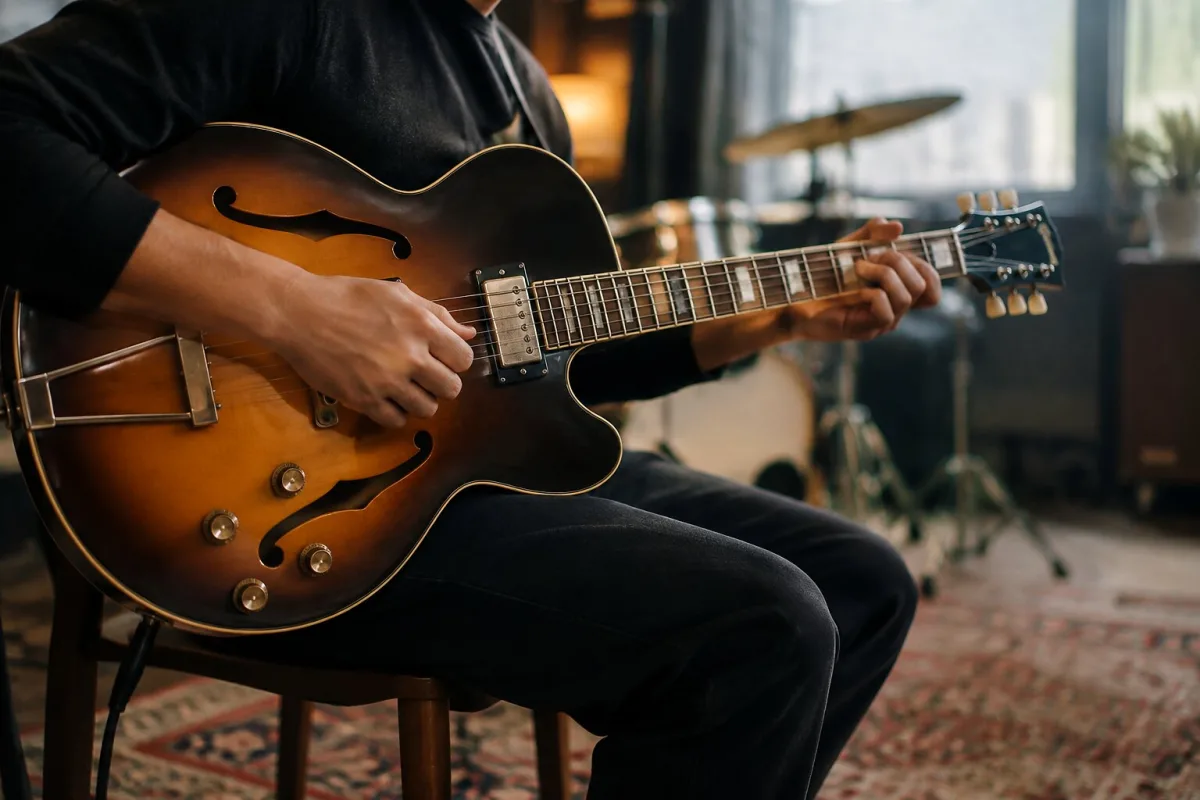
Buying a hollow-body guitar means accepting a trade-off from the start: you're choosing tone character and aesthetic over high-gain versatility and extreme sustain. That's not a weakness; it's a choice. If you're making it deliberately, with your eyes open, you'll end up with an instrument that makes sense for what you're trying to play. If you wander into it thinking you're getting a universal rock guitar, you'll regret it.
Let's be practical about what matters when you're actually spending money.
Decide: Fully Hollow or Semi-Hollow?
This is the fundamental question. A fully hollow guitar gives you maximum acoustic resonance, warmth and that distinctive woody tone. It's wonderful for jazz, blues, rockabilly and classic rock played cleanly or with light breakup. But it's fussy at high volume and gains easily. A semi-hollow guitar has a solid center block, which means better feedback control, more sustain and more practical high-volume performance. You sacrifice some of that pure acoustic bloom, but you get an instrument that's genuinely playable in a band setting with gain.
If you're playing jazz or blues cleanly, fully hollow. If you're in a rock band or want the flexibility to use overdrive without fighting feedback, semi-hollow makes more practical sense. Be honest about what you'll actually play.
Budget Categories: What You Get at Each Price Point
Under £500: You'll find budget semi-hollow guitars from Epiphone, Ibanez and other makers. These are functional instruments with acceptable construction, though pickups and hardware might be basic. Good entry point if you want to try the concept without major investment.
£500–£1,000: Better construction, more reliable hardware, improved pickups. Epiphone's higher-end semi-hollow models, certain Ibanez designs and entry-level guild instruments sit here. Solid choice for a serious player who doesn't need premium credentials.
£1,000–£2,000: Quality instruments from established brands. Gibson's semi-hollow models, higher-end Gretsches, Eastman's more affordable archtops. Noticeably better construction, hardware and pickups. Good resale value.
£2,000+: Premium brands like Sadowsky, Heritage, D'Angelico and high-end Eastman. These are genuinely excellent instruments with superior construction, hardware and often handcrafted details. Worth the investment if you're certain about the instrument's role in your playing.
The Major Brands and What They Offer
Gibson historically owns hollow-body territory. Their ES-series guitars are iconic and expensive. The ES-335 is the semi-hollow standard; the ES-175 is a famous archtop jazz model. Quality is reliable; price reflects the name.
Epiphone offers semi-hollow and hollow options inspired by classic Gibson designs but at substantially lower price points. The value is good; these are playable instruments.
Gretsch specializes in thin-line hollow-body guitars strongly associated with rockabilly and country. The G6120 is their signature model. These instruments have character and distinctive jangly tone.
Ibanez produces modern semi-hollow designs aimed at jazz, fusion and contemporary players. Build quality is solid and prices are reasonable.
Eastman builds traditionally constructed archtop guitars in both jazz and contemporary styles. These are serious instruments; prices reflect the craftsmanship.
Guild has a long hollow-body heritage. Their semi-hollow instruments offer good value and solid construction.
Key Specifications to Check
Body size matters. Large jazz boxes (15+ inches wide) are louder unplugged and more resonant but less portable. Thin-line models (13–14 inches) are easier to handle whilst retaining character.
Hardware quality: Check the tuners, bridge and tailpiece. Cheap hardware creates tuning stability and intonation problems. At the price points that matter, this shouldn't be an issue, but verify it.
Pickup type: Humbuckers deliver warm, thick tone; single-coils offer clarity and that distinctive clucky character. Floating pickups (mounted separately rather than directly to the body) reduce feedback. These choices affect both sound and price.
Wood quality: Better instruments use quality arched tops, solid backs and quality woods throughout. Cheaper models use laminate or lower-grade materials. This directly affects tone.
Test Before You Buy
Plug one in. Play it through an actual amp at moderate volume. Listen to the top-end clarity and the bass response. Feel how it resonates. Listen unplugged—fully hollow guitars should sound genuinely acoustic. A cheap hollow body that sounds thin and dead unplugged will sound thin and dead plugged in too.
Check sustain. Fully hollow guitars have less sustain than semi-hollow; that's normal. But the sustain should be smooth and musical, not abrupt.
Test feedback behavior. Drive the amp a bit. A semi-hollow should handle moderate gain without fighting you. A fully hollow will ring more easily—that's expected.
Consider Used Vintage Instruments
The hollow-body market has decades of excellent used guitars. Vintage Gibsons, Gretsches and Guilds often sound better than newer equivalents because the wood has aged and opened up sonically. If you find a clean 1970s or '80s semi-hollow from a major brand at reasonable money, it's often a better purchase than a new budget instrument.
The Bottom Line
Buy a hollow body knowing what you're trading: sustain and high-gain performance for tone character and warmth. Choose semi-hollow if you want versatility; choose fully hollow if tone is your only concern. Buy from an established brand, test it thoroughly, and don't overpay for the badge. The money is spent on construction and tone, not marketing.





Comments