


Harley Benton Stratocaster article
Harley Benton Stratocaster for Beginners: A Complete Guide
Your Harley Benton Stratocaster awaits. This beginner guide reveals why it's an excellent first guitar and walks you through your rewarding first months.
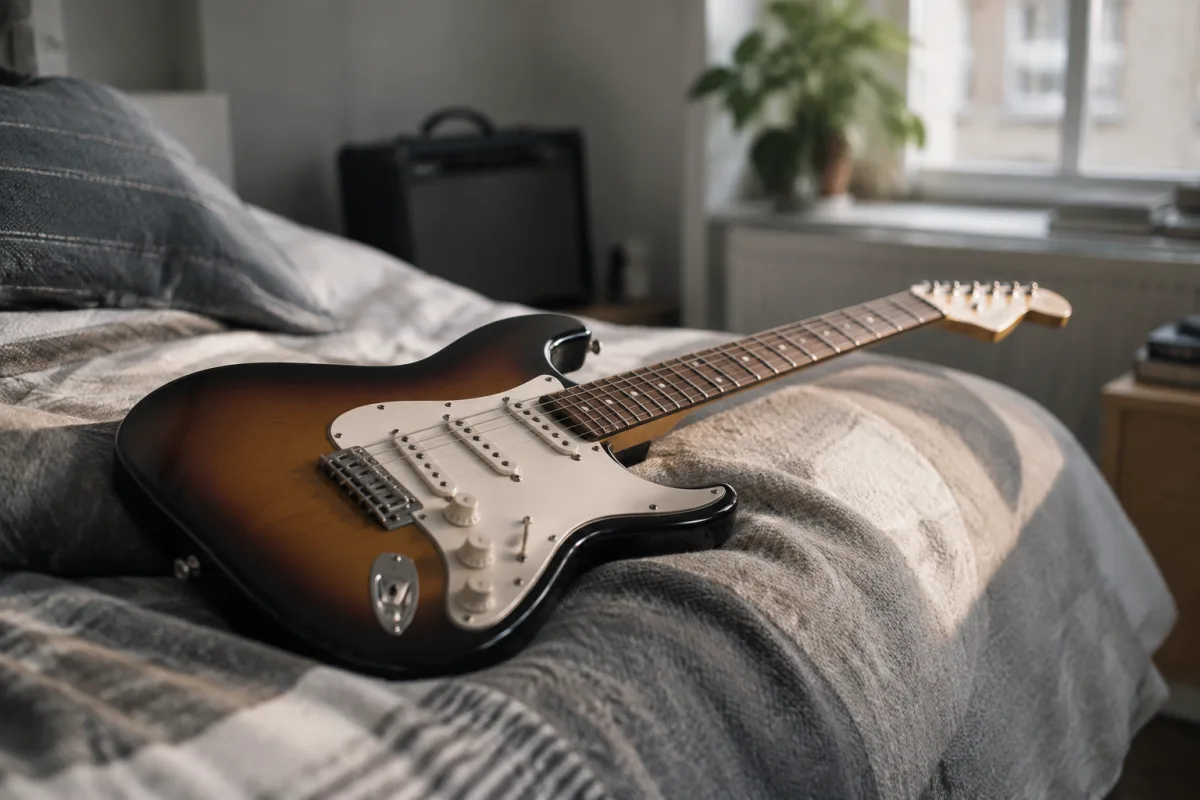
Choosing a Harley Benton Stratocaster as your first electric guitar is an excellent decision. Harley Benton, Thomann's house brand, produces beginner-quality instruments that deliver exceptional value without compromising playability or sound quality. For under £250, you get a recognisable Stratocaster design, reliable electronics, and a neck that doesn't punish your developing hands with excessive difficulty. This guide helps you navigate your first weeks with confidence, establishes effective practice habits, and steers you away from the common mistakes that derail beginning guitarists.
Why Harley Benton Makes an Ideal First Guitar
Starting guitar involves significant commitment—emotional, financial, and temporal. Many beginners worry about investing substantial money only to discover they're not enjoying the experience. A Harley Benton Stratocaster removes this financial barrier. For the price of a dinner out, you get a genuine instrument that sounds pleasant, plays comfortably, and won't discourage you with frustrating technical limitations.
The Stratocaster design itself is beginner-friendly. The single-cutaway body balances comfortably against your torso whether you sit or stand. The fretboard width is moderate—not so cramped that small hands struggle, not so wide that larger hands feel clumsy. The neck profile is reasonably thin, making chord formation accessible to developing hands.
Additionally, the Stratocaster is arguably the world's most recognisable electric guitar design. Learning on a Stratocaster means you're using the same instrument as countless heroes—from Jimi Hendrix to contemporary musicians. This psychological advantage maintains motivation during challenging early phases.
Initial Setup: What You Actually Need
Beyond the guitar itself, resist the urge to buy every accessory available. Start with only essentials:
- An amplifier: A practise amplifier (15-20 watts, £50-150) suffices beautifully for beginners. Avoid expensive amplifiers until you're confident about your long-term commitment.
- A cable: A quality instrument cable (£10-15) ensures good signal transmission. Don't skimp here; cheap cables introduce noise.
- A tuner: A clip-on digital tuner (£15-30) keeps your guitar in tune. Accurate tuning is non-negotiable for enjoyable practice.
- A strap: Many Harley Benton guitars include basic straps. A comfortable strap (£20-40) improves standing practice comfort.
- Picks and spare strings: Beginners break strings accidentally. Keep several spare sets (£15-30 total) on hand.
- A method book or course: Structured learning beats random YouTube videos. A beginner method book (£15-30) provides organisation and progression.
Total startup cost: under £400. This is genuinely affordable for the learning journey you're beginning.
Your First Week: Establishing Foundation Habits
Don't focus on playing songs immediately. Your first week involves building foundation habits and developing hand comfort. Plug into your amplifier and spend time simply plucking single strings, listening to the tones carefully.
Learn the basic open chords: E major, A major, D major, and G major. These four chords appear in countless songs. Don't attempt complex chord changes yet; simply practise moving between two chords repeatedly, slowly, with attention to clean sound production. Your fingers will ache—this is normal and temporary.
Establish that you can tune your guitar confidently using the digital tuner. This repeated skill becomes automatic within days and is essential for all future practice.
Common Beginner Mistakes to Avoid
Gripping too tightly: Beginners unconsciously grip the neck as if strangling it. This creates rapid hand fatigue and sore fingertips. Your grip should be firm but relaxed. Imagine holding a hand you're greeting—present but not gripping.
Playing too softly: Some beginners hold the pick so gently that strings barely vibrate. Commit to plucking—use enough force to hear clear, ringing tones. This develops the muscle memory you need.
Neglecting tuning: An out-of-tune guitar sounds awful and discourages practice. Tune before every session. This consistency trains your ear and maintains motivation.
Practising inconsistently: Sporadic two-hour sessions frustrate more than fifteen-minute daily sessions. Your fingers need conditioning to develop calluses and strength. Build a daily habit.
Trying to play songs too soon: Many beginners attempt songs before mastering basic chords, producing frustrating results. Complete fundamental skills first—open chords, strumming patterns, basic lead passages. Songs follow naturally.
Setting unrealistic timelines: "I'll play Wonderwall by next week" is fantasy. Realistic expectations prevent discouragement—you'll play recognisable chord progressions within 3-4 weeks, complete songs within 2-3 months.
Ignoring posture: Sitting with the guitar properly—body tilted slightly toward you, neck at a comfortable angle—prevents repetitive strain. Poor posture causes neck and shoulder pain that makes practice uncomfortable.
Building Calluses and Hand Strength
Sore fingertips in your first week are inevitable and temporary. The skin on your fingertips gradually hardens into protective calluses. This discomfort peaks around day three or four, then diminishes rapidly. By week three, your calluses are established and fingertip soreness is forgotten.
Some relief strategies: soak sore fingertips in water (increases callus formation), take days off if soreness becomes extreme (usually unnecessary), and apply soothing lotion in evenings. Don't stop playing—consistent light practice builds calluses faster than sporadic intense sessions followed by rest.
Your Three-Month Progression
With consistent daily practice, expect this realistic progression:
Week 1-2: Comfort with the instrument, basic open chords, introduction to strumming patterns. Soreness peaks and begins resolving.
Week 3-4: Smooth transitions between basic chords. Simple strumming patterns becoming automatic. Your first recognisable "songs" (simple progressions).
Month 2-3: Playing complete beginner songs from your method book. Introduction to simple lead passages and single-note melodies. Increasing playing duration without fatigue.
Month 3+: Choosing your musical direction—pursuing genres that excite you, developing personal style, playing alongside backing tracks or other musicians.
Choosing Your Musical Direction
Harley Benton Stratocasters suit numerous musical styles: blues, rock, country, pop, and experimental genres. Early in your learning, explore music that excites you. Listen to guitarists whose tone and style appeal to you. This exploration inspires practice and helps you discover what draws you to guitar.
Your favourite genre becomes your motivation. Learning to play songs you genuinely love transforms practice from obligation to joy.
Connecting With Community
Online guitar communities—subreddits, forums, YouTube comment sections—are remarkably supportive. Ask questions without embarrassment. You'll discover countless adults learning guitar simultaneously; you're never alone in this journey.
Many online resources are free: YouTube tutorials, chord databases, backing tracks. Combine these with your method book for comprehensive learning.
When to Upgrade
Your Harley Benton Stratocaster serves beautifully for your first year or more. Only after establishing consistent practice habits and discovering your musical preferences should you consider upgrading to a higher-quality instrument. Many lifetime guitarists never feel compelled to upgrade far beyond entry-level instruments; the player matters infinitely more than the equipment.
For comprehensive information on Harley Benton Stratocasters and their specifications, capabilities, and variations, explore the complete guide to Harley Benton Stratocaster, which covers technical details and broader context in depth.
Your Harley Benton Stratocaster journey begins now. Embrace the beginner phase—every skilled guitarist passed through it. With consistent daily practice, realistic expectations, and genuine enthusiasm, you'll develop real musicianship. In three months you'll play songs you love. In six months you'll improvise. In a year you'll wonder why you didn't start sooner. Welcome to the guitar world.


Comments