


Locking Tuning Machine Heads article
The Complete Guide to Locking Tuning Machine Heads
Locking tuning machine heads keep your guitar in tune reliably. Explore how they work and why they're essential for gigging musicians.
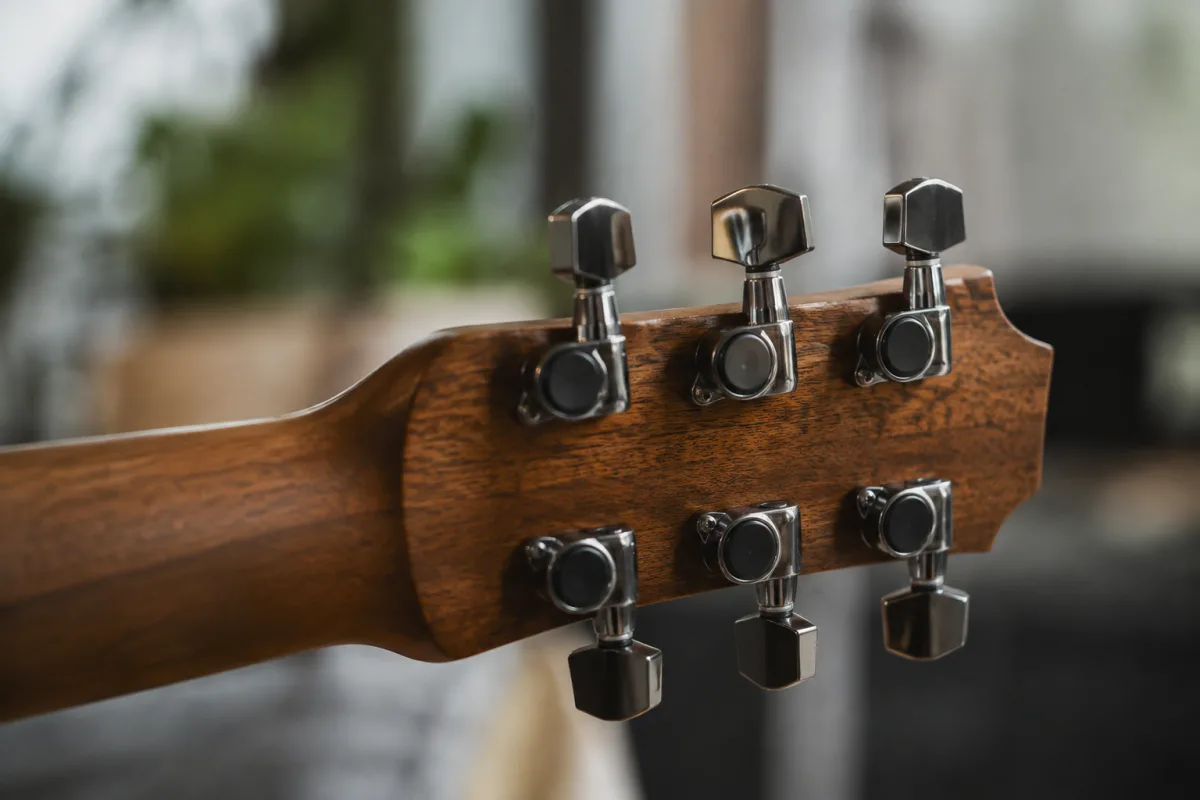
Locking tuning machine heads represent a significant advancement in guitar hardware, eliminating one of electric and acoustic guitarists' most persistent frustrations—strings gradually going out of tune during performance. These ingenious mechanical devices grip the string at the capstan, preventing slippage and drift that affects tuning stability. Whether you're a gigging musician, studio player or someone learning guitar, understanding locking tuning machine heads can dramatically improve your playing experience and instrument performance.
How Locking Tuning Machine Heads Work
Traditional tuning machine heads feature an open capstan where the string wraps freely multiple times around a post. Over time, especially during vigorous playing or string bending, the string gradually shifts position, causing the pitch to drift flat. Locking tuning machine heads solve this problem through a locking mechanism—typically a small lever or screw—that clamps the string firmly against the capstan.
When engaged, the locking mechanism prevents string slippage entirely. The string remains perfectly stationary, maintaining tension and pitch even during aggressive playing, heavy vibrato or extreme string bending. Some designs employ a pinch-block mechanism squeezing the string, whilst others use a clamp that rotates around the capstan. All designs accomplish the same goal—absolute string retention.
Benefits of Locking Tuning Machine Heads
The primary advantage of locking tuning machine heads is tuning stability. Your instrument stays in tune far longer, particularly important during extended playing sessions or live performances where re-tuning mid-set proves impossible. This stability proves invaluable for gigging musicians, studio recordings and anyone recording guitar tracks that must maintain perfect pitch.
Locking tuning machine heads also simplify string installation significantly. Traditional machines require careful spacing and multiple string wraps to secure the string properly. Locking machines clamp immediately with minimal wrapping—typically just one or two turns. This faster installation process saves time and reduces frustration during restringing.
For players using tremolo systems, locking machine heads become practically essential. Floyd Rose and similar whammy bars require absolute tuning stability to function properly. Without locking machines, aggressive tremolo use quickly throws your instrument out of tune. With locking tuners, you can use tremolo effects freely without worrying about tuning drift.
Types of Locking Tuning Machine Heads
Several designs deliver locking functionality, each with specific advantages:
- Lever Lock — A small lever on the tuner housing engages a clamp, most common design
- Button Lock — A button or push mechanism locks the string in place
- Screw Lock — A small screw tightens a clamp around the capstan
- Spline Drive — Premium design offering smooth operation and refined mechanics
- Vintage-Style — Modern locking designs maintaining traditional aesthetics for classic-looking guitars
Each design offers similar performance. Choose based on your aesthetic preferences and budget. Premium designs generally feel more refined and require less maintenance, whilst budget-friendly versions deliver identical tuning stability at lower cost.
Installation and Upgrade Considerations
Upgrading from standard to locking tuning machine heads typically requires removing the old machines and installing the new ones—a straightforward task for experienced guitar technicians. Most locking machines mount identically to standard machines using the same holes, making retrofitting simple.
The string installation process proves crucial. After threading the string through the locking mechanism, turn the tuning peg to tension the string, then engage the lock. Different designs require slightly different engagement—always consult the manufacturer's instructions. Proper installation ensures optimal performance and long tuner lifespan.
Cost and Value Proposition
Locking tuning machine heads cost £8-15 per machine, or £50-120 for a complete six-machine headstock set. Professional installation by a guitar technician adds £30-50 in labour. This modest investment—typically less than £150 total—dramatically improves tuning stability and instrument reliability.
For gigging and recording musicians, this investment quickly pays for itself through reduced tuning issues and improved instrument stability. For casual players, the convenience and reliability may not justify the expense unless you use aggressive playing techniques or tremolo systems.
Compatibility and Headstock Styles
Locking tuning machine heads are available for virtually all headstock configurations—six-in-line, three-by-three, slotted headstocks and even unusual custom designs. Most manufacturers offer options matching your guitar's specifications. Vintage-style locking tuners maintain traditional aesthetics whilst providing modern stability benefits.
Before purchasing, verify your guitar's tuning machine hole diameter and any specific mounting requirements. Minor variations exist between manufacturers and guitar styles. Consulting your guitar's documentation or a qualified technician ensures you purchase correct components.
Conclusion
Locking tuning machine heads represent an intelligent upgrade for any guitarist valuing tuning stability and reduced maintenance. Whether you're performing live, recording in the studio or simply enjoying playing without constant re-tuning frustration, these mechanical innovations transform your instrument's performance reliability. The modest cost and straightforward installation make locking tuning machine heads a practical upgrade for professional musicians and serious hobbyists alike.



Comments