


Gibson V Flying article
Gibson V Flying for Beginners: A Complete Guide
The Gibson V Flying is visually stunning and genuinely playable. This beginner's guide covers shape, comfort, specifications, and whether you should buy one.
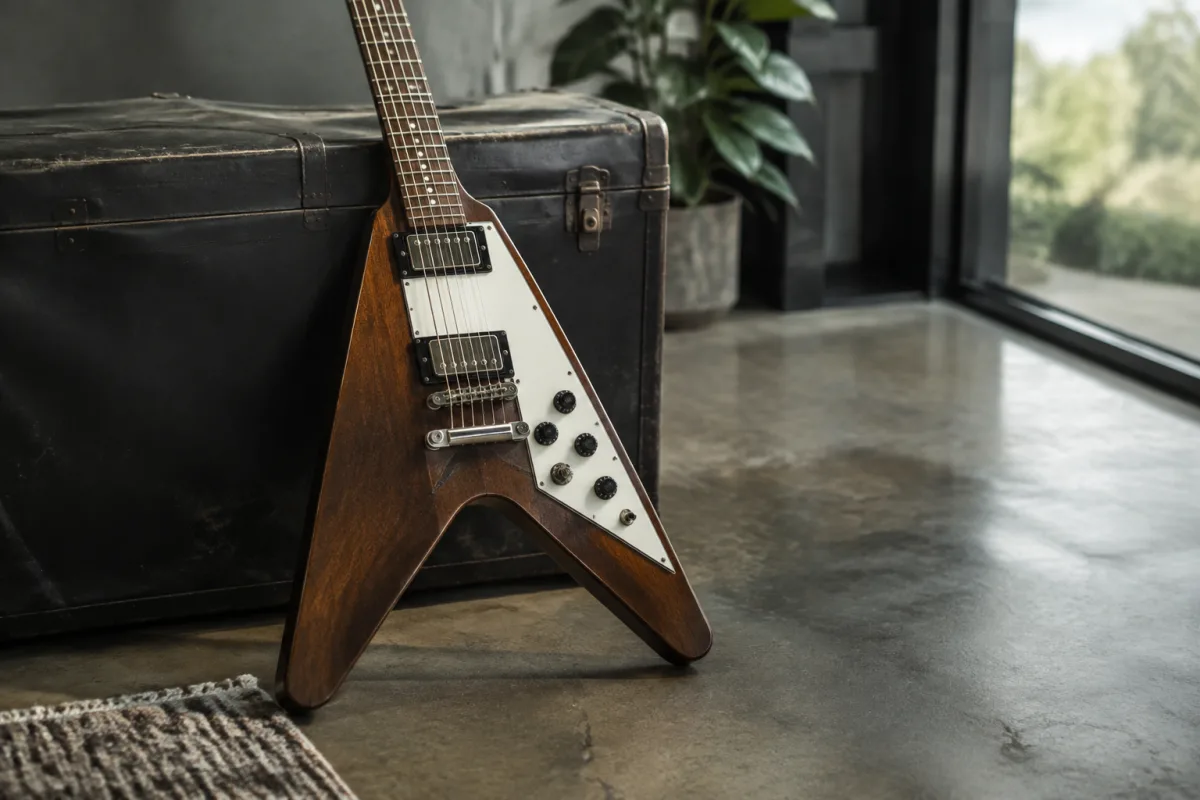
You've seen the Gibson V Flying guitar on album covers, in music videos, and wielded by rock legends. Its futuristic, angular shape looks nothing like a Stratocaster or Les Paul—and that's exactly the point. If you're considering your first Gibson V Flying or curious about what makes this guitar special, you're probably wondering whether it's truly playable or purely visual theatre. The truth is both: the Gibson V Flying is genuinely distinctive, genuinely iconic, and if it appeals to you visually, there's a good chance it'll inspire your playing. This guide walks you through what you need to know before committing to this bold instrument.
The Story Behind the Gibson V Flying Shape
Gibson introduced the Flying V in 1958, an era when electric guitar design meant curves and comfort. The Flying V reversed that logic—it's angular, geometric, and aggressively modern. The original run was tiny, making vintage Flying Vs rare and expensive. Gibson later introduced the V, a similarly futuristic shape but slightly less extreme. Both represent Gibson's adventurous side. Beginner players often feel uncertain about these shapes: "Will it actually work for me, or is this decoration?" The answer is clear: countless professional musicians build entire careers around Flying Vs. It's playable, it's legitimate, and it looks magnificent doing it.
The Visual Impact: Understanding Aesthetic Choice
The Gibson V Flying isn't subtle. If you buy one, people notice. That attention feels exciting to some players, intimidating to others. Before purchasing, be honest about how you feel. Will this guitar motivate you to practice more because you love how it looks? Or will you feel self-conscious? Neither answer is wrong—it's personal. A Gibson V Flying that sits in your case because it feels too bold serves nobody. A Gibson V Flying that inspires daily practice is the right choice. Visual appeal matters in instruments; a guitar you love to look at encourages playing.
Playability and Comfort: The Real Questions
The Gibson V Flying's shape creates unique ergonomics. The pointed body edges require careful positioning—you can't nestle it against your body the way you would a Stratocaster. Sitting down demands adjustment: the guitar sits higher on your leg, and arm access feels different. Standing with a strap demands balance; the narrow body and sharp points take getting used to. None of this makes it unplayable. It makes it different. Try one in a shop before buying. Sit with it, stand with it, and play for 20 minutes. Does the new position feel exciting or uncomfortable? Your answer matters more than any review.
Specifications That Matter for a Gibson V Flying
| Specification | Typical for Gibson V Flying | Why It Matters |
|---|---|---|
| Body Material | Mahogany or chambered mahogany | Affects tone warmth; chambered bodies are lighter, reducing fatigue from the narrow shape |
| Pickup Configuration | Humbuckers (usually 2) | Humbuckers provide thick, sustaining tone ideal for rock; varies by model |
| Neck Thickness | Moderate to thick | Thick necks feel substantial; thinner necks suit smaller hands or fast playing |
| Weight | 7-8 lbs (chambered); 8-9 lbs (solid) | Lighter guitars reduce shoulder strain, especially important for the Gibson V Flying's narrow shape |
| Hardware | Tuners, bridge, tailpiece | Quality hardware affects tuning stability and ease of adjustment |
Common Beginner Misconceptions About Gibson V Flying
First misconception: it's only for rock players. False. The Gibson V Flying works for blues, metal, fusion, and experimental music. The look suggests aggression, but the sound is versatile. Second misconception: it's uncomfortable for long sessions. Some players find it perfect for long sessions; others prefer traditional shapes. Personal fit matters more than reputation. Third misconception: a Gibson V Flying requires stage confidence. You can play a Gibson V Flying in your bedroom just as happily as onstage. The guitar doesn't care; you do. Fourth misconception: Gibson V Flying models are all similar. Modern Gibsons offer numerous V Flying variants at different price points. Research the specific model you're considering rather than assuming they're all identical.
Price and Value Considerations
Entry-level Gibson V Flying models (£400-£600) offer genuine playability and the iconic shape at reasonable cost. Mid-range options (£600-£1200) add premium construction and tonal refinement. Vintage Flying Vs (1950s originals) cost thousands and appeal to collectors. For a beginner, mid-range represents the sweet spot: quality construction, distinctive character, and investment potential without vintage-level expense. A £700 Gibson V Flying is a legitimate instrument, not a compromise.
Trying One Before You Buy
Before committing to a Gibson V Flying purchase, visit a guitar shop that stocks them. Play several if available—different models vary in comfort and tone. Bring your amplifier if possible, or test through the shop's amp. Play songs you know to assess feel and response. Ask the shop staff about returns or trial periods. Gibson V Flying purchases benefit from hands-on evaluation; online purchase is riskier with such a distinctive shape. A 14-day return policy gives you confidence to try before committing.
For comprehensive information on Gibson V Flying specifications, history, and advanced techniques, explore our complete guide to Gibson V Flying.
Should You Buy a Gibson V Flying?
Ask yourself three questions. First: does this guitar's look excite you? If yes, continue. If no, other shapes exist. Second: have you tried one and felt comfortable playing it? If yes, it's worth serious consideration. If no, practice on another guitar before deciding. Third: can you afford it without financial stress? If yes, you've found your guitar. The Gibson V Flying is bold, distinctive, and genuinely playable. It's not for everyone, and that's fine—the best guitar for you is the one you want to play daily. If that's a Gibson V Flying, stop hesitating and make it yours.


Comments