


Volume Knobs article
Volume Knobs for Beginners: A Complete Guide
Volume knobs are robust and forgiving. This guide walks you through the essentials and shows you how to get the most from them.
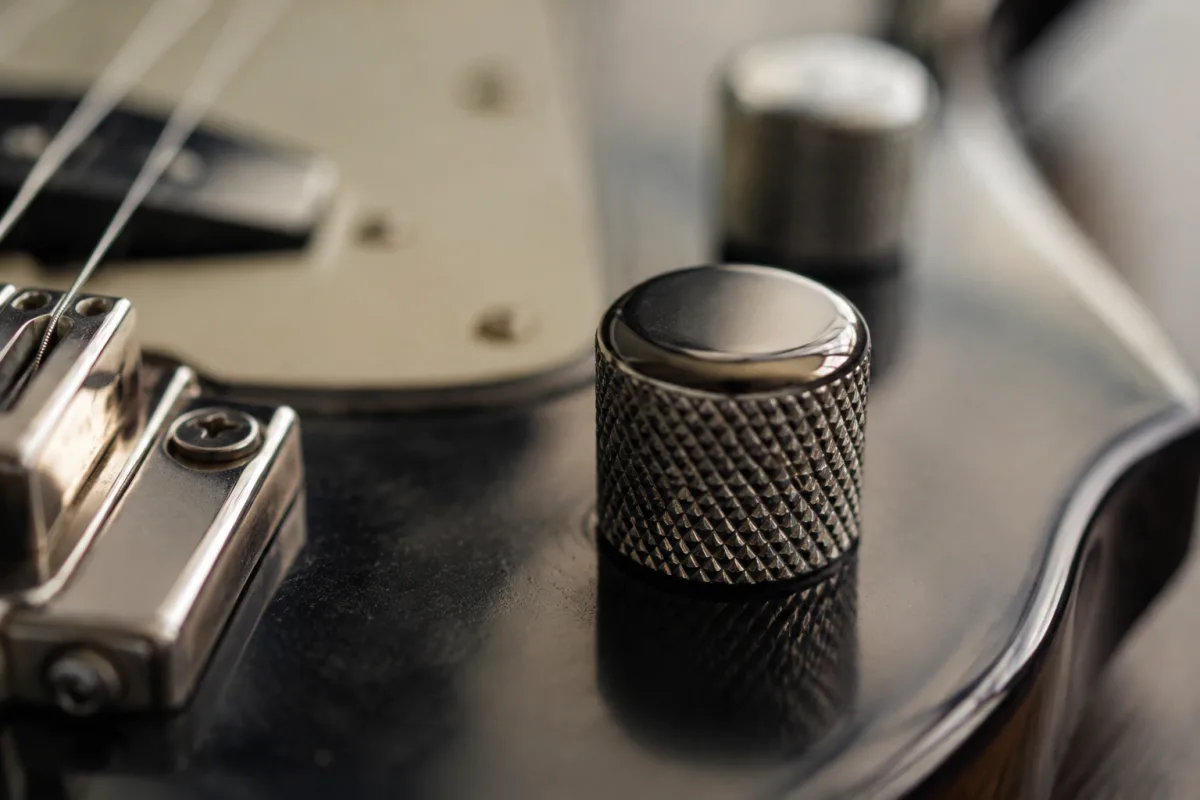
Volume knobs are among the simplest controls on a guitar, yet beginners often misunderstand how to use them or worry they'll break something. In reality, volume knobs are robust, forgiving and incredibly useful once you understand what they do. This guide walks you through the essentials and shows you how to get the most from them.
What Does a Volume Knob Actually Do?
Your guitar's volume knob controls how loud the signal from your pickups is before it reaches your amplifier. That's it. Turn it up and your amp gets a stronger signal; turn it down and the signal gets quieter. This is different from your amplifier's volume control—which amplifies the signal coming from your guitar—and different from your amp's master volume, which controls overall output.
Volume knobs are passive controls. They sit right on your guitar and don't require power or batteries. They're literally just a variable resistor that your guitarist adjusts by hand. This simplicity is their strength: they never fail, never need repair, and can be adjusted instantly while you're playing.
The Basic Anatomy of a Guitar Volume Knob
Most electric guitars have either one or two volume knobs. Here's what you're looking at:
- The knob itself: The plastic or wooden piece you grip. It turns smoothly around a central shaft and registers positions from 0 to 10 (or sometimes 0 to 100 on digital readouts, though rare).
- The potentiometer: The electronic component underneath the knob. You don't see this, but it's what actually does the work. Higher-quality potentiometers (pots) turn smoothly and last longer.
- The shaft: The metal rod connecting the knob to the pot. This should fit snugly with no wiggle; loose shafts cause crackling or the knob to spin freely without effect.
- The nut and washer: These secure the pot to your guitar's control plate. Over time, these can loosen and cause rattling.
None of these parts are fragile. You won't break a volume knob by using it—they're designed to last a guitar's lifetime.
How to Use Your Volume Knob Effectively
Using a volume knob is straightforward, but there's an optimal way to get the best results:
| Scenario | Volume Knob Position | Why |
|---|---|---|
| Home practice (moderate amp) | 7–9 out of 10 | Gives good headroom and prevents clipping while leaving room for dynamic playing. |
| Very quiet playing (neighbours, late night) | 4–6 out of 10 | Reduces signal to your amp, keeping volume down while maintaining tone clarity. |
| Live performance with full amp | 9–10 out of 10 | Maximises signal strength to your amp. The amp's volume control manages overall level. |
| Controlling feedback (loud playing) | Reduce to 6–7 | Lower signal reduces feedback tendency. Use tone knob to shape sound, not volume. |
| During silence (tuning, between songs) | Reduce to 0–2 | Eliminates hum and noise. Practical courtesy in band settings and studios. |
The key insight: keep your volume knob above about 5 for general playing. Turning it below 5 starts losing clarity and tone. If your overall sound is too quiet, adjust your amplifier volume instead.
Single Volume Knob vs. Two Volume Knobs
Some guitars (like Telecasters or Les Pauls) have two volume knobs—one for each pickup or one for each channel. Here's what this means:
- Two independent volume knobs: If your guitar has two pickups, you get independent control of each. Turn the neck pickup volume down and up the bridge pickup volume, and you'll smoothly transition between the two pickups without losing signal. This is powerful for live play.
- Blending pickups: Some players set both knobs to different levels to "blend" the pickups, creating hybrid tones between the two. This is an advanced technique but worth exploring once you're comfortable.
- Quick muting: If one volume knob is all the way down, that pickup contributes nothing. This is useful for silencing a noisy pickup or focusing entirely on one.
Single volume knob guitars are simpler; two volume knobs offer more tonal flexibility. As a beginner, don't worry about these subtleties—just keep your volume knob(s) around 7–9 and focus on playing.
Why Your Volume Knob Might Crackle or Feel Stuck
Most volume knob problems are minor and easily fixed. Here's what to do:
- Crackling or scratching noise: This is usually dust or oxidation inside the potentiometer. Turn your knob all the way back and forth rapidly 20–30 times while playing through your amp. This "exercises" the pot and often clears the problem. If it persists, the pot may need replacing (usually £20–40 with labour).
- Knob is stiff or won't turn: Check the nut under the knob—it may have tightened too much. Gently loosen it with a wrench (careful not to over-tighten or strip it). If it still won't budge, don't force it—have a tech inspect it.
- Knob spins freely but has no effect: The pot shaft may have slipped inside the knob (or the nut is loose). Tighten the nut gently. If that doesn't work, the pot may need replacement.
- Hum or noise when volume is at 0: This is normal—it's your amp's background hum. Your volume knob isn't the problem. It disappears when you raise the volume or turn off the amp.
All of these are normal, age-related issues. Nothing is seriously wrong.
Volume Knob Best Practices for Beginners
Here are habits that keep your volume knobs working smoothly for years:
- Don't leave your volume knob at full 10 when storing. This puts constant stress on the pot. Leave it around 5 when you put the guitar away.
- Turn your knob deliberately and slowly. Quick, violent twisting can stress the potentiometer shaft. Treat it gently—it's responsive enough to small adjustments.
- Clean around your knob occasionally. Dust accumulates around the edges. Use a soft cloth to wipe it clean. Don't pour liquid into it.
- Mute your volume before unplugging or plugging in. Sudden signal spikes can hurt your ears or your amp. Turn the volume down first, then make cable changes.
- If your knob feels scratchy, exercise it gently. Turning it back and forth 20–30 times often fixes minor crackling. If it persists for more than a few sessions, have a tech check it.
Using Volume Dynamics for Expression
Once you're comfortable with basics, volume knobs become an expressive tool:
- Clean vs. overdriven tone: A lower volume knob setting (6–7) makes your amp's overdrive less aggressive. Full volume (9–10) pushes the amp harder into saturation. You can play the same riff and change its character just by adjusting the volume knob.
- Swell technique: Turn your volume down before a note, then slowly turn it up while holding the note. This creates a swell effect without using the amplifier. It's subtle but adds nuance to your playing.
- Dynamic control: Soft phrases get a slightly lower volume setting; aggressive passages get full volume. This is a skill that develops over months of practice, but volume knobs make it easy.
Jimi Hendrix and other pioneering guitarists used volume knobs extensively for tonal variation. You won't be at that level as a beginner, but knowing it's possible encourages exploration.
Common Beginner Mistakes with Volume Knobs
Watch out for these:
- Leaving the volume at 10 all the time: This is fine, but it removes your main tonal control lever. Experiment with positions 6–9; you'll find sweet spots.
- Turning the volume down when your overall sound is too quiet. This is backwards. If your amp volume is fine but everything feels soft, you need a stronger pickup or a different amp, not a lower volume knob. Leaving your volume too low (below 5) sacrifices tone.
- Assuming a scratchy knob means it's broken. It's almost certainly just dirty inside. Exercise it and it usually clears up. No need to panic.
- Forcing a stuck knob. If it won't turn, have a tech look at it. Forcing can damage the pot or shaft permanently.
Volume Knobs and Amp Settings
Your guitar's volume knob and your amp's volume/gain controls work together. Here's the relationship:
- Guitar volume knob: Controls how hot the signal is coming from your guitar to your amp.
- Amp gain control: Amplifies that incoming signal. If your guitar volume is low, raise the amp gain. If your guitar volume is high, you may need less amp gain.
- Amp master volume: Controls the overall output level to the speaker. This affects loudness without changing tone.
The ideal setup: guitar volume knob at 7–9, amp gain set so the amp is clean without clipping, and master volume set to your desired loudness. If you change any one of these, the balance shifts.
For more advanced techniques, troubleshooting guide details, and modification options, see our complete guide to volume knobs.
FAQ
Q: Is turning the volume knob all the way up bad for my guitar or amp?
A: No. All the way up is a perfectly valid position. Some amp settings work best at full volume. The only minor stress is leaving it there permanently during storage.
Q: Can I accidentally break my volume knob by using it?
A: Extremely unlikely. Volume knobs are designed for constant use. Gentle handling keeps them lasting decades.
Q: My volume knob crackles. Is my guitar broken?
A: No. Crackling is usually dust inside the potentiometer. Exercise the knob back and forth rapidly 20–30 times—this often clears it. If it persists, a tech can replace the pot for £20–40.
Q: Why do some guitars have one volume knob and others have two?
A: Single-pickup guitars have one knob. Multi-pickup guitars (like Les Pauls or some Telecasters) have two, one for each pickup or channel. Two knobs allow independent control and blending.
Q: Does lowering the volume knob change the tone?
A: Slightly. Very low settings (below 4) start to roll off high frequencies and lose clarity. The tone becomes duller. For this reason, keep your volume above 5 during normal play.
Q: Should I turn my volume to 0 when I'm not playing?
A: It's a good habit. It eliminates background hum and noise, and removes stress from the potentiometer. Leave it around 0 when you put the guitar away.


Comments