


Volume Knobs Buying guide
Volume Knobs: A Complete Buyer's Guide
Choosing the right volume knobs involves understanding potentiometer specifications, shaft compatibility, and your guitar's aesthetic. This guide helps you buy volume knobs with confidence.
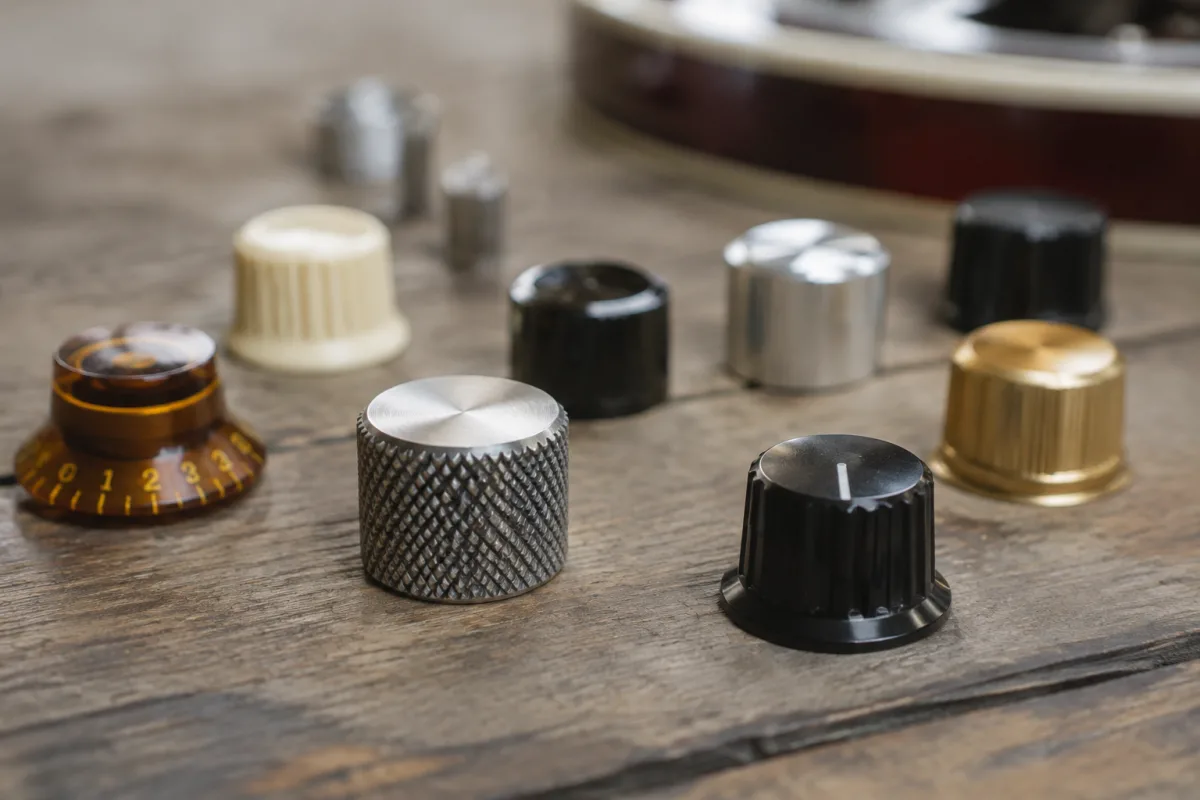
Volume knobs are one of the most frequently touched components on any guitar, yet most players give them surprisingly little thought when purchasing or replacing them. The right volume knobs can enhance your playing experience dramatically—improving tactile feedback, offering precise control, and even subtly improving your tone. This buying guide walks you through exactly what to consider when selecting volume knobs, so you can choose with confidence rather than guessing whether the stock knobs on your guitar are actually the best option for your needs and playing style.
Why Volume Knobs Matter More Than Most Players Realise
A good volume knob should feel responsive under your fingers, maintain its position without creeping, track smoothly across its entire range, and last years without wearing out. Poor quality volume knobs develop scratchy pots (the electrical component inside), slip out of position mid-performance, or feel unpleasant to grip. These seemingly minor issues accumulate into frustration that distracts from your playing. Investing in proper volume knobs is a worthwhile upgrade that many guitarists overlook despite noticing the benefits immediately after installation.
Understanding Volume Knob Types and Construction
Volume knobs vary more than most people realise. Your choice depends on your guitar style, playing preferences, and the look you're going for.
| Volume Knob Type | Material | Best For | Price Range |
|---|---|---|---|
| Plastic/Acrylic | Injection-moulded plastic | Budget builds, colour options | £2–£8 |
| Metal (Alloy) | Zinc alloy or aluminium | Durability, professional look | £5–£20 |
| Aged/Vintage | Metal with finish distressing | Vintage aesthetic guitars | £8–£25 |
| Premium (Boutique) | High-grade metals, hand-finished | High-end instruments, bespoke builds | £15–£50+ |
Potentiometer Specifications: The Hidden Component
Inside every volume knob is a potentiometer (or "pot")—the electrical component that actually controls volume. The pot determines how smoothly your volume changes and how long the knob lasts before developing problems. Understanding pot specifications ensures you buy volume knobs that perform reliably.
Resistance Value (Ohms)
Most guitar volume pots are either 250k or 500k ohms. This matters more than many realise. A 250k pot is commonly paired with single-coil pickups (like Fenders) because it maintains their brightness and treble response. A 500k pot works better with humbucking pickups (like Les Pauls) to preserve their characteristic warmth. Buying volume knobs with the wrong pot value for your guitar's electronics can dull or brighten your tone unexpectedly. Check your guitar's existing pot value before purchasing replacements.
Pot Taper
Volume pots come in linear or audio (logarithmic) taper. Audio taper pots—which most guitars use—provide a more natural feeling volume curve where the first quarter turn handles most of the adjustment. Linear taper feels unnatural on volume controls but suits tone knobs better. Make sure you're buying audio taper pots for your volume knobs unless you specifically want linear response (rare for volume control).
Pot Quality
Budget pots scratch, drift out of position, and fail within a year or two of regular playing. Mid-range pots (found in quality aftermarket volume knobs) stay reliable for many years. Premium pots used in boutique builds maintain their character and performance indefinitely. The pot is literally the most important part of the volume knob—don't let an appealing knob shape tempt you into choosing inferior internal components.
Shaft Compatibility: A Often-Forgotten Detail
Volume knobs fit onto different shaft styles, and mixing incompatible components is frustrating. Most modern guitars use either split-shaft or solid-shaft pot designs. Vintage guitars might use 24-spline shafts. Measure your guitar's existing pot shaft or check the wiring diagram before purchasing volume knobs—buying the wrong shaft type means either a loose, spinning knob or forcing an ill-fitting component that damages your guitar.
Size and Ergonomic Considerations
Volume knobs vary significantly in diameter and grip texture. Larger knobs (around 25mm) feel easier to grip and adjust with heavy strings or fingers, particularly useful for lead players who need rapid volume swells. Smaller knobs (around 18mm) suit vintage-style instruments and look more authentic to the guitar's era. Dome-shaped knobs offer good control; flat-top knobs can slip under fingers during playing. Consider your hand size, playing style, and whether you adjust volume frequently during performance.
Aesthetic Matching: Completing Your Guitar's Look
Volume knobs are visible, and they contribute significantly to your guitar's overall appearance. Matching your volume knobs to your tone knobs, pickup covers, and bridge hardware ensures visual cohesion. If your guitar has aged nickel hardware, black plastic volume knobs look out of place. If you're building a vintage-style instrument, pristine chrome knobs contradict the aesthetic. Think about your guitar's era and style when selecting volume knobs.
Price Considerations and Value
Budget volume knobs (£2–£5) work for occasional players and student guitars. You'll likely replace them eventually. Mid-range options (£5–£15) offer decent reliability and aesthetics for serious amateurs and semi-professionals. Premium volume knobs (£15–£50+) suit high-end instruments where longevity and precision matter. Generally, matching your volume knob quality to your guitar's overall quality makes sense—don't install £40 boutique knobs on a £200 budget guitar, nor skip proper knobs on a premium instrument.
Common Purchasing Mistakes to Avoid
Buying Based on Appearance Alone
A volume knob that looks stunning but contains a scratchy pot is worse than no upgrade at all. Research the interior pot quality before purchasing based on looks alone. Many decorative volume knobs sacrifice reliability for aesthetics—a mistake you'll regret months into playing.
Ignoring Your Guitar's Original Specifications
Your guitar's wiring diagram specifies the pot value and shaft type for a reason. Ignoring these specifications and buying incompatible volume knobs can alter your tone or result in a poor fit. Check before buying rather than assuming all volume knobs are interchangeable.
Penny-Pinching on Pots
Saving £3 by buying budget pots typically means replacing them again within 2–3 years. Investing in mid-range pots extends their lifespan to a decade or more. Over time, better pots cost less because you're not constantly replacing them.
Mismatching Vintage Instruments with Modern Components
Installing brand-new shiny volume knobs on a vintage 1959 Les Paul looks jarring and diminishes the instrument's character. Research period-correct options or distressed knobs that complement your guitar's age and aesthetic.
Installation and Maintenance Considerations
Most guitarists can install new volume knobs easily—it's typically as simple as loosening a set screw and sliding the old knob off, then sliding the new one on. However, if you're replacing the pot itself (not just the knob cap), you'll need soldering skills or a professional technician. When purchasing, clarify whether you're replacing just the visible knob or the entire pot assembly.
Specific Recommendations by Application
For classic single-coil guitars: Look for 250k audio taper pots with vintage-style knobs in aged nickel or cream. For humbucking-equipped guitars: Choose 500k pots with knobs matching your guitar's hardware finish. For modern shredders: Select volume knobs with good grip texture and precisely engineered pots for fast, reliable adjustments.
For more comprehensive details about different guitar components and their roles, explore the complete guide to volume knobs.
Making Your Purchase Decision
Write down your guitar's specifications (pot value, shaft type, hardware finish), consider your playing style and frequency of volume adjustments, then identify three or four volume knob options that match those requirements. Read reviews specifically mentioning pot quality and durability, not just appearance. Buy from a reputable guitar supplier with return policies in case the fit or feel isn't quite right. Quality volume knobs improve your playing experience measurably—select with care and you'll appreciate the choice every time you play.


Comments