


Types of Guitar article
Types Of Guitar for Beginners: A Complete Guide
Choosing your first guitar becomes less intimidating once you understand the basic types available. This guide simply explains what makes each distinctive.
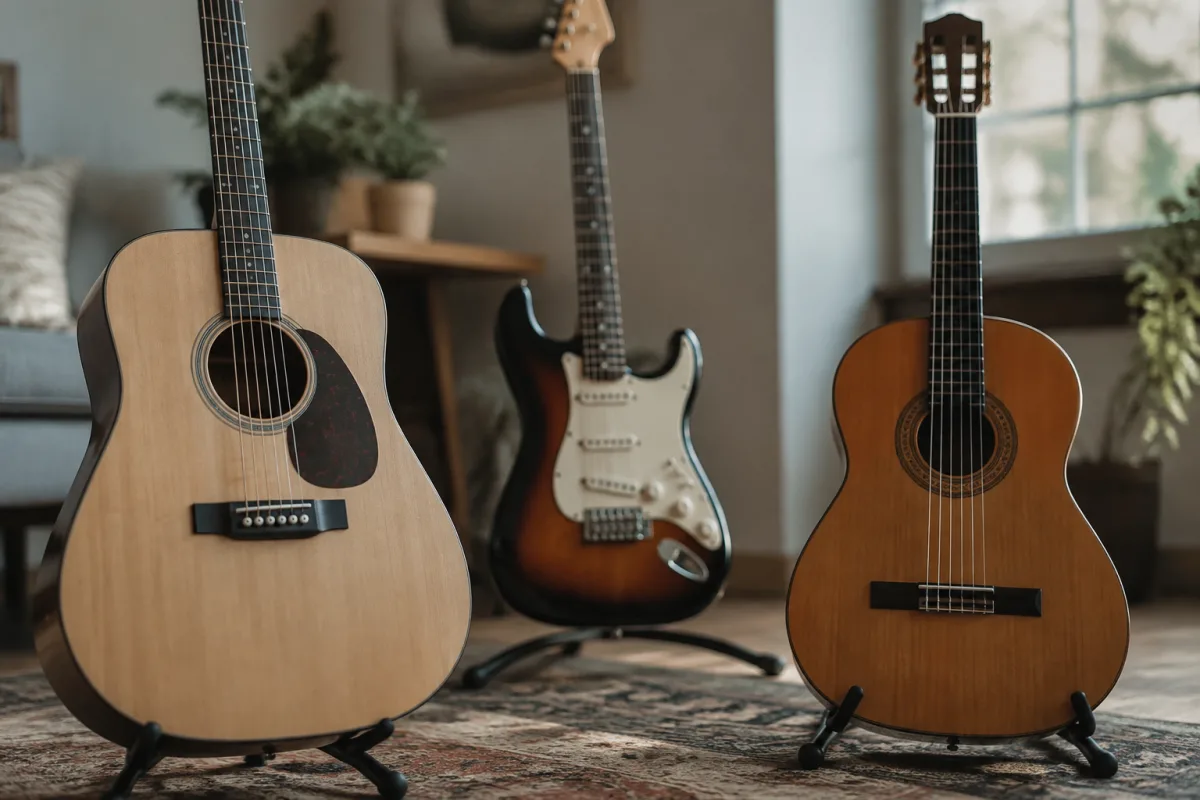
Choosing your first guitar becomes less intimidating once you understand the basic types available. Rather than overwhelming you with technical jargon, this beginner's guide simply explains the main types of guitar you'll encounter, highlighting what makes each distinctive and which suits different musical goals. You'll finish this guide confident that you understand your options without needing engineering expertise.
The Three Main Types of Guitar Every Beginner Needs to Know
Acoustic guitars produce sound through vibrating wooden bodies—no electricity required. They're louder, portable, and forge strong finger development for beginners. Electric guitars use pickups converting string vibrations into electrical signals, played through amplifiers. They're easier on fingers initially but require an amplifier and cable setup. Classical guitars feature nylon strings and flat tops, producing warm, mellow tones beloved by fingerstyle players. These three categories encompass about 95% of beginner guitars—understanding them eliminates most confusion immediately.
Acoustic Guitars Explained Simply
Acoustic guitars produce volume through wooden resonance—the hollow body amplifies string vibrations naturally. Beginners love acoustics because they're self-contained; just grab it and play anywhere. Downsides: acoustic strings feel harsh on fingers initially, causing temporary soreness that disappears as calluses develop. Acoustic guitars cost £150–500 for beginner models, making them accessible investments. They suit folk, pop, country, and singer-songwriter styles perfectly. If finger soreness concerns you, your calluses will toughen within weeks—this is genuinely normal and resolves quickly.
Electric Guitars for First-Timers
| Aspect | Why It Matters | Beginner-Friendly Truth |
|---|---|---|
| String Tension | Affects finger comfort and pressure needed | Electric strings feel softer than acoustics—easier on developing fingers |
| Sound Control | Determines musical expression possibilities | Amplifiers let you shape tone with simple knobs—no skill required initially |
| Portability | Affects practice location flexibility | Lightweight bodies; requires amplifier; less portable than acoustics |
| Cost | Initial investment barrier | Guitar + amplifier combo kits: £200–400 for beginners |
Classical Guitars: A Beginner-Friendly Alternative
Classical guitars use nylon strings producing warm, mellow tones. They're beloved by flamenco and fingerstyle players. For beginners, nylon strings feel gentler on fingers than steel acoustics—a genuine advantage if finger soreness worries you. Classical technique emphasises finger independence and complex patterns, making learning steeper than pop guitar initially. However, once basics stick, classical technique transfers to all other guitar types. Many teachers recommend classical as a first instrument specifically because it builds strong technical foundations.
Common Beginner Mistakes About Types of Guitar
Mistake one: assuming electric guitars are "easier" because strings feel softer. Actually, different guitars suit different styles and players—ease depends on your goals and hand size. Mistake two: thinking acoustic means "more authentic." Both acoustics and electrics produce equally valid, authentic music—choose based on musical style and comfort. Mistake three: overlooking classical guitars entirely. If flamenco or fingerstyle interests you, classical is more suitable than acoustic for developing proper technique. Mistake four: buying expensive types of guitar initially. Beginner models in any category outperform premium options in wrong styles.
Less Common Types of Guitar (You Might Encounter)
Semi-acoustic (or semi-hollow body) guitars blend acoustic resonance with electric pickups—appealing to jazz and blues players. Beginner semi-acoustics are pricier (£400–800) than pure acoustics or electrics, suited for players committed to specific genres. Twelve-string guitars produce rich, resonant tones through paired strings. Beginners find them challenging due to extra string tension, so most start with six-string variants first. Bass guitars use thicker strings and wider necks, producing low frequencies. Bassists develop finger strength differently than guitarists, but fundamentals transfer between instruments.
Choosing Your First Types of Guitar Confidently
Ask yourself: what musical style excites you? Pop, rock, and singer-songwriter? Electric or acoustic suits you. Flamenco, fingerstyle, or classical? Classical guitars are perfect. Folk, country, or indie? Acoustic guitars work beautifully. Your musical tastes should drive your choice—forcing yourself into "beginner-appropriate" types of guitar you don't genuinely enjoy guarantees frustration and quit rates.
Hand Size and Guitar Type Considerations
Beginners worry: will my hand size limit my types of guitar? Not really. Standard-sized guitars work for most adults—hand size becomes relevant only at extremes. Children start with three-quarter or half-size types of guitar. Larger-handed players might prefer wide-bodied acoustics or electric guitars with thicker necks. Honestly, 90% of beginners never need special sizing—focus on playing style and genre rather than agonising over proportions.
Price Ranges Across Types of Guitar
Budget beginner acoustic: £100–250. Budget beginner electric: £150–300 (plus £50–150 amplifier). Budget beginner classical: £120–300. All these types of guitar deliver playable quality for learners. Investing more initially doesn't accelerate learning significantly—better to start affordably and upgrade after 6–12 months once you understand your preferences. Most experienced guitarists own multiple types of guitar; starting with one type lets you build skills before expanding.
Your Next Steps With Your New Understanding
You now understand the main types of guitar well enough to make confident choices. Visit a music shop, handle different types of guitar, and play whichever feels most natural. Don't overthink—most guitarists change types throughout their musical journey. Your first guitar simply launches your journey; it needn't be permanent or perfect. For comprehensive understanding of guitar architecture and design across different types of guitar, explore the complete guide to types of guitar. Start now with whatever type resonates with you emotionally—that emotional connection drives long-term practice commitment better than any logical analysis.


Comments