


Synths Music Buying guide
Synths Music: A Complete Buyer's Guide
Buying a synthesizer doesn't have to be overwhelming. This buying guide covers everything you need to know about selecting the right synth, from understanding different categories to evaluating key specs and avoiding common pitfalls.
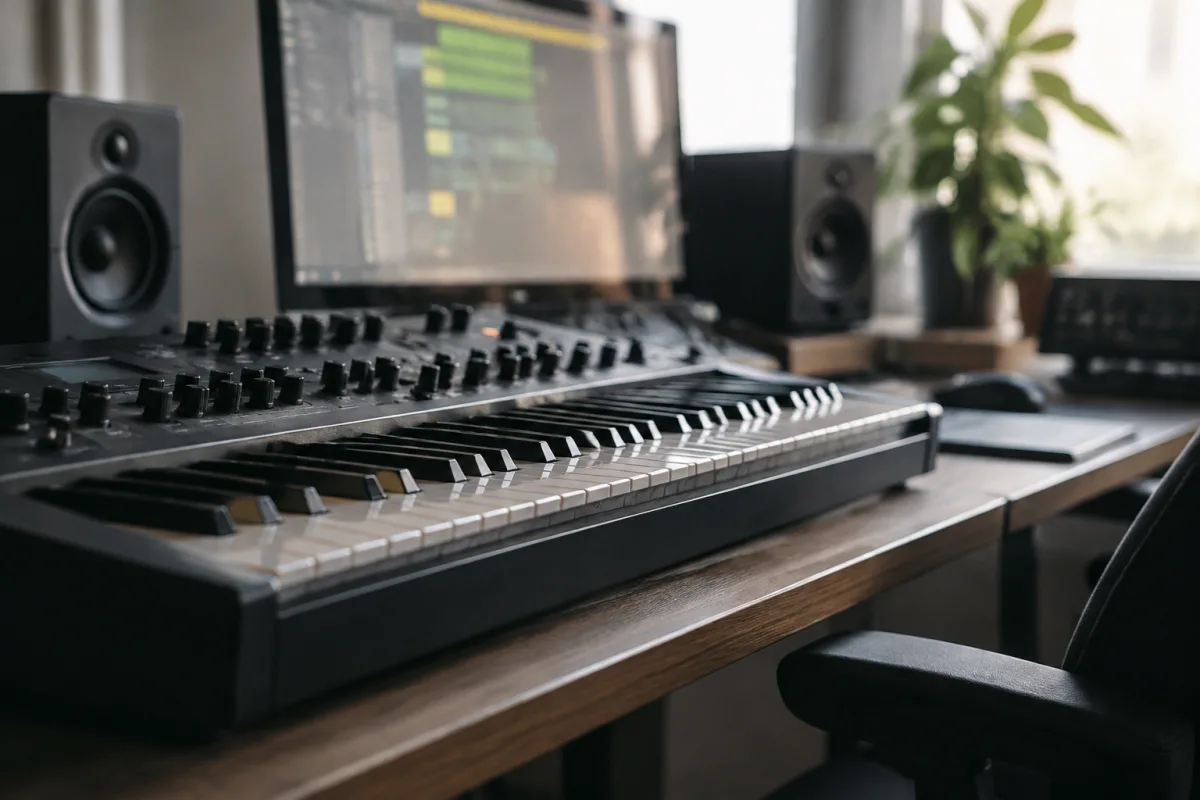
Buying a synthesizer is one of the most rewarding decisions you can make as a musician, but it can also feel overwhelming given the sheer variety of options available. Whether you're stepping into synth music production for the first time or expanding your setup, understanding what to look for will help you make an informed choice that matches both your artistic vision and budget. This guide walks you through the essential considerations when shopping for synths music equipment.
Understanding Synth Categories
Before diving into specs, it's crucial to grasp the main categories of synthesizers. Analogue synthesizers produce sound through oscillators and analogue circuits, offering warm, organic tones prized by many professionals. Digital synthesizers use processors to generate and manipulate sound, providing flexibility, reliability, and typically lower price points. Hybrid synths combine elements of both approaches, while software synths run on your computer and offer unlimited sound design possibilities at minimal hardware investment.
Each category serves different purposes in synths music production. Analogue synths excel in live performance and recording classic sounds, digital synths work brilliantly for modern electronic music, and software synths are perfect for bedroom producers and those exploring sound design without major expense.
Keys, Keyboards, and Controllers
The keyboard or control interface is arguably your first point of interaction with any synthesizer. Full 88-key weighted keyboards provide an authentic piano-like experience and are essential if you play with classical technique. 61-key unweighted keyboards offer portability and are ideal for live performance and production work. 49-key and smaller options are lightweight and affordable but limit expressive possibilities and require MIDI setup for full sound access.
Consider whether you need weighted keys, aftertouch sensitivity, and pitch bend/modulation wheels. Quality keys make a significant difference in feel and playing experience—especially if you'll be using your synth regularly in a live setting.
Polyphony and Voice Count
Polyphony determines how many notes you can play simultaneously. For synths music production, 8-voice polyphony is the bare minimum for basic chordal work, but 16 or more voices is preferable. If you're creating complex pads, layering sounds, or using arpeggiators, higher polyphony becomes essential. Entry-level digital synths often offer 64 or more voices, while some analogue machines top out at 4-6 voices by design.
Don't overlook this spec—attempting to play complex arrangements on a 4-voice analogue synth will teach you quickly about limitations, and not always in a musical way.
Sound Design Features and Synthesis Types
The synthesis engine is the heart of any synth. Subtractive synthesis, the most common method, starts with rich waveforms and sculpts them using filters and envelopes—ideal for creating evolving pads and aggressive leads. FM synthesis delivers complex, bell-like and metallic tones through frequency modulation. Wavetable synthesis blends between different waveforms for timbral richness. Sample-based synthesis playbacks recorded sounds and is straightforward for beginners.
For synths music, subtractive synthesis remains the gold standard for learning and general production. FM synthesis suits electronic and experimental work. Consider what sound design depth you'll actually explore—a synth with 1000 parameters is only useful if you're willing to dive into sound design.
Filter Types and Effects
The filter is your primary tone-shaping tool in synths music. Lowpass filters are most common and essential, cutting high frequencies for classic, warm sounds. Highpass filters remove low end, useful for creating thin, piercing leads. Bandpass filters isolate a specific frequency range. Multi-mode filters offer several options in one unit.
Filter resonance (sometimes called "emphasis" or "Q") adds a peak at the cutoff frequency, creating that characteristic "zipping" sound. Check whether your synth allows modulation of filter parameters—this is critical for dynamic, expressive sound design.
Connectivity and Integration
In modern production, a synthesizer rarely works in isolation. MIDI connectivity allows external keyboards and controllers to trigger your synth's sounds. USB ports provide power and control to your computer DAW. Audio outputs should be quality (ideally balanced XLR or quality unbalanced) to connect to mixing equipment. Some synths offer CV/Gate connectivity for modular integration, though this is more advanced.
If you're building a home studio setup, verify that your prospective synth connects smoothly with your existing equipment and software. A synth with superb sound but awkward connectivity can become frustrating in workflow.
Price Tiers and Value
| Price Range | Typical Features | Best For |
|---|---|---|
| Under £300 | Basic synthesis, limited polyphony, simple interface | Absolute beginners, hobbyists |
| £300–£800 | Decent sound design, 16-32 voices, solid build | Home producers, semi-pro use |
| £800–£2000 | Advanced synthesis, premium keyboards, pro features | Serious producers, touring musicians |
| £2000+ | Top-tier sound, premium build, specialist features | Professional studios, specialists |
Entry-level synths have improved dramatically in recent years. Many budget models deliver excellent value, offering surprising sound quality and functionality. Premium synths justify their cost through superior keyboards, deeper sound design, reliability, and resale value—not always because they sound fundamentally better.
Common Pitfalls to Avoid
Buying purely on price is tempting but often regrettable. The cheapest option might have poor keyboard feel, frustrating menu navigation, or limited sound-shaping capabilities. Conversely, overlapping specs doesn't mean overlapping sound—a £3000 synth isn't always three times better than a £1000 instrument.
Another mistake is ignoring build quality and manufacturer support. A synth from an unknown brand might be cheap, but if the company disappears, finding replacement parts becomes impossible. Established manufacturers offer better documentation, firmware updates, and community support.
Don't underestimate the importance of hands-on experience. Specifications tell part of the story, but how a keyboard feels, how intuitively the interface works, and how you connect emotionally with the sound matter just as much. Visit music shops and spend time with instruments before committing to a purchase.
Complementary Gear to Consider
Your synthesizer is rarely a complete system on its own. A quality audio interface transforms your signal into your computer's digital domain. Studio monitors (speakers) and headphones let you hear what you're actually creating. MIDI controllers extend your synth's expressiveness. A stand or keyboard case protects your investment during transport and storage.
Budget for these ancillaries when calculating total cost of ownership. A brilliant synth paired with poor monitoring or recording setup won't showcase its potential.
Making Your Final Decision
After considering these factors, narrow your options to two or three candidates. Read detailed reviews and watch demos from producers whose taste in sound you respect. If possible, test them side-by-side. Think about your music style and production workflow—what works brilliantly for film score composition might feel clunky for dance music production.
Remember that no synth is objectively "best." The best synthesizer is the one that motivates you to make music. Many legendary recordings came from humble, affordable synths used by musicians who understood their instrument deeply. If you're new to synths music, starting with something accessible and learning it thoroughly will serve you better than investing in a complex instrument you'll never fully explore.
For a comprehensive understanding of synths music and how these instruments fit into broader musical contexts, check out the complete guide to synths music, which covers history, applications, and the full spectrum of what's possible with synthesis technology.
Conclusion
Choosing a synth requires balancing your artistic aspirations, budget constraints, and practical requirements. Focus on synthesis type, polyphony, keyboard feel, and connectivity. Test instruments when possible, prioritise from established manufacturers, and remember that learning your instrument thoroughly matters more than owning the most expensive model. With these considerations in mind, you'll find a synthesizer that serves your musical vision and grows with you as your skills develop.


Comments