


Synthesizers Music Buying guide
Synthesizers Music: A Complete Buyer's Guide
A practical guide to choosing the right synthesizer. Understand synthesizer types, key specifications, price tiers and common mistakes to avoid when investing in an instrument for music production.
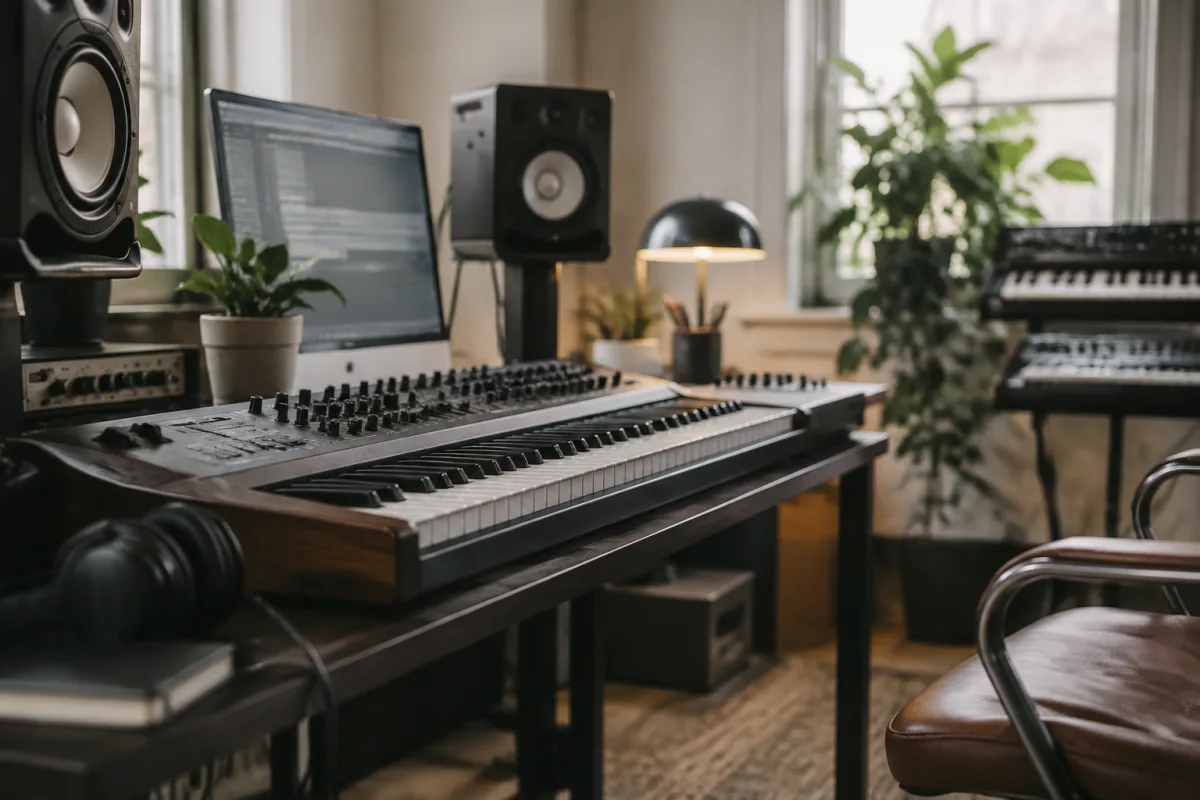
Buying your first synthesizer or expanding an existing collection requires understanding what separates the genuinely useful instruments from the flashy dead-ends. Whether you're drawn to synthesizers for electronic music production, live performance, or studio experimentation, knowing what specs actually matter—and which marketing claims to ignore—makes the difference between finding an instrument that inspires you and one that frustrates you within weeks.
Synthesizer Types: Understanding Your Options
Modern synthesizers come in fundamentally different architectures, and this shapes everything about how you'll use them. Analogue synthesizers use oscillators, filters and envelopes built from discrete electronic circuits. They sound warm, organic and respond beautifully to hands-on tweaking. Digital synthesizers use computer processing to model or generate sounds; they're far more versatile, more affordable, and don't drift out of tune. Hybrid instruments combine analogue sound generation with digital control and effects. Each type suits different approaches to synthesizer music creation.
Desktop units and modular synthesizers offer endless sonic possibility but demand understanding of synthesis fundamentals. Keyboard synthesizers—the conventional choice—bring playability and immediate familiarity. All-in-one workstations combine synthesizer, sequencer, effects and sampler in one box. Software synthesizers (VSTs running in a DAW) offer extraordinary value but lack the tactile control that makes hands-on synthesizer experimentation rewarding. Each form factor attracts different types of synthesizer musicians.
Key Specifications That Actually Matter
Polyphony—how many notes you can play simultaneously—directly impacts synthesizer musicality. A four-voice synth can play only four simultaneous notes; eight-voice is better for sustained chords without note theft (where playing a new note silences an existing one). For synthesizer music with full chord progression, aim for minimum eight-voice polyphony. More is better, particularly if you use long envelopes or stacked layers.
Oscillator count and waveforms determine sonic palette. A single oscillator per voice limits what sounds you can sculpt. Two or three oscillators per voice let you stack and detune them for richer synthesizer tones. Waveform options—sawtooth, square, triangle, pulse—matter more than raw oscillator count. Many budget synthesizers claim impressive specs but offer limited waveform variety, which severely constrains creativity.
Filter type is critical to synthesizer character. Subtractive synthesis (filtering noise to create tone) dominates electronic music. A multi-pole filter (typically 24dB/octave for rich character, or 12dB/octave for subtlety) responds more musicality to the filter envelope than simpler single-pole designs. Some synthesizers offer multiple filter types—ladder, diode, state-variable—each with distinct character. This matters far more than oscillator count for developing a personal synthesis voice.
Synthesizer Price Tiers and Feature Sets
| Price Range | Typical Features | Best For |
|---|---|---|
| Under £300 | Limited polyphony (4–8 voices), fixed architecture, basic filters, minimal effects | Learning synthesis basics, bedroom producers, educational use |
| £300–£800 | 8–16 voice polyphony, flexible synthesis, decent filter design, integrated sequencer | Serious hobbyists, small studio setups, performing musicians |
| £800–£2,000 | 16+ voices, rich synthesis options, multiple effects, expert-level sequencing, build quality | Professional producers, live performers, creative synthesizer experimentalists |
| £2,000+ | Modular integration, advanced sampling, vast sound library, flagship effects, durability | Studio professionals, touring musicians, synthesis specialists |
Keyboard Action and Playability
How a synthesizer keyboard feels under your fingers shapes your entire creative process. Lightweight, unweighted keys respond instantly but feel toy-like and offer no dynamic control. Semi-weighted keys provide reasonable control with less finger fatigue on long sessions. Fully weighted, hammer-action keys (borrowed from piano design) let you play with genuine dynamics and velocity control but add significant cost and weight. Your choice depends on how much of your synthesizer music involves real-time keyboard performance versus sequencing from a computer or external sequencer.
Key count matters less than you might think. 61 keys cover five octaves and suit most synthesizer music production; 88 keys add a full piano-range span but increase desk footprint and weight. Keyboard type should match your playing style: if you're programming synthesizer sequences rather than performing live, a 25-key mini-keyboard saves space and money.
Synthesis Engine and Creative Flexibility
Architecture flexibility separates inspiring synthesizers from limiting ones. Subtractive synthesis (the classic approach) works well for most synthesizer music but can feel predictable. Wavetable synthesis lets you morph between complex waveforms for movement in static tones. FM synthesis (frequency modulation) creates metallic, bell-like timbres and digital character. Granular synthesis (fragmenting and reassembling samples) opens experimental possibilities. Look for synthesizers that let you combine approaches—many modern units layer multiple synthesis engines, which dramatically expands sonic range.
Modulation depth matters enormously. A synthesizer with limited LFO (low-frequency oscillator) control and basic envelope options feels constrictive. Deeper modulation—multiple LFOs, complex envelopes, modulation matrices—lets your synthesizer sound intentional and expressive rather than generic.
Effects and Sound Shaping
Built-in effects separate playable synthesizers from mundane ones. Reverb, delay and chorus are essentials; a rich reverb engine lets you create space and dimension within the synthesizer itself, independent of external processing. Distortion and overdrive add grit and aggression. Advanced effects—granular processing, spectral effects, algorithmic tools—unlock creative possibilities beyond conventional synthesis. For synthesizer music production, having excellent effects onboard reduces dependency on external gear and streamlines workflow.
Effects quality matters more than quantity. A synthesizer with five mediocre effects is less useful than one with two excellent reverbs and a genuinely musical delay. Listen critically—does the reverb sound like a real space or artificial? Does the delay maintain clarity or turn to mud?
Sequencing and Integration
A built-in synthesizer sequencer shapes your entire workflow. Basic step sequencers let you program drum patterns and bass lines. Pattern-chaining lets you build longer arrangements within the synthesizer. If you produce electronic music primarily in a DAW, sequencer power matters less. If you perform live or prefer standalone synthesizer setup, a sophisticated sequencer becomes essential to your creative process.
MIDI connectivity determines whether your synthesizer integrates smoothly with other gear. Full MIDI in and out, USB connectivity and sync options (MIDI clock, Link) let you sync synthesizers with sequencers, controllers and other instruments. Check compatibility with your existing setup before purchasing.
Common Pitfalls in Synthesizer Selection
Chasing specifications leads many buyers astray. A synthesizer claiming thirty oscillators per voice sounds impressive until you realise it lacks filter modulation options—you can't actually sculpt interesting tones. Prioritise oscillators, filter design, envelope depth and modulation flexibility over raw oscillator count. Another mistake is buying based on sound demos alone. A synthesizer recorded by an expert producer in an optimised studio sounds drastically better than the same instrument in your hands without experience. Play before purchasing if possible; borrow if you can't.
Ignoring keyboard action leaves you frustrated. Spending six months with an uncomfortable keyboard action damages your feel and prevents genuine performance. Similarly, dismissing software synthesizers underestimates their quality—many VSTs rival hardware instruments, but they lack the tactile magic that makes hands-on synthesizer exploration rewarding.
For context on synthesizer fundamentals and their role in music creation, read the complete guide to synthesizers music, which covers synthesis history, types and sonic character in depth.
Selecting a synthesizer is ultimately about matching its strengths to your creative goals. Understand your synthesis priorities, listen critically to how it sounds, test the keyboard action and workflow thoroughly, and invest at the tier that supports your ambitions. A well-chosen synthesizer becomes an extension of your creative voice, not a limitation.


Comments