


Music Mixers article
The Complete Guide to Music Mixers
Music mixers blend multiple audio sources into a cohesive final mix, providing control over volume, tone, and effects that separate professional from amateur productions. Learn what features matter for your setup.
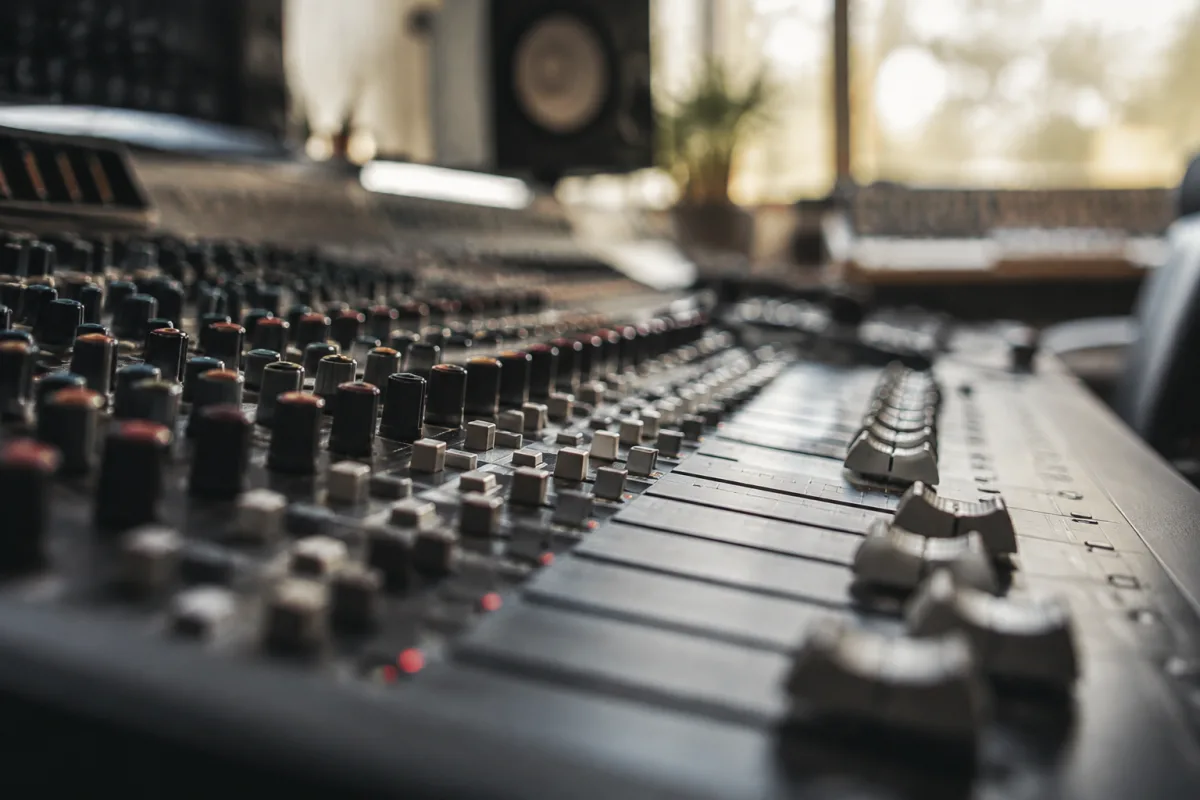
Music mixers form the central hub of any serious music production setup, whether you're recording in a professional studio, operating a live sound system, or building a home production rig. These intelligent devices blend multiple audio sources into a cohesive final mix, providing control over volume, tone, and effects processing that separates amateur productions from professional-sounding results. Understanding how music mixers work and what features matter will help you choose the right equipment for your specific needs.
What Music Mixers Actually Do
A music mixer takes multiple audio inputs—microphones, instruments, playback devices—and combines them into fewer outputs. This straightforward concept conceals sophisticated functionality. Each input channel on a music mixer provides independent volume control, allowing you to balance loud sources against quiet ones. Beyond simple level management, modern music mixers offer equalization (EQ), which lets you shape the tonal character of each source by boosting or cutting specific frequencies.
Music mixers add spatial effects through auxiliary sends and returns, letting you create shared reverb, delay, and other processing that affects multiple channels simultaneously without requiring individual processing units for each source. The summing amplifiers that combine all channels into the final stereo output represent critical quality points—the best music mixers employ precision summing amplifiers that maintain headroom, prevent distortion, and deliver transparent sound quality.
Analogue vs Digital Music Mixers
Analogue music mixers process audio through dedicated electronic circuitry. Signals flow through resistors, capacitors, and amplifiers that colour and shape the sound with subtle harmonic characteristics. Professional engineers prize analogue music mixers for this sonic character—many describe analogue processing as "warm" or "musical" compared to digital alternatives. Classic analogue music mixers from manufacturers like Neve and SSL remain sought-after, commanding premium prices in the used market.
Digital music mixers convert audio into numerical data, process it through digital algorithms, and convert back to analogue for amplification and listening. This approach offers several advantages: recall of exact settings, perfect repeatability, and virtually unlimited processing possibilities. Digital music mixers can morph between configurations, run multiple mixes simultaneously, and integrate with computer-based recording systems seamlessly. Modern digital music mixers deliver exceptional sound quality that rivals high-end analogue equipment.
Mixer Size and Configuration: Channels and Buses
Music mixers are defined by their channel count and bus architecture. A small music mixer might have 8 input channels and 2 output buses (stereo). A professional live sound mixing console might feature 40+ channels and numerous auxiliary buses. The term "channels" refers to independent input strips—each can accommodate a different source. "Buses" are output collection points where multiple channels can be routed and processed collectively.
For home recording, a small music mixer with 8–16 channels typically suffices. Live sound applications often demand larger music mixers with more channels to accommodate all instruments and microphones on stage. Professional studios sometimes employ multiple music mixers, routing outputs from one into another for hierarchical mixing organisation.
Essential Controls on Every Music Mixer
Every music mixer, regardless of size, includes essential controls that determine how well it functions:
- Faders: Volume controls for each channel and bus, allowing you to balance mix levels smoothly.
- EQ sections: Typically 3–4 band equalisers on each channel for tonal shaping. Professional music mixers offer parametric EQ with centre frequency, gain, and Q selection.
- Pan controls: Position each channel anywhere in the stereo field from left to right.
- Auxiliary sends: Route channels to auxiliary buses for shared effects processing like reverb or delay.
- Monitoring outputs: Dedicated outputs for musicians to hear custom mixes during recording or performance.
- Master output faders: Control the overall mix level sent to speakers or recording devices.
Premium music mixers add parametric EQ, multi-band compression, and sophisticated routing options that grant nearly unlimited mixing flexibility.
Compact Music Mixers vs Large Mixing Consoles
Small portable music mixers—often called "field mixers" or "compact mixers"—prioritise portability and ease of use. These diminutive devices typically handle 4–8 channels, ideal for small recordings, podcasts, or modest live events. Their simplicity appeals to beginners, though limited input counts and basic processing restrict their capability for complex productions.
Midrange music mixers (12–24 channels) represent the sweet spot for most applications—large enough to handle realistic complexity yet manageable in cost and physical footprint. Professional mixing consoles—often called "large format music mixers"—feature 40–100+ channels with sophisticated routing, comprehensive processing, and automation capabilities. These represent significant investments, typically deployed in established studios or touring operations.
Music Mixers in the Digital Era
Software-based digital audio workstations (DAWs) have fundamentally altered music mixing workflows. Today's music producers often mix entirely "in the box"—using computer software to control virtual faders, EQ, and effects rather than physical hardware music mixers. However, many engineers value physical control surfaces—sometimes called "control surfaces" or "mixing controllers"—that provide tactile faders and knobs controlling DAW mixing operations.
Hybrid setups combining traditional music mixers with computer recording are popular. A small analogue music mixer might provide input preamps and EQ for microphones and instruments, with audio then routed into a DAW for mixing and mastering.
Choosing the Right Music Mixer for Your Needs
Selecting an appropriate music mixer requires honestly assessing your requirements. Small home recording projects might benefit from a simple 8-channel music mixer or USB audio interface. Live sound reinforcement demands more channels and typically favors digital music mixers with scene recall and advanced processing. Professional studios often employ large format music mixers, though increasingly these are controlled via software interfaces for flexibility.
New music mixers offer excellent value and reliability. Used professional-grade music mixers provide significant cost savings for those comfortable learning vintage equipment. Whatever you choose, quality music mixers provide years of reliable service and become central to your production capabilities.


Comments